
Martin Gensbaur
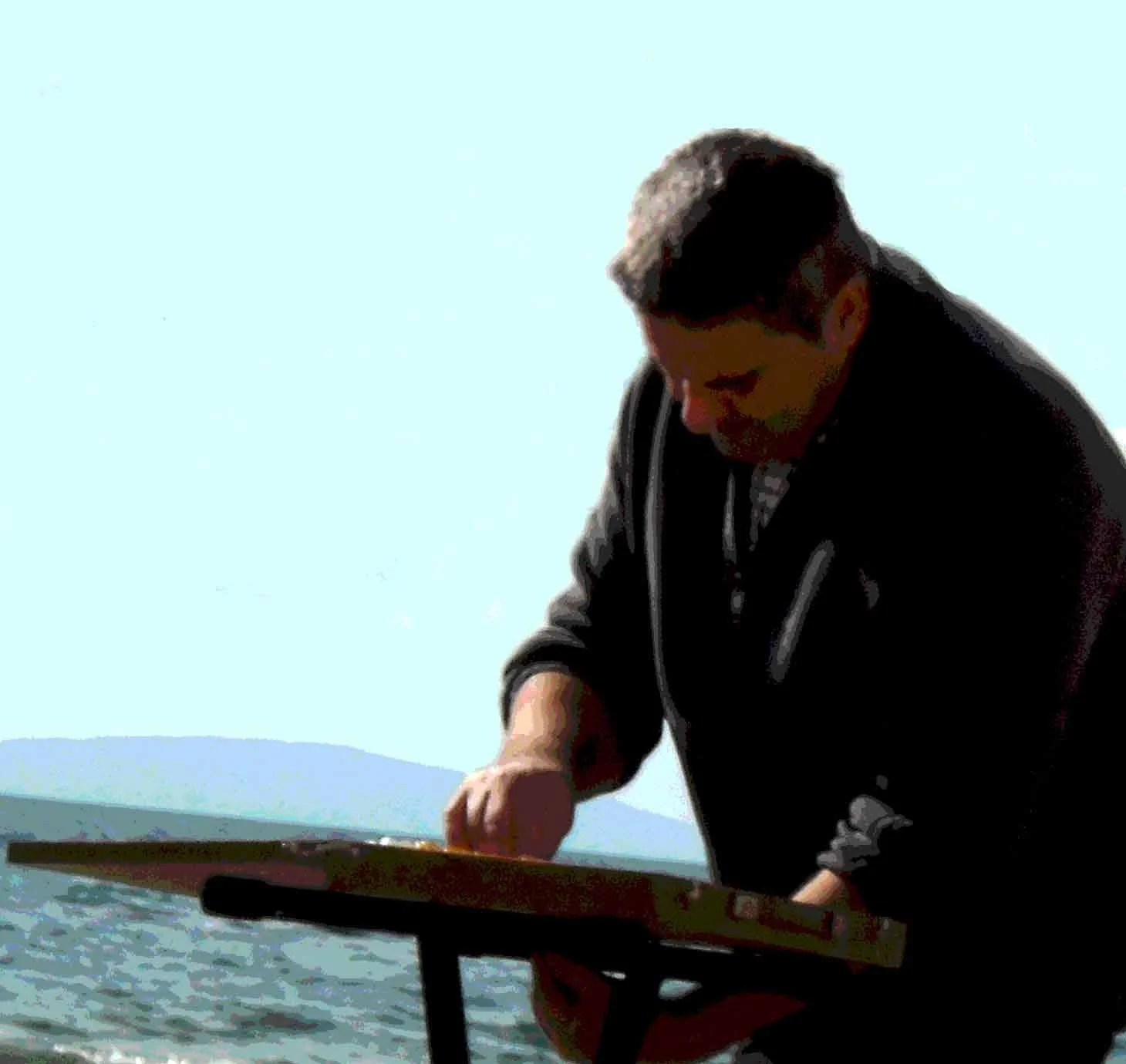
Image from Wikipedia
Image from Wikipedia
Martin Gensbaur – Painting Between Ammersee, Alpine Region, and Italian Quest
An Artist Who Transforms Landscape, Architecture, and Memory into Images
Martin Gensbaur, born in Munich in 1958, is one of the prominent voices in contemporary painting in Bavaria. As a painter, art educator, museum educator, lecturer, and author, he combines artistic practice with art historical reflection and pedagogical experience. His living and working space between Dießen am Ammersee, Urfeld am Walchensee, and Scarlino in Italy shapes his visual world as much as his intensive engagement with places, spaces, and atmospheric transitions.
His works navigate between immediate observation of nature and conscious construction of image space. This leads to a painting that perceives the familiar in a new light: gas stations, houses, squares, mountain landscapes, water surfaces, and architectural fringes become motifs for a precise yet poetic description of the present. Gensbaur's work thus represents an art that sharpens perception and transforms everyday spaces into concentrated visual ideas.
Biographical Roots: Munich, Education, and Academic Influence
Martin Gensbaur's artistic career began with a solid academic foundation. From 1977 to 1983, he studied painting and graphic arts at the Academy of Fine Arts Munich under Horst Sauerbruch, Rudi Tröger, and Franz Bernhard Weißhaar. He completed his studies with a diploma as well as the first and second state examinations, which early on made his dual focus on artistic production and art education visible.
This education was complemented by study visits to the universities of Perugia and Innsbruck, as well as to the Institute of Art History in Florence. These stages not only broadened his perspective on Italian and Central European art traditions but also sharpened his awareness of historical image spaces that resonate throughout his later painting. Even in this early phase, his craftsmanship was coupled with an art historical vigilance.
Teaching, Communicating, Curating: Art as a Public Mission
Since 1982, Gensbaur has worked as an art teacher at various public and private schools. From 1990 to 1996, he taught art history at the University of Eichstätt, Munich branch, and from 1997 to 2024, he headed a seminar for the training of secondary school art teachers in Munich. This long-standing pedagogical practice is an essential part of his profile: Gensbaur does not think of art in isolation, but in relation to education, the public, and communication.
Particularly significant is the art window in Dießen am Ammersee, a project he runs with his wife, art historian Ulrike Gensbaur. This platform serves as a workshop, exhibition space, and cultural meeting point. There, in addition to exhibitions, lectures, readings, concert rehearsals, workshops, and open house days take place. Thus, a vibrant venue emerges where painting becomes visible as part of a larger cultural discourse.
The Art Window: Exhibition Practice in Public Space
The Art Window has established itself as a non-commercial exhibition platform for contemporary painting and photography. It is located in a highly frequented area in Dießen, connecting art with the everyday life of the place. This position gives the project its appeal: the images do not enter a secluded white cube, but into a space perceived by passersby, local residents, and culturally interested individuals alike.
Content-wise, the Art Window is closely connected to Gensbaur's own painting. Numerous exhibitions and collaborative projects, including those with international guests, demonstrate his interest in the dialogue between image and environment. Series such as "Parallel Worlds," "Parallel to Nature," or later presentations on themes like landscape, shadow, and trace quest showcase a constant search for image constellations that not only depict reality but question it.
Theme World and Painting: Between Nature Observation and Built Reality
Gensbaur's work thrives on the tension between natural and built environments. In his depictions of roadside edges, parking lots, new housing developments, gas stations, mountain backdrops, and water landscapes, he develops a visual language that takes the seemingly trivial seriously. The fringes of perception become the actual field of motifs where present, memory, and experiences of place overlap.
Characteristic of his images is their atmosphere: they are not merely documentary but condense situation, light, and space into a quiet drama. The motives frequently appear in the tension between familiarity and strangeness, between topographical accuracy and painterly release. This gives even unremarkable places a peculiar dignity and surprising presence.
Italy, Walchensee, Ammersee: Places as Artistic Matrix
The geographical reference points in Gensbaur's life are more than biographical data; they form an artistic matrix. The Ammersee stands for regional anchoring, the Walchensee for alpine expansiveness, and Scarlino in Italy adds a southern, light-intensive component to his work. These spaces do not appear in his images as postcard motifs but as condensed places of experience, where nature, culture, and memory overlap.
Especially in works with Italian references, it becomes clear how much Gensbaur reacts to local atmospheres. Squares, facades, pathways, and everyday architectures become carriers of a quiet narrative. His painting does not use these places for mere illustration but as a starting point for a precise investigation of perception, materiality, and mood.
Exhibitions, Projects, and Current Presence
Even in recent years, Gensbaur has remained present through exhibitions. In 2025, the Abbey Venio in Munich Nymphenburg showcased an exhibition titled "Parallel Worlds," presenting a selection of works in the garden hall. This presentation is understood as a trace quest and refers to the concentrated, reflective painting that Gensbaur represents. Also in 2025, a catalog for the exhibition "May the Time Come… Life and Images of Franz Hermann Lechner," in which Martin and Ulrike Gensbaur participated, was published.
In spring 2025, he co-curated the exhibition "Holes in the Light" in Dießen, where Gensbaur was represented with his own works. The show combined an engagement with shadow, perception, and image theory with a location-based approach typical of his work. Such projects display an artist who continuously intertwines his visual practice with art historical and aesthetic questions.
Writings and Art Educational Authority
As an author and editor, Gensbaur has repeatedly framed his artistic practice theoretically. Since 2014, he has co-published the writing series "Das Kunstfenster" with Ulrike Gensbaur, which accompanies exhibitions and documents art-related topics. This results in a dual profile of practice and reflection that holds significant authority within the art scene.
The publications and lectures make visible that Gensbaur does not only produce art but explains, communicates, and historically contextualizes it. His activities in museum education and teacher training further underscore this claim. Therefore, those who engage with his work encounter not just a painter but a precise observer of image processes and an experienced mediator of visual culture.
Artistic Signature and Cultural Influence
Gensbaur's painting fits into the tradition of a reflective object art that treats landscape, architecture, and the everyday world as serious image themes. His visual language is convincing through concentration, spatial awareness, and a fine balance between observation and composition. This is precisely where his cultural relevance lies: he demonstrates that regional motifs are not a footnote but can form a center of contemporary image creation.
His influence unfolds not only in exhibitions but also in the communication of art as a public conversation. The Art Window, his teaching activities, and his continuous publication efforts create a network that connects artistic production with cultural education. For the regional art scene around Ammersee and beyond, Gensbaur thus represents a shaping figure with lasting impact.
Conclusion: A Painter with an Eye for the Essential
Martin Gensbaur captivates with painting that does not assert itself loudly and thus resonates for a long time. His images find beauty in the inconspicuous, depth in the tied-to-place, and tension in the interplay of nature and built environment. Those who engage with his work discover an artistic attitude that is precise, focused, and marked by high cultural historical sensitivity.
This very mix of artistic clarity, pedagogical authority, and spatial experiential density makes him intriguing. His exhibitions invite viewers to re-experience painting as a place of seeing, thinking, and remembering. A visit is worthwhile wherever Gensbaur's images stand in the space and unfold their quiet power directly.
Official Channels of Martin Gensbaur:
- Instagram: No official profile found
- Facebook: No official profile found
- YouTube: No official profile found
- Spotify: No official profile found
- TikTok: No official profile found
Sources:
- Wikipedia - Martin Gensbaur
- gensbaur's website! - Official website of the painter Martin Gensbaur
- ArtMajeur - Martin Gensbaur, Contemporary Painter Artist
- Ammersee Region - Art Window Dießen: Exhibition Platform Martin Gensbaur
- Wikipedia - Art Window (Dießen am Ammersee)
- Abbey Venio OSB - Exhibition Archive
- Süddeutsche Zeitung - Dießen: Exhibition "Holes in the Light" in the Dovecote
- Art at Ammersee - Martin Gensbaur
- German Digital Library - Martin Gensbaur
Upcoming Events
"GENSBAUR Practices MOZART"