
Markus (Evangelist)
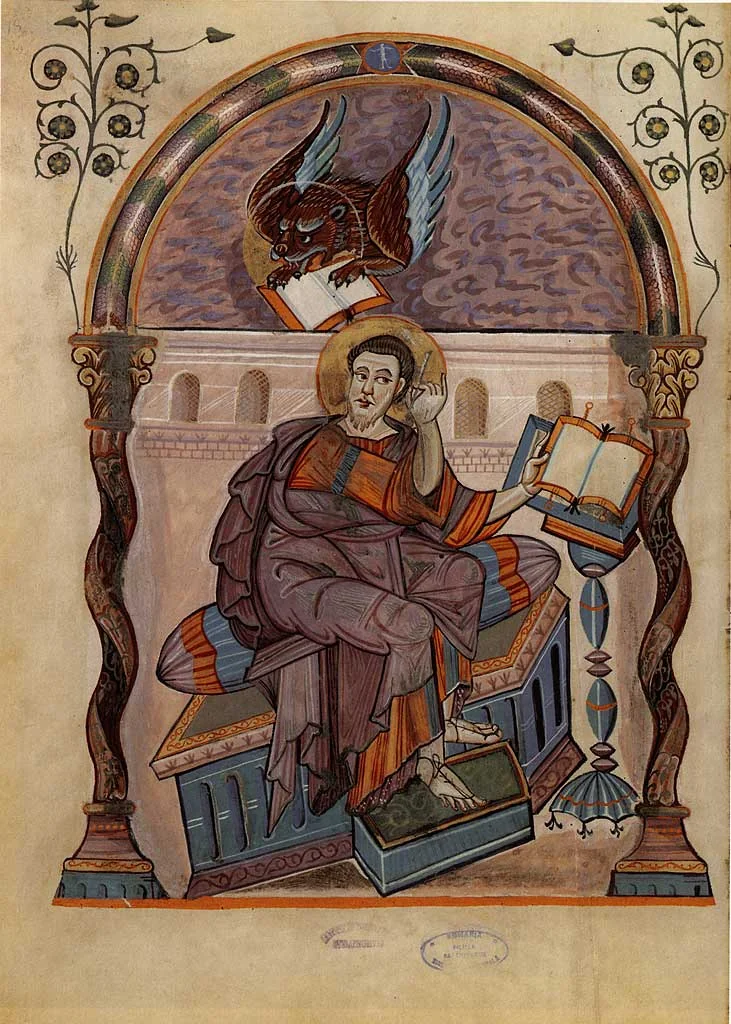
Image from Wikipedia
Image from Wikipedia
Markus (Evangelist) – The Name Behind the Oldest Gospel and the Symbol of the Lion
An Evangelical Author Between Tradition, Text History, and Cultural Impact
Markus is regarded in early church tradition as the author of the probably oldest of the four canonical gospels. The evangelist does not mention his name in the text itself; the designation "Markus" is a later attribution and a scholarly convention. This very tension between tradition and historical classification makes the figure so intriguing to this day: Markus represents not a classic portrait of an artist, but a central source text of Christianity and a narrative style that intertwines faith, memory, and literary form. ([domradio.de](https://www.domradio.de/person/markus-evangelist?utm_source=openai))
Biographical Context: Who is Markus Anyway?
Tradition connects Markus with early Christianity and identifies him as a student of Peter. In older church traditions, he is also mentioned as a companion of Paul, although modern exegesis distinguishes between the Paul companion Markus and the author of the Gospel of Mark. This leaves his biography intentionally open from today's perspective: What is historically secured, what has been embellished legendarily, and what is literary attribution are strictly separated in scholarly research. ([domradio.de](https://www.domradio.de/person/markus-evangelist?utm_source=openai))
His name itself is also revealing. Markus, or Marcus, is not a Jewish name, but a Roman one. For this reason, scholarly literature indicates that the use of the name "Markus" does not automatically adopt the early church biography of Markus, but primarily serves as a practical designation for the author of the Gospel. This conceptual precision is essential to a serious historical consideration. ([domradio.de](https://www.domradio.de/person/markus-evangelist?utm_source=openai))
The Gospel of Mark as a Literary Breakthrough
The actual "breakthrough" of Markus lies not in a career in the modern sense but in the impact of his gospel. In church tradition, he was viewed as the author of the oldest gospel; modern biblical research treats the Gospel of Mark as a key text for the synoptic problem and for the literary development of the Jesus tradition. Its narrative condensation, concise style, and dramatic progression through conflict, mystery, and passion have made the work a foundation of New Testament tradition. ([domradio.de](https://www.domradio.de/person/markus-evangelist?utm_source=openai))
From a cultural-historical perspective, the Gospel of Mark is a text with enormous resonance. It has shaped liturgy, preaching, interpretation, and artistic representation for centuries. Where names stand for works, motifs, and cycles in music history, Markus here represents a canonical text body that has inspired countless musical settings, passions, and spiritual compositions. Its significance extends far beyond biblical scholarship into European cultural and music history. ([resonando.bandcamp.com](https://resonando.bandcamp.com/album/markuspassion?utm_source=openai))
Tradition, Places of Influence, and Church Legends
Later legends attribute different places of influence to Markus. Among others, Aquileia and Loreto are mentioned, as well as the transfer of his relics from Alexandria to Venice and to Reichenau. Such layers of tradition demonstrate how deeply the figure of Markus has been embedded in the memory culture of the church: From an evangelist, he became a saint, and from a text author, a distinguishing reference point for entire communities and cities. ([domradio.de](https://www.domradio.de/person/markus-evangelist?utm_source=openai))
The traditional origin story is also notable. According to church tradition, Markus is said to have been born as Levit Johannes Markus and to be the son of Maria, in whose house early Christians met. This information stems from ancient Christian tradition and is not easily read as biographical certainty in scholarly research, but it belongs to the classic interpretative horizon of the figure. ([heiligenlexikon.de](https://www.heiligenlexikon.de/BiographienM/Markus.htm?utm_source=openai))
Symbolism of the Lion of Markus
The symbol of the evangelist is the Lion of Markus. In Christian iconography, the lion stands for strength, dignity, and presence; in the case of Markus, it also indicates the special position of his gospel within the Four Gospel tradition. Such symbols are more than decorative signs: They structure perception, piety, and iconographic memory. The Lion of Markus remains a strong visual shorthand for the Gospel of Mark and its cultural legacy to this day. ([domradio.de](https://www.domradio.de/person/markus-evangelist?utm_source=openai))
Discography, Hits, and Charts: Another Kind of Influence History
Strictly speaking, Markus as an evangelist does not possess a discography, no hit singles, and no chart placements. Nevertheless, his text has produced an impact that in music history recalls the presence of great reference works: The Gospel of Mark has served as a template for passions, oratorios, and spiritual compositions that transform his narrative into sound. It is precisely this musical reception that makes the evangelist one of the most enduring figures in European cultural history. ([resonando.bandcamp.com](https://resonando.bandcamp.com/album/markuspassion?utm_source=openai))
A particularly tangible example of this enduring impact is provided by contemporary reception in church music. The "Markuspassion" by Nikolaus Matthes has been presented as a new, consciously Bach-like passion in recent times, highlighted in the music press. Such projects demonstrate that the Markus material has not become a museum piece but continues to inspire composers who adapt the biblical text to contemporary performance contexts. ([resonando.bandcamp.com](https://resonando.bandcamp.com/album/markuspassion?utm_source=openai))
Critical Reception and Scholarly Classification
The critical reception of Markus is closely tied to the question of authorship and historical identity. Recent exegesis clearly distinguishes between the early church tradition of Markus and the literary findings of the gospel. This results in a nuanced picture: Markus is not simply a historically clearly identifiable biography but a name of tradition under which church memory, literary analysis, and theological interpretation overlap. ([domradio.de](https://www.domradio.de/person/markus-evangelist?utm_source=openai))
However, this multifaceted history of reception speaks to the cultural authority of the text. Markus is firmly anchored in liturgy, art, and theology because his gospel is regarded as dense, dynamic, and narratively powerful. Modern research emphasizes the distance between tradition and secure historical knowledge without diminishing the spiritual and cultural impact of the text. On the contrary: The tension between tradition and analysis enhances its intellectual depth. ([domradio.de](https://www.domradio.de/person/markus-evangelist?utm_source=openai))
Cultural Influence: From the Bible to Art, Liturgy, and Music
Markus is one of those figures whose influence cannot be measured through a classic work biography but through centuries of reception. His gospel shapes readings, sermons, and theological debates; his symbol, the lion, appears in artworks, church spaces, and manuscripts. Particularly in music, this impact unfolds impressively, as biblical passion narratives are repeatedly set to music, interpreted, and performed anew. ([resonando.bandcamp.com](https://resonando.bandcamp.com/album/markuspassion?utm_source=openai))
For this reason, Markus remains a name with extraordinary cultural reach. He does not represent pop culture in the narrow sense but rather a text and tradition center that has shaped musical, visual, and liturgical forms over generations. Engaging with Markus means encountering a source text of the Christian tradition and simultaneously a lasting motor of cultural production. ([heiligenlexikon.de](https://www.heiligenlexikon.de/BiographienM/Markus.htm?utm_source=openai))
Conclusion: Why Markus Continues to Fascinate Today
Markus fascinates because he stands at the intersection of tradition, literature, and cultural history. As a name for the evangelist, he consolidates early Christian tradition, scholarly debate, and an extraordinary history of reception that extends into the present. His Gospel of Mark remains a key text that uniquely connects faith, narrative art, and cultural impact. ([domradio.de](https://www.domradio.de/person/markus-evangelist?utm_source=openai))
Those who wish to understand Markus discover not just a biblical figure but one of the most influential textual names in European intellectual history. His brilliance continues to thrive particularly in music, art, and liturgy. It is worth repeatedly reading, hearing, and experiencing this origin in all its cultural depth. ([resonando.bandcamp.com](https://resonando.bandcamp.com/album/markuspassion?utm_source=openai))
Official Channels of Markus (Evangelist):
- Instagram: No official profile found
- Facebook: No official profile found
- YouTube: No official profile found
- Spotify: No official profile found
- TikTok: No official profile found