
Lisa Graf
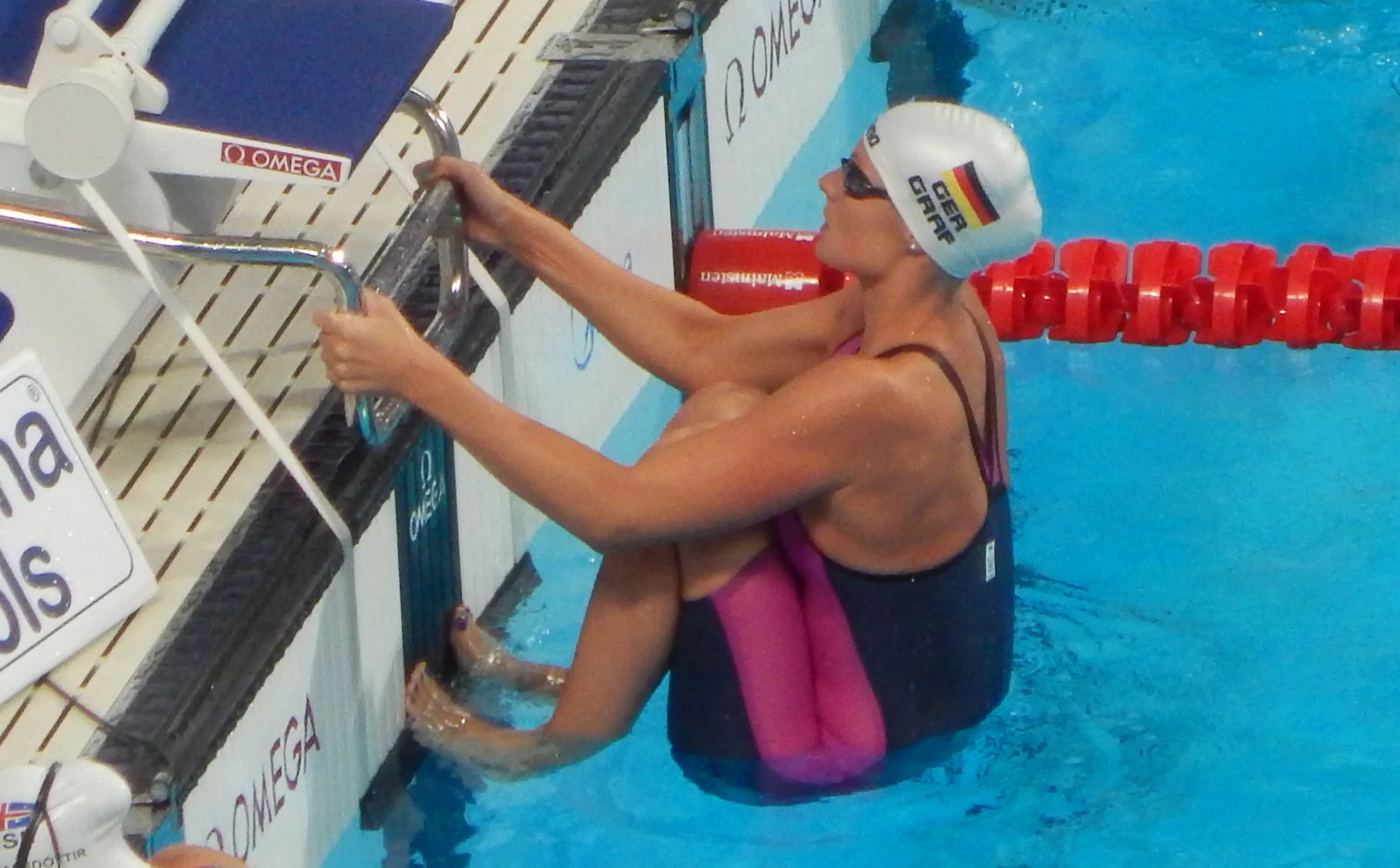
Image from Wikipedia
Image from Wikipedia
Lisa Graf – Backstroke Swimmer with Record Pace, Posture, and Impact
From the Leipzig Pool to the International Stage: How Lisa Graf Became a Defining German Backstroke Specialist through Technique, Discipline, and Mental Strength
Lisa Graf, born on November 13, 1992, in Leipzig, is one of the prominent faces of German swimming in the 2010s. As a backstroke specialist, she combined efficient water position, high frequency, and precise underwater management into a style that made her an Olympic participant in 2016 and a European champion in the medley relay in 2012. There is no musical career for her – yet her athletic journey reads like a score of tempo, timing, and rhythm: cleanly structured, intelligently arranged, culminating in an impressive crescendo in the form of a German record over 200 meters backstroke in 2017. Following health complications from a COVID-19 infection, she ended her competitive career in 2021 – leaving a lasting impact on technical ideals and training culture in German backstroke swimming.
Early Years in Leipzig: Foundations of Technique, Artistic Development in the Water
In Leipzig's youth system, Graf honed her profile early: reactive start phase, stable head position, and rhythmic leg movement formed the basis of her artistic development as an athlete. Age group records in sprint events signaled her potential, but the true character of her musical journey in the pool – interpreted as an athletic career – was shaped by long-term work on pull length, pressure phase, and turns. This focus on composition and arrangement in training, such as the coordination of dolphin kicks after the push-off, became the hallmark of the later backstroke specialist.
Departure to Berlin: SG Neukölln and the Fine-Tuning of Stage Presence
In 2012, Graf moved to SG Neukölln Berlin. The club's framework with a strong performance structure provided the ideal production environment: periodized training cycles, video analysis for fine-tuning hand positions during the pull phase, and targeted lactate management for the 200-meter discipline. In Berlin, she gained stage presence – understood as a confident presentation from warm-up to finish touching. The move made her a visible representative of the capital's program in German backstroke swimming and led to stable final and semi-final placements at international championships.
European Champion 2012: Team Dynamics as a Creative Collective
With the 4×100 m medley relay, Graf won gold at the 2012 European Championships in Debrecen – a signal of the strength of German backstroke technique in relay format. The relay is viewed in competitive sports like an ensemble: each segment brings its own "sound". Graf's back leg represented a balance between efficient frequency and economical water position. This collective element underscored her authority that extended beyond individual races, sustainably strengthening national relay competence.
Rio 2016: Olympic Stage, Semi-Final, and the Drama of the 200-Meter Race
The Olympic appearance in Rio de Janeiro 2016 marked a career highlight: In the 200-meter backstroke, Graf reached the semi-final and ultimately placed 13th. The 200-meter race demands dramatic competence – controlled opening, progressive middle section, precisely timed final sprint. Graf showcased in Rio the race architecture that secured her international reputation: measured load management, decisive underwater phases, constant line leading in the back distance.
German Record 2017: The Crescendo of Performance Curve
On June 18, 2017, Graf crowned her musical career in the pool with a national sensation: 2:07.63 minutes over 200 meters backstroke, a German record. In the language of training methodology, this meant the perfect transfer of technical parameters into competitive efficiency: increased effectiveness per stroke, reduced lateral forces in rotation, cleaner rhythm change on the last lap. The record underscored her authority within the backstroke scene and served as a benchmark for the subsequent generation.
World and European Championships: Consistency in the Extended World Elite
Between 2013 and 2018, Graf established herself in the extended world elite. Fourth places at European Championships, top-10 results at World Championships, and significant roles in medley relays speak to her consistent musical quality – transferred to athletic vocabulary: recurring proximity to finals, reproducible intermediate times, reliable relay contributions. Her profile as an athlete combined rhythm sense, race tactics, and mental presence.
Race Style and Technique: Fine Motor Skills as Artistic Signature
Graf interpreted backstroke with a combination of calm head position, precise torso rotation, and efficient underwater dolphin kicks. The composition of the race followed a clear arrangement: negative split tendency, controlled frequency increase in the third 50 meters, forced push-off quality at the wall. In the production logic of high-performance sports, she relied on video analysis, strength-endurance coupling, and active recovery – building blocks that determined her "sound color" in the water.
Club, Environment, Mentorship: SG Neukölln as a Label for Development
SG Neukölln acted as the proverbial label that curates and develops talents. In this environment, Graf grew into a style-defining athlete whose training discipline and professional attitude left a lasting impact. The combination of home training facility, federal training center infrastructure, and international exposure during training camps created the authority that defined her career beyond individual medals.
Health Crisis and Career End 2021: Trust through Transparency
After suffering from COVID-19 early in 2021, Graf experienced long-COVID symptoms and missed the Olympic qualification for Tokyo. In May/June 2021, she faced the consequences and ended her competitive sports career. The openness with which she communicated this phase strengthened her credibility and set a precedent for health responsibility in elite sports – an aspect of trustworthiness that extends beyond times and records.
Performance Record instead of Discography: Results, Personal Bests, Milestones
As an athlete, Graf naturally does not have a discography. Her "tracklist" is a performance record: Olympic semi-final 2016 over 200 back; European gold 2012 in the medley relay; German record 2017; multiple European final placements and world top placements. This chronicle forms the documented oeuvre of her musical career in the water – a series of performances reflected in records, placements, and personal bests.
Cultural Influence: Role Model for Technique, Resilience, and Youth Development
Graf shaped the image of the modern German backstroke specialist: technically aware, mentally focused, communicatively clear. Her record and European performances became a reference framework for young female athletes. At the same time, her handling of setbacks – from qualification pressure to a health crisis – demonstrated a professional resilience that offers guidance to young athletes. In the cultural memory of German swimming, her name remains associated with the 200-meter backstroke aesthetics of the 2010s.
Conclusion: Why Lisa Graf Remains – Even After Retirement
Lisa Graf combined athletic precision, sustainable artistic development in terms of technical design, and clear stage presence at major events. Her German record from 2017 and Olympic semi-final participation in 2016 mark the peaks of her dramaturgy in elite sports. Those who want to understand the appeal of backstroke will find in Graf a blueprint: economical water work, smart race tactics, respectful team spirit. Her legacy invites experiences of backstroke live – because when technique, timing, and courage come together, it creates the pull that quiets the stands and amplifies the finishes.
Official Channels of Lisa Graf:
- Instagram: No official profile found
- Facebook: No official profile found
- YouTube: No official profile found
- Spotify: No official profile found
- TikTok: No official profile found
Sources:
- Wikipedia – Lisa Graf
- Team Deutschland – Athlete Profile Lisa Graf
- WELT/dpa – German Record over 200 m Back, June 18, 2017
- Der Tagesspiegel – Interview before the 2017 World Championships
- Swimsportnews – Analysis & Goal Setting 2018
- SG Neukölln – Achievements and Olympic Participation
- Forum – Report on Career End and Long Covid, June 18, 2021
Upcoming Events
Lisa Graf: The Dallmayr Saga – Reading
Reading with Lisa Graf – Dallmayr Novels
Reading with Lisa Graf