
Kurt Eisner
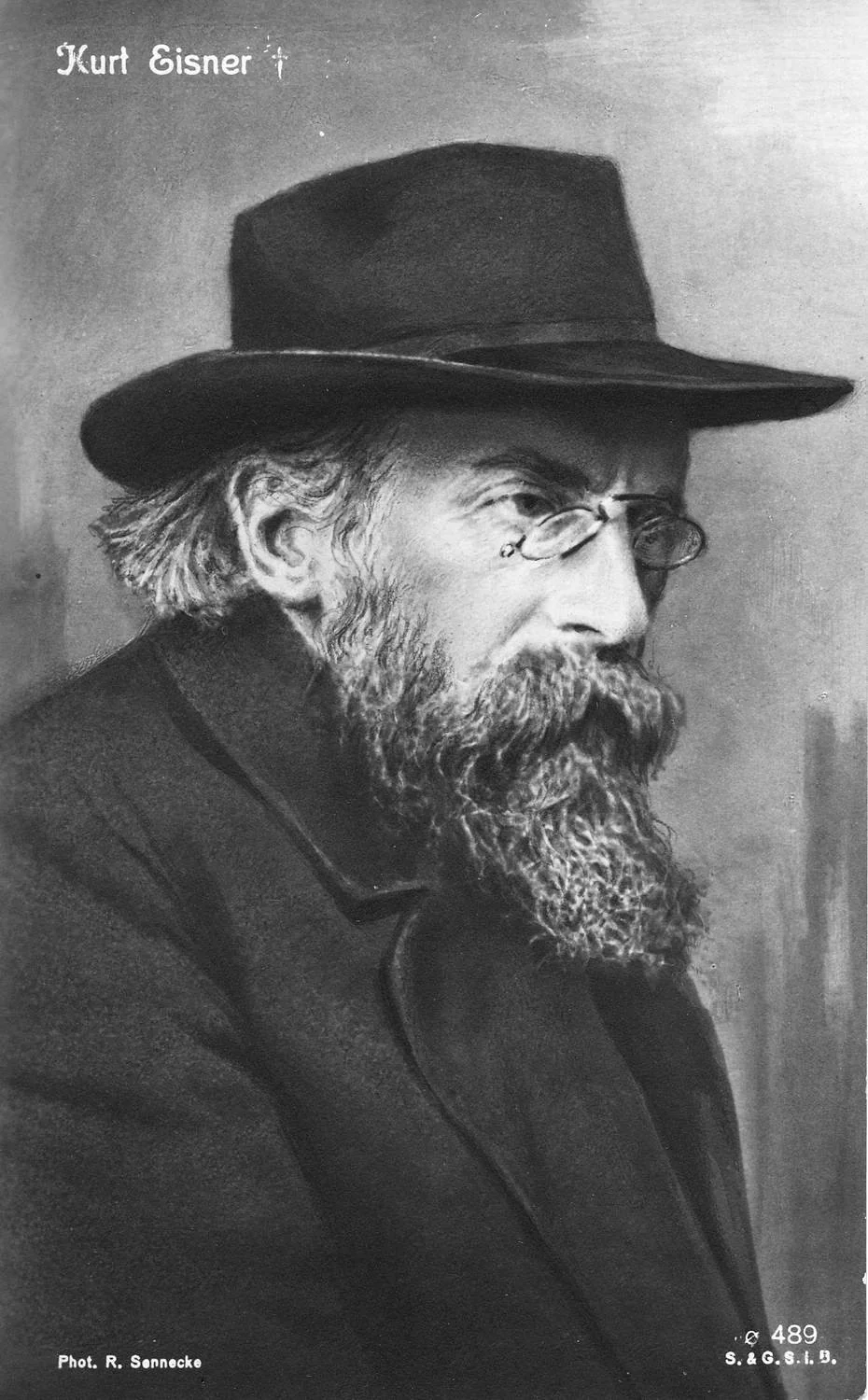
Image from Wikipedia
Image from Wikipedia
Kurt Eisner – Journalist, Writer and Revolutionary of Modern Bavaria
From Berliner Feuilletonist to Leader of the November Revolution: How Kurt Eisner Made History with Words, Attitude, and Political Vision
Kurt Eisner was born on May 14, 1867, in Berlin and was murdered on February 21, 1919, in Munich. As a German journalist, writer, and politician, he influenced the dramatic shift from the Empire to democracy with clear language, pacifist conviction, and unwavering stage presence in the political arena. On November 8, 1918, he declared the Free State of Bavaria in Munich and became the first Minister-President of the new people's state. His artistic development as a critic and author, his music career in the metaphorical sense of public performance and rhetorical performance, as well as his advocacy for democratization, enlightenment, and social justice made him a key figure in German contemporary history.
Even before 1914, Eisner established himself as a perceptive publicist who consistently questioned monarchical dogmas and war enthusiasm. His experience as an editor, columnist, and arranger of debates in the feuilleton shaped an author who created political compositions from facts, conscience, and clear sentences. The reality of industrialized killing during World War I radicalized him into a pacifist, using the public as a resonance space long before social media existed. His short, intense path to the top of Bavaria culminated in a historic solo – and ended in an assassination, the echo of which still permeates the political culture of the country today.
Early Years and Intellectual Formation: The School of Modern Writing
In Berlin, Eisner learned the craft of journalism from the ground up: researching, weighing, and formulating precisely. He wrote theater critiques and political commentaries that functioned like carefully arranged sentences of a score through composition and timing. The editorial office became his stage, the newspaper an instrument with which he tuned public opinion. As a member of the revisionist wing of social democracy, he emphasized practical day-to-day politics and enlightenment – no radical showstopper, but the patient work on the sound of the Republic.
His move to Munich in the first decade of the 20th century opened a new resonance field for him. In the intellectual atmosphere of Schwabing, Eisner combined literary sensibility with political analysis. This artistic development – from critic to author of social change – shows him as a cultural journalist who thinks about politics aesthetically: attitude as style, language as action, public life as a stage.
Editorial Work, Party, Opposition: The School of Responsibility
As a leading editor of the party organ Vorwärts, Eisner shaped the editorial line and tone. He combined report, commentary, and moral point into a coherent arrangement. As the war progressed, his distance from the SPD's peace policy grew: in 1917, he joined the USPD. This decision was not a sudden break but a logical continuation of his experience – journalism as a service to the community, politics as an ethic of responsibility.
In January 1918, he became a central initiator of the Munich strike movement against war and authoritarianism. The state's response was harsh: arrest, pre-trial detention, repeated rejection of requests for release. It was during these months that his political resonance sharpened: those who survive the silence of a cell often find the calmest, clearest voice for the loud public. Upon his release in October 1918, he faced a society at a tipping point – and took on responsibility.
November Revolution 1918: Proclamation, Program, and Political Stage Presence
On November 8, 1918, Eisner proclaimed the Free State of Bavaria in Munich and declared the Wittelsbach dynasty deposed. The dramaturgy of this day was precise: mass demonstration, council conference, government formation. Eisner acted as the conductor of a restless score of the end of the war, hunger, and the energy of political upheaval. His government focused on democratization, transparency, and federal perspectives. Symbolically powerful was his publication of Bavarian diplomatic reports from the pre-war period – an act of political enlightenment that prioritized responsibility over legend.
During this short period of government, ideals, pragmatism, and societal tensions competed for rhythm: council movement, parties, military, administration – a polyphonic score whose tempos were hardly manageable. Nevertheless, demands and measures such as the eight-hour day, strengthening democratic rights, and the impetus for political education marked a clear programmatic sound. Eisner's stage presence was less about pathos than about moral rigor.
Election Defeat, Resignation Intent, and Assassination: The Abrupt Final Chord
The state election in early 1919 brought the USPD only 2.5 percent in Bavaria – a painful point of dissonance. On February 21, 1919, Eisner made his way to the constitutive parliamentary session to announce his resignation and moderate the transition to responsible parliamentary work. In front of the parliamentary building in downtown Munich, he was shot by Anton Graf von Arco auf Valley. The murder not only halted a political career but ended an exemplary artistic development in the sense of political writing and speaking: public life as a work, democracy as composition.
The assassination began a chaotic, violence-laden phase that led to the council republic and ultimately to reaction. Eisner's short, intense activity remained a guiding motif: transparency instead of myth, responsibility instead of glorification, debate instead of slogans. The aftermath dealt with his legacy – often distorted, occasionally defamed – but the fundamental melody of democratic culture remained audible.
Journalistic Work and Reception: Texts as Political Scores
Eisner's discography in the metaphorical sense is his journalistic oeuvre: editorials, essays, speeches, analyses. He wrote with historical consciousness, an economic perspective, and a sense of rhetorical composition. His publications on the causes of the war and the willingness to examine and make official documents accessible to the public exemplify a practice of investigative enlightenment. Critical reception accompanied him throughout: for his supporters, he was an upright, enlightening democrat; for his opponents, a demagogue. This polarization shows how strongly his texts resonated within society.
In the context of cultural history, Eisner's writing can be read as part of modernity: a language that leaves behind the pathos of the 19th century and takes the citizen as a competent addressee seriously. His editorial work demonstrates technical understanding of the structure, dramaturgy, and rhythm of a text – a production in the literal sense, living off the material of facts and finding its form in the arrangement of political arguments.
Style, Genre, and Artistic Signature: Moral Clarity as Aesthetic
Eisner's genre is the political-literary essay; his style the connection of empiricism and ethos. He composed arguments in clear periods, did not hold back on irony, and did not shy away from names or responsibilities. His artistic development leads from theater critic, dissecting performances, to politician, unveiling performances. This shift of the stage – from theater to republic – is characteristic of the upheavals of early modernity, where art and politics interpenetrate.
Technically speaking, Eisner worked with recurring motifs: truth, responsibility, democracy. His production was marked by precise source work and uncompromising publishing practices; his arrangements followed a clear dramaturgy of observation, analysis, conclusion. In a media culture without radio and television, the editorial was his solo – and the mass rally his choir.
Cultural Influence and Memory Culture: From Event to Institution
Eisner's influence extends beyond his brief term in office. The Free State of Bavaria as a political structure, the strengthening of democratic processes, the public acknowledgment of German complicity in the outbreak of war – all of this marks cultural internal reforms that shifted thinking and debate spaces. His experience as a journalist created a model of political communication that seems self-evident today: government as public accountability, politics as a permanent explanation.
In the culture of remembrance, Eisner lives on in exhibitions, memorial plaques, city museum contexts, and historical portals. Institutions of political education, radio documentaries, and scholarly biographies work on his influence in a nuanced way. In this reception, the conflict over the authority of interpretation is also reflected: revolution as liberation or as loss of control? Eisner's work provides a concise answer: democracy is not a state of emergency but the most demanding of all compositions – with citizens as contributors.
Lessons for the Present and Future: The Art of Democratic Communication
From Eisner's artistic career in a metaphorical sense – the masterful performance before masses, the discipline in writing, the precision in argument – lessons can be learned for the present: public language requires courage, moderation, and humanity. Those who explain political processes enhance their legitimacy. Those who name mistakes protect the truth from the kitsch of legends. Those who treat the public as a partner and not as an audience produce trust – the rarest but most important currency of any republic.
His artistic development from critic to creator shows that expertise emerges from practice: editorial conferences, assembly halls, and street rallies are places of learning. In these spaces, Eisner's authority arose – not from office but from attitude. This authority continues to serve as a reference framework for democratic culture in Bavaria and beyond.
Conclusion: Why Kurt Eisner Still Resonates Today
Kurt Eisner captivates because he transformed language into action and lived politics as an ethic of the public. He embodies the artistic idea of a democracy that explains itself and remains committed to truth. His biography condenses into a narrative about responsibility: from the feuilleton to revolution, from editorial to proclamation. Anyone who wishes to understand the political history of Bavaria will hear Eisner's opening – and recognizes in the echo of the present how relevant his program sounds.
Anyone who truly wants to experience the power of his words should visit places of remembrance, view exhibitions, and work with historical sources – an encounter that sharpens perspective and strengthens one’s own democratic stage presence. Experiencing Kurt Eisner live is today only possible through texts, images, and the institutions of memory – yet it is precisely there that his work continues to have an impact.
Official Channels of Kurt Eisner:
- Instagram: No official profile found
- Facebook: No official profile found
- YouTube: No official profile found
- Spotify: No official profile found
- TikTok: No official profile found
Sources:
- Wikipedia – Kurt Eisner
- LeMO – German Historical Museum: Biography of Kurt Eisner
- German Bundestag – November 7, 1918: Kurt Eisner Declares the Free State of Bavaria
- Bavarian Broadcasting Corporation – November 1918: The Bloodless Revolution
- House of Bavarian History – Bavariathek: Kurt Eisner
- Munich City Museum – Revolutionary and State Premier: Kurt Eisner
- Federal Archives – Assassination of Bavarian Minister-President Kurt Eisner (February 21, 1919)