
Katja Berlin
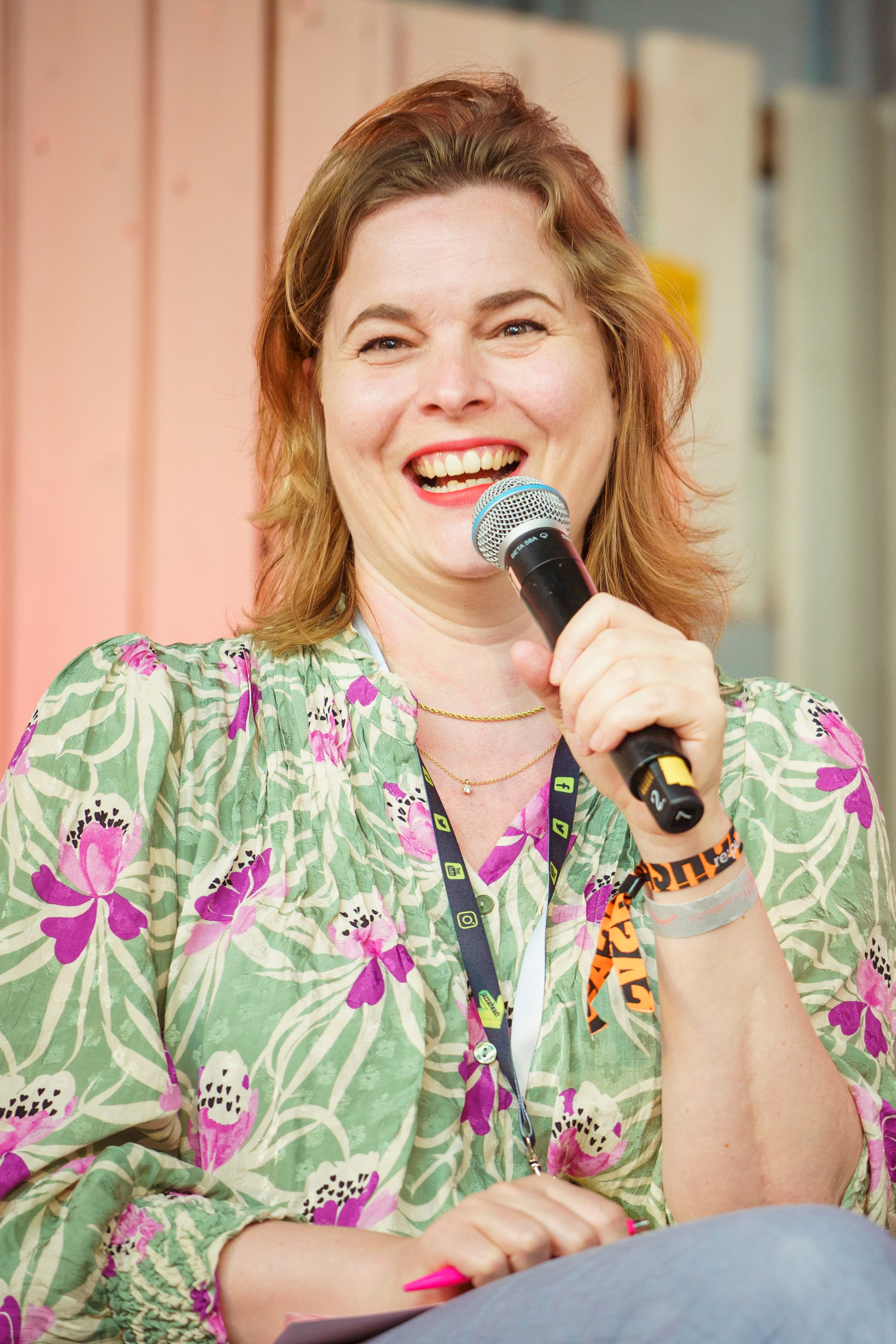
Image from Wikipedia
Image from Wikipedia
Katja Berlin: Satirical Graphics, Clever Punchlines, and a Distinct Voice of the Present
An Author Who Translates Everyday Life into Precise Images
Katja Berlin, born Katja Dittrich on February 27, 1980, in Berlin, has carved out a solid place for herself in the German media landscape as an author, columnist, and podcaster. Her profile is characterized by analytical wit, societal observation, and a visual language that condenses complexity into a pointed core. It is precisely this blend of journalistic sharpness and satirical ease that makes her a significant voice of her generation. (de.wikipedia.org)
Biography: Shaped by Berlin, Academic Background, and the Path to Public Life
Berlin studied media consulting and political science at TU Berlin and FU Berlin. After several years as a PR officer and online editor for various associations and a federal ministry, she transitioned to freelance authorship in 2010. This step marked the beginning of a career that is oriented not toward classical feuilleton routines but towards independence, timing, and a clear position. (de.wikipedia.org)
The origin of her fame lies in the Graphitti blog, which she started in 2010 with Peter Grünlich. There, she developed a form of visual commentary that bundles the everyday, politics, and societal patterns into satirical infographics. From this idea grew a distinctive brand: concise, accessible, humorous, and at the same time analytical. (katjadittrich.de)
The Breakthrough with Satirical Infographics
Her first book, "What We Do When the Elevator Doesn't Come," sold over 250,000 copies according to Ullstein; Wikipedia even cites over 300,000 copies. This early response demonstrated how well Katja Berlin captures the pulse of an audience that seeks not only entertainment but also recognition in graphic sharpness. The success opened the door for more books and solidified her reputation as a specialist in pointed observations of everyday life. (ullstein.de)
The press also responded attentively to her work. The Rheinische Post praised her illustrations as precise observations from German everyday life, while the Tagesspiegel and the Berliner Zeitung described her presence on Twitter as a kind of small stage. Such characterizations show that her work goes far beyond mere gags: it combines humor with social diagnosis. (de.wikipedia.org)
Columns, Podcasts, and the Expansion of Her Format
Since 2015, her graphics column "Cakes of Truth" has been published weekly in Die Zeit, reaching more than two million readers there. In parallel, she wrote columns for Handelsblatt magazine and Berliner Zeitung. Between 2022 and 2024, she also co-hosted the podcast "Fix und Vierzig" with Gunda Windmüller, which addressed topics related to women over 40 in 69 episodes. (de.wikipedia.org)
The development of her career shows a remarkable expansion of expressive forms. From the graphics column emerged a larger cultural narrative about humor, politics, progress, and equality, which she continued in keynotes on stages such as re:publica 2022 and OMR 2023. Thus, Katja Berlin moves between journalism, satire, lecture, and public debate. (katjadittrich.de)
Works, Themes, and Journalistic Handwriting
Content-wise, her books and columns revolve around social injustice, right-wing populism, global warming, women's rights, and the contradictions of everyday life. Her distinctive handwriting becomes particularly visible in her reductions: she translates societal tensions into pie charts that appear playful but carry a distinct political edge. This form of composition is her artistic signature. (katjadittrich.de)
The effect arises from the combination of clarity and irony. Psychologist Stephan Lermer described her graphics as surprising answers to big questions that convey the feeling of understanding and being understood. Exactly therein lies the authority of her work: she does not explain from a position of superiority but brings complex topics into an accessible and intellectually clear form. (de.wikipedia.org)
Discography in a Metaphorical Sense: Books as a Canon of Work
Even though Katja Berlin is not a musician, her body of work can almost be read like a discography: individual titles represent various phases of her artistic development. Her books include "What We Do When the Elevator Doesn't Come," "At Birth," "At the Wedding," "What We Do When the Doorbell Rings," "Felt Germany," "What Women Need to Justify," "News from Men," "What We Learn in School," "What Right-Wing Populists Demand," and "Who Can Live Well on the Minimum Wage." (de.wikipedia.org)
These publications showcase a consistent profile: the mix of satire, everyday observation, and societal analysis remains intact, while topics and emphases change. It is precisely this strength of her "discography" in the literary sense: recognizability without stagnation, format awareness without self-repetition. (de.wikipedia.org)
Current Projects and Public Presence
Currently, Berlin is promoting her book "When an Idea is Deemed Good," announced for February 2026, on her website. Additionally, she is announcing the "Cakes of Truth" tour 2026, a series of events across Germany, Austria, and Switzerland. This shows how consistently she is bringing her work from the printed page to the live space. (katjadittrich.de)
The website also makes it clear that her work continues to thrive on a sharply observed present. Whether humor, politics, progress, or equality: Katja Berlin remains in the mode of commentary, sharpness, and public friction. Her stage is not the concert hall, but the societal panel, the lecture, the column, and the visual punchline. (katjadittrich.de)
Cultural Influence and Public Resonance
The cultural influence of Katja Berlin lies in condensing complex debates into a form that is immediately readable yet lingers long after. Her works function like small satirical arrangements: precisely set, rhythmically constructed, and composed with an effect of insight in mind. Her presence in media such as Die Zeit, Handelsblatt, and Berliner Zeitung underlines her reach in the cultural discourse. (de.wikipedia.org)
Public perception also confirms this position. On her website, Berlin refers to keynotes at re:publica and OMR, which underscores her role as a sought-after voice at the intersection of media, society, and contemporary culture. In this field, she represents a form of intellectuality that is not academically closed off but remains popular, sharp, and open to dialogue. (katjadittrich.de)
Conclusion: Why Katja Berlin Remains So Engaging
Katja Berlin is engaging because she brings societal complexity into a precise, humorous, and instantly recognizable form. Her career demonstrates how observation, sense of style, and linguistic clarity create a distinctive brand. Those who experience her live encounter an author who not only delivers punchlines but sparks thought movements. (de.wikipedia.org)
Official Channels of Katja Berlin:
- Instagram: no official profile found
- Facebook: no official profile found
- YouTube: no official profile found
- Spotify: no official profile found
- TikTok: no official profile found