
Jean-Pierre und Luc Dardenne
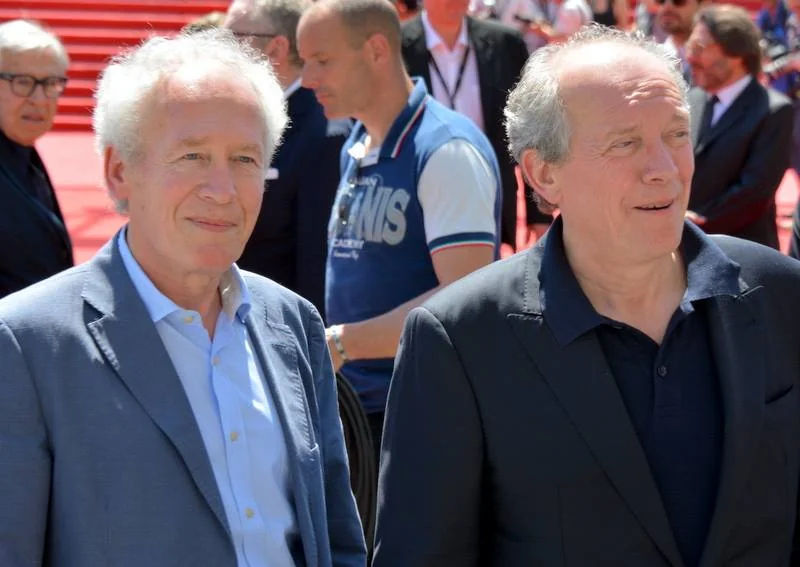
Image from Wikipedia
Image from Wikipedia
Jean-Pierre and Luc Dardenne: Belgian Author Cinema with a Social Conscience
Brothers, Observers, Chroniclers: How the Dardenne Films Shape European Cinema
Jean-Pierre Dardenne, born on April 21, 1951, in Engis, and Luc Dardenne, born on March 10, 1954, in Awirs, are among the most influential filmmakers of European author cinema. The two Belgian brothers have been working together for decades almost exclusively as directors, producers, and screenwriters, establishing themselves internationally with a consistent, socially realistic style. Their films focus on individuals on the fringes of society, moral choices, poverty, work, responsibility, and the fragile dignity of daily life. (britannica.com)
Those who examine the Dardennes' body of work quickly recognize a rare continuity: a cinematic signature emerging from precise observation, rigorous form, and human proximity. Their career does not begin with the glamour of major studios but with documentary work, political interest, and a deep trust in the power of everyday life as a narrative space. It is from this foundation that the authority emerged which makes their films significant touchstones in the history of festivals and cinema to this day. (britannica.com)
The Beginnings: From Documentation to Cinema of Social Reality
The Dardenne brothers began their careers in the 1970s with documentary work and later founded their own production company, Les Films du Fleuve, established in 1994. Even their early projects showed a clear interest in social structures, workers' biographies, and the political and economic conditions of life in Belgium. These roots explain why their later feature films never merely tell stories but rather map social spaces. (lesfilmsdufleuve.be)
Particularly formative was their close connection to their home region around Liège and Seraing, whose industrial landscapes became a recurring setting for their cinema. The Dardennes do not present a picturesque backdrop there but rather a real experiential space where economic pressure, family instability, and the struggle for self-assertion become visible. This grounding made them an unmistakable voice for critics and festival juries early on. (brusselstimes.com)
The International Breakthrough: “La Promesse” and the Path to Cannes
The brothers achieved their international breakthrough with La Promesse in 1996, which made their precise, unobtrusive staging known to a wider audience. From this point on, the Dardennes were perceived as directors who do not illustrate social reality but transform it into a dense, morally charged drama. Their films often feel stark; yet it is this formal restraint that generates emotional power. (festival-cannes.com)
However, the great festival history began in Cannes, where the brothers became the most consistently present authors of the competition. Of their 13 feature films, 11 have been shown at Cannes, 10 of which competed officially; with Rosetta and L’Enfant, they won the Palme d'Or twice, thus joining an extremely exclusive circle. This double accolade made them definitive reference figures in European cinema. (thebulletin.be)
The Brothers' Signature: Camera, Rhythm, Composition
The cinema of the Dardennes is renowned for its physical closeness, mobile camera movements, and focus on bodies in space. Their staging rarely employs ornamental imagery but rather adheres to a strict, almost ascetic form that directs attention to gestures, breath, and decisions. It is precisely in this reduction that their strength lies: the composition of their scenes generates tension from moral uncertainty rather than external spectacle. (bombmagazine.org)
Luc Dardenne himself has described this aesthetic as a result of long collaborative work that shows people in the context of their social conditions without isolating them. This also explains why the films often feel so immediate: they do not rely on distance but rather on an observing closeness that appears neither sentimental nor cold. This balance between empathy and rigor has become a hallmark of the Dardenne brothers. (filmwerkstatt-duesseldorf.de)
The Key Films: From “Rosetta” to “Jeunes mères”
Central works include Rosetta (1999), Le Fils (2002), L’Enfant (2005), Le Gamin au vélo (2011), La Fille inconnue (2016), Le Jeune Ahmed (2019), Tori et Lokita (2022), and Jeunes mères (2025). This filmography demonstrates remarkable consistency in themes and attitudes: youth, precarity, guilt, care, and the pursuit of dignity are recurrently at the center. At the same time, their cinema evolves without losing its moral foundation. (lemonde.fr)
Jeunes mères, screened in competition at Cannes in 2025, continues this line and tells the story of five young women in a home for young mothers. The film won the best screenplay award there in addition to the Ecumenical Prize, highlighting the ongoing relevance of the brothers in international festival cinema. Even in their latest work, the Dardennes combine social observation, precise character direction, and a strong interest in collective fate. (focusonbelgium.be)
Successes, Awards, and Critical Reception
The Dardenne brothers are among the most awarded auteur filmmakers in Europe. In addition to their two Palme d'Or awards for Rosetta and L’Enfant, they have received numerous other accolades at Cannes, and their films have repeatedly been highlighted as exemplary of uncompromising social-realist cinema. Critics regularly emphasize their ability to illuminate great moral questions in seemingly unremarkable situations. (lesfilmsdufleuve.be)
Outside of Cannes, their works have also garnered significant attention. Le Gamin au vélo was described as a stylistic opening with a somewhat brighter tone and greater fairy-tale quality, without losing its social urgency. Tori et Lokita and Jeunes mères demonstrate how consistently the brothers continue to focus on social margins, migration, responsibility, and fragile family structures, even after decades. (fandango.com)
Cultural Influence: Why the Dardennes Are Important Beyond Belgium
The cultural influence of the Dardenne brothers extends far beyond Belgian cinema because they have developed a universal cinematic language for social reality. Their works inspire generations of filmmakers who see in their reduction, closeness to non-heroic figures, and moral openness a model for serious auteur cinema. The regular screenings of their films at Cannes cemented their status as an international reference. (audiovisuel.cfwb.be)
Notably, their works never feel like mere case studies. Despite all the social sharpness, an emotional core always remains: the search for help, for responsibility, for a way out of powerlessness. It is precisely this connection between political perspective and human warmth that keeps the Dardenne brothers relevant over time. (brusselstimes.com)
Conclusion: A Cinema of Precision That Resonates Deeply
Jean-Pierre and Luc Dardenne stand for a cinema that avoids effects yet lingers long after viewing. Their films are rigorously constructed, emotionally precise, and socially alert; they transform the everyday into drama and observation into insight. Those who wish to experience European author cinema in its most concentrated form find one of the most important addresses of the present with them. (lesfilmsdufleuve.be)
Precisely because their films remain so close to real-life situations, they often feel more immediate in cinema than grand speculative narratives. Jean-Pierre and Luc Dardenne are therefore not directors for quick effects, but for sustainable experience. Those who witness their work live on screen encounter a cinema that does not comment on social reality but makes it palpable. (bombmagazine.org)
Fans' Voices
No official social media profile found.
Official Channels of Jean-Pierre and Luc Dardenne:
- Instagram: no official profile found
- Facebook: no official profile found
- YouTube: no official profile found
- Spotify: no official profile found
- TikTok: no official profile found
Sources:
- Wikipedia – Jean-Pierre and Luc Dardenne
- Britannica – Dardenne brothers
- Les Films du Fleuve – Les frères Dardenne
- Festival de Cannes – The films of the Official Selection 2025
- Focus on Belgium – Screenplay Prize at the 2025 Cannes Film Festival
- The Brussels Times – Roll camera, cue grit: The Dardenne brothers keep it real
- The Bulletin – Belgium’s Dardenne brothers in running for third Palme d’Or at Cannes Film Festival
- Le Monde – Cannes 2025: dans « Jeunes mères »...
- Wikipedia/Encyclopedia – Young Mothers
- Wikipedia/Encyclopedia – Jeunes mères – Young Mothers
Upcoming Events
Young Mothers - Young Mothers
Young Mothers - Jeunes Mères
Young Mothers