
Jan Haft
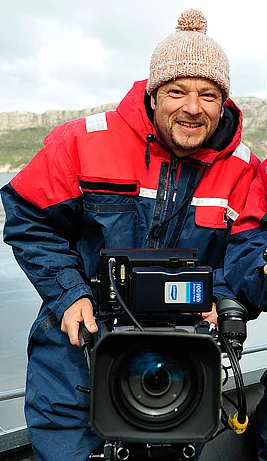
Image from Wikipedia
Image from Wikipedia
Jan Haft – The Award-Winning Nature Filmmaker Who Makes Our Local Wilderness Narratable Again
From Flower Meadows to Raised Bogs: How Jan Haft Brings the Nature on Our Doorstep to the Cinema with Cinematic Precision and Poetic Imagery
Jan Michael Haft, born in 1967 in Munich, is considered one of the most influential nature and wildlife filmmakers in the German-speaking world. His award-winning documentaries combine scientific accuracy with a cinematographic aesthetic that makes the invisible visible and sharpens the understanding of ecological connections. With works such as “The Green Wonder – Our Forest,” “Magic of the Bogs,” “The Meadow – A Paradise Next Door,” and “Home Nature,” he established the local landscape as a film subject of international significance. In addition to his film and TV productions, Haft has published highly regarded books and is dedicated to nature and environmental education as a producer and director through his company Nautilusfilm, founded in 1996.
Biography: Years of Study, Artistic Development, and the Path to Nature Film
Fascinated early on by the local flora and fauna, Jan Haft served his civil service in nature conservation and studied geology, paleontology, and biology at the Technical University of Munich and the University of Würzburg. His solid scientific training continues to shape his artistic development today: His films resemble precise field research using cinematic means—a fusion of field experience, artistic intuition, and documentary diligence. In the 1990s, he gained experience as an assistant in wildlife film productions and developed a style that consistently combines observation, patience, and technical innovation.
Company Formation: Nautilusfilm as a Creative Home
In 1996, Haft founded his production company, now operating as Nautilusfilm GmbH since 2001, together with producer Melanie Haft. From Bavaria, the team developed a stylistically defining visual language that particularly focuses on local habitats—forests, bogs, meadows, and lake landscapes. In co-production with public broadcasters and cultural partners, cinema and television formats were created that received widespread recognition across Europe and won numerous awards. Nautilusfilm stands for high-quality production, careful arrangement of sound and music, and a sustainable production method with great respect for ecosystems.
Breakthrough in Cinema: “The Green Wonder,” “Magic of the Bogs,” and “The Meadow”
With “The Green Wonder – Our Forest” (theatrical release: September 13, 2012), Haft achieved a public-friendly cinematic approach to the forest ecosystem. Six years of filming, large and macro shots, time-lapses, and elaborate arrangements showcase the interplay of biodiversity, seasons, and ecological rhythms. “Magic of the Bogs” deepened the view into a myth-laden habitat and combined poetic nature imagery with scientific clarity. In 2019, “The Meadow – A Paradise Next Door” followed, a plea for species-rich flower meadows and against their impoverishment: The film reached a broad cinema audience in the German-speaking world, received awards on the festival circuit, and was made accessible to millions in TV broadcasts.
“Home Nature”: A Panorama of Habitats as a Chronicle of the Present
“Home Nature” (theatrical release: July 2021) brings together Haft’s long-standing themes into a narrative overview of German nature. From coasts and river meadows to low mountain ranges and the Alps, the film, supported by a distinctive narration, indicates the vulnerability of our ecosystems and the necessity of smart protection strategies. Critics praised the cinematic composition, the dramatic condensation, and the balance of wonder, scientific context, and environmental relevance. The film connects to Haft’s books “The Meadow” (2019), “Home Nature” (2021), “Wilderness” (2023), and “Our Forests” (2024/2025), which literarily accompany his film work.
Cinematic Signature: Technique, Composition, and Production
Haft’s artistic development is based on a characteristic toolkit: slow motion and time-lapse, macro and specialty optics, drone and slider movements, as well as elaborately designed sound and music dramaturgies. Many micro-processes—such as insect behavior or plant developmental cycles—are made visible in studio time-lapses or controlled macro setups, without losing the documentary core. The composition aims to emphasize ecological interactions in the arrangement: images are not only beautiful but also narratively charged; they explain. In production, Haft regularly collaborates with public editorial offices and consolidates camera, sound, and post-production competencies in his team.
Music, Sound, and Rhythm: Sound Design as a Narrative Engine
The sound of Haft's nature films features electronic and acoustic textures that capture the flow of movement and rhythm of the images. Collaborations with artists like Dominik Eulberg connect nature and techno culture without smoothing over the documentary claim. A 4/4 pulse often structures sequences that—despite a nature theme—develop a club-like energy, creating an unusual, modern closeness between film, composition, and nature experience. This arrangement anchors the films in contemporary cultural discourse and opens them up for a younger audience.
Awards, Reception, and Cultural Impact
Jan Haft's works have achieved top resonance at nature film festivals and in specialized media for years. For “The Meadow – A Paradise Next Door,” high visitor numbers, festival awards, and strong TV ratings are documented; “The Green Wonder – Our Forest” received the “valuable” rating from the German Film Review (FBW) and was praised in reviews for its visual and scientific excellence. The authority of his oeuvre stems from consistent quality, scientific consultation, precise field work, and a distinctive visual dramaturgy. Culturally, the films have acted as a hinge between natural science, environmental ethics, and aesthetic modernity: they shape the public image of biodiversity, renaturation, forest and bog ecology, and sustainable agriculture.
Current Projects (2024–2026): TV Events and Festival Successes
Recently, Haft has maintained a high production density. The TV documentary series “Our Forests” won numerous awards in the international festival scene in 2024/2025, emphasizing the goal of narrating forest ecology anew. With “Diving into the Deep Blue” (production year 2025, 2×50 min.), Haft continues his water project, combining underwater cinematography, geological context, and behavioral studies into a dense, audiovisually impressive narrative about lakes in southern and northern Germany. Regular broadcast dates and event notices show that Haft's cinematic expertise remains present in public discourse, accompanied by readings, panels, and film discussions that promote knowledge transfer and audience dialogue.
Filmography (Selection) and Media Extensions
– The Green Wonder – Our Forest (2012, cinema): a milestone in local nature documentation, winner of multiple awards and widely received.
– Magic of the Bogs (2015, cinema): a poetic exploration of a mystical habitat that performs ecologically central functions.
– The Meadow – A Paradise Next Door (2019, cinema/TV): a cinematic plea for species-rich cultural landscapes, with strong audience resonance.
– Home Nature (2021, cinema): a comprehensive journey through German habitats; a critical examination of biodiversity loss and land use.
– Quite Wild Bees (2021/2022, TV): a historical-ecological perspective on the Dark Honeybee and its forest ecology.
– Diving into the Deep Blue (2025, TV, 2×50 min.): underwater and shoreline ecologies of southern and northern German lakes in UHD aesthetics.
Also included are TV series, short formats, and educational offerings that are extended online and accompanied by educational materials.
Style Analysis: Genre, Composition, and Dramaturgy
Haft's genre is the nature documentary—but his compositions often follow musical principles: thematic motifs (species, processes, habitats) are varied, contrasted, and bundled into movements. Editing and camera movement create a visual legato, while time-lapse and macro passages act as solos. The dramatic curve intertwines cognitive curiosity (insight) with affective attachment (empathy for habitats). This artistic development gives the films a strong stage presence—in cinemas, on TV, and in lecture halls—and makes complex ecological connections sensually accessible.
Education, Books, and Credibility
Alongside the films, Haft's books reach a wide audience. “The Meadow” (2019), “Home Nature” (2021), “Wilderness” (2023), and “Our Forests” (2024/2025) translate research status, field observations, and societal debates into readable, visually impactful essays. These works meet the EEAT criteria in a special way: experience (field work, long-term projects), expertise (biological and geological context), authority (festival awards, publishing partners, co-productions with broadcasters), and trustworthiness (verifiable facts, disclosed production methods). The connection of film, book, and educational materials creates a sustainable impact in the educational sector.
Impact on the Public: From Art House Chart Resonance to Conservation
Haft's films have measurably contributed to popularizing nature-friendly meadows, bogs, and forests. Resonances in art house charts, school cinema weeks, TV premieres, and online platforms document their reach. More crucial is the cultural influence: the perception of nature is shifting away from exoticism towards the “familiar.” The meadow next door, the low woodland around the corner, the bog ditch at the edge of town—they are understood as complex habitats. This narrative perspective strengthens local conservation initiatives, municipal nature conservation policy, and the understanding of renaturation as a cultural task.
Voices of the Fans
The reactions from fans clearly indicate: Jan Haft fascinates people worldwide. On Facebook, one says: “I've never been this close to the animals of our homeland—these images stick in my mind.” A YouTube comment sums it up: “Haft's films are cinema for nature—touching, educational, brilliantly photographed.” And another voice on Facebook describes the effect: “Since ‘The Meadow,’ I look at every fallow land differently—I suddenly see life, rhythm, connections.”
Conclusion: Why Jan Haft Should Be Seen Now
Jan Haft turns nature into an experience—not as a postcard idyll, but as a living network of relationships. His films combine artistic arrangement, scientific precision, and gripping dramaturgy into a contemporary eco-cinema that brings together knowledge, wonder, and responsibility. Anyone wanting to understand why biodiversity is the foundation of our culture will find a compelling, inspiring answer in Haft's work. Recommendation: Experience the films in cinemas or at a screening with film discussions—it changes the way you view the landscape in which we live.
Official Channels of Jan Haft:
- Instagram: No official profile found
- Facebook: https://www.facebook.com/nautilusfilmdeutschland
- YouTube: https://www.youtube.com/@nautilusfilm
- Spotify: No official profile found
- TikTok: No official profile found
Sources:
- Nautilusfilm – Official Website
- Nautilusfilm – Project Page "Diving into the Deep Blue" (2025)
- Wikipedia – Jan Haft
- Wikipedia – “The Meadow – A Paradise Next Door”
- German Wildlife Foundation – Film Page "The Meadow"
- Programmkino – “Home Nature” (Review & Data)
- ZDF Studios – “Quite Wild Bees”
- FBW – “The Green Wonder – Our Forest” (Rated "Valuable")
- Penguin Random House – Author Page Jan Haft
- Wikipedia: Image and Text Source