
Igor Levit
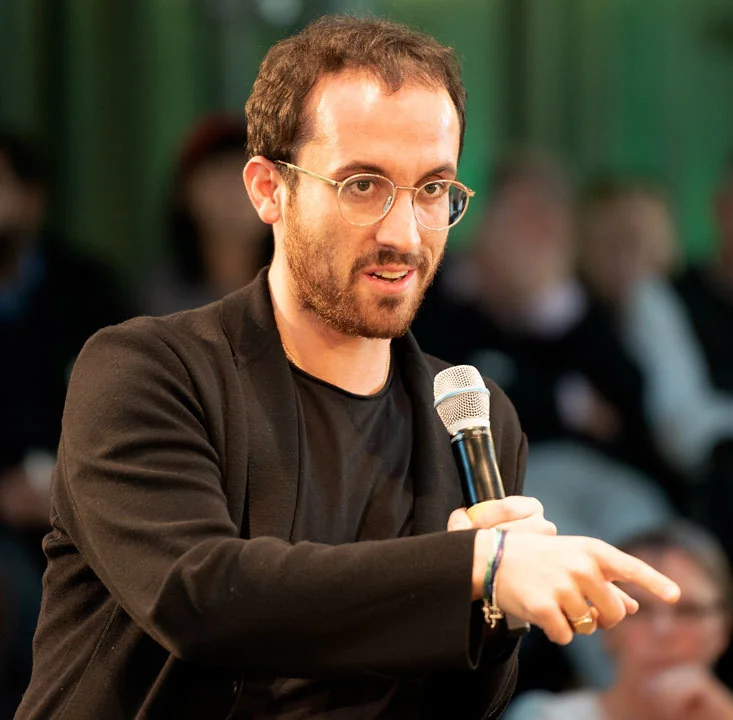
Image from Wikipedia
Image from Wikipedia
Igor Levit – Pianist, Citizen, European: The Uncompromising Sound Thinker of Our Time
From the Concert Hall to Societal Debate: Why Igor Levit is Revitalizing Classical Music
Igor Levit was born on March 10, 1987, in then-Soviet Gorky (now Nizhny Novgorod), and moved to Germany at an early age. His musical career began early; the pianist's stage presence and artistic development are rooted in training with influential teachers in Salzburg and Hannover. Levit combines uncompromising knowledge of the works with a humanistic attitude – his interpretations of Bach, Beethoven, Shostakovich, and Liszt are musical essays on freedom, responsibility, and expression. As a professor in Hannover and as Artistic Co-Director of the Heidelberger Frühling music festival, he shapes the present of piano culture with substance and stance.
Biographical Beginnings: From Prodigy to Reflective Virtuoso
Levit began playing piano at the age of three, receiving lessons from his mother and achieving early successes on local stages before the family moved to Hannover in 1995. Studies at the Mozarteum and at the Hochschule für Musik, Theater und Medien Hannover led him to the master classes of Karl-Heinz Kämmerling, Matti Raekallio, Bernd Goetzke, and Hans Leygraf. Competitions played a significant role in his development early on: in 2004 he won the Hamamatsu International Piano Academy Competition, among others, and in 2005 – as the youngest participant – he took home the silver medal at the Arthur Rubinstein Competition in Tel Aviv. These milestones are less trophies and more stages of an artistic development that combines technical mastery, tonal delicacy, and intellectual interpretative power.
Breakthrough and International Presence: From Beethoven to Global Discourse
His international breakthrough came with a series of exemplary studio albums and cycle evenings that placed Beethoven at the center. In 2019, Levit released his recording of the 32 piano sonatas – a reference recording that earned him the title of Artist of the Year from Gramophone Magazine in 2020. At the same time, he conquered the great concert halls: Musikverein Vienna, Philharmonie Berlin, La Scala, Concertgebouw Amsterdam, Carnegie Hall, and Walt Disney Concert Hall. His music career is marked not only by a concentration of prestigious venues but, above all, by program dramaturgy: Levit combines classical core repertoires with repertoire that opens aesthetic and political horizons.
Music as Civil Society: House Concerts, Awards, Stance
With the onset of the pandemic in 2020, Levit streamed 53 house concerts from his Berlin apartment – a moment of lived solidarity that resonated worldwide. He distilled this experience artistically into the album "Encounter," a program about comfort, collection, and human connectivity. For his artistic and societal work, he has received significant honors: the Gilmore Artist Award (2018), the Gramophone title "Artist of the Year" (2020), the Federal Cross of Merit (2020), and awards for civic engagement. Here, experience and trustworthiness intersect: Levit thinks of music as public art – precise, responsible, and for a diverse audience.
Curator, Teacher, Creator: Heidelberger Frühling and Other Initiatives
Since the 2022/23 season, Levit has been the Artistic Co-Director of the Heidelberger Frühling music festival, actively shaping discourse spaces between tradition and the present. Simultaneously, he initiated the Piano Fest in partnership with the Lucerne Festival, which consolidates pianistic perspectives and empowers younger generations. As a professor in Hannover, he refines a pedagogy that develops technique, stylistics, interpretation, and artistic personality equally – expertise that radiates from the stage and studio back into the educational environment.
Current Projects 2024–2026: Brahms, Mendelssohn, and Monumental Repertoire
In the 2024/25 concert season and beyond, Levit will highlight a repertoire that spans from intimate Mendelssohn to monumental Busoni. A live production of Brahms’ piano concertos (Vienna Philharmonic, Christian Thielemann) was released in October 2024 and is accompanied by solo pieces from Op. 116–119 – a sonic panorama of late romantic piano poetry. In the wake of the events of October 7, 2023, he released "Lieder ohne Worte" (Mendelssohn) as the most personal statement of his discography. His calendar for 2026 includes a recital evening in Washington, D.C., the Busoni concert gig with the Los Angeles Philharmonic, and a recital at Carnegie Hall – programming that connects virtuosity, formal awareness, and contemporary relevance.
Discography at a Glance: From "Life" to "On DSCH"
Levit's discography represents concept albums that combine composition, arrangement, and production into narrative content. Following the late Beethoven sonatas (2013), he released the Bach Partitas (2014) and the triple-stretched variations triptych (2015) consisting of Goldberg Variations, Beethoven's Diabelli Variations, and Rzewski's "The People United Will Never Be Defeated!" – a bridge between baroque architecture, classical innovative spirit, and politically charged variation techniques of the 20th century. In 2018, "Life" formulated an intimate work of grief and remembrance; in 2020, "Encounter" consolidated contemplative sound spaces between Bach/Busoni, Reger, and Feldman. 2021 marked "On DSCH" as a peak work of modern piano literature: Shostakovich's 24 Preludes and Fugues Op. 87 contrasted with Ronald Stevenson's "Passacaglia on DSCH" – two large forms in which Levit shapes structure, color, and tension into a captivating dramaturgy. In 2022, "Tristan" explored the night side of Romanticism and Modernism; in 2023, Mendelssohn's "Lieder ohne Worte" followed, and in 2024, a Brahms release with orchestra and solo pieces.
Critical Reception: Authority through Interpretation, Not Just Technique
The leading specialist press acknowledges Levit as having a rare synthesis of intellectual sharpness, structural clarity, and emotional urgency. The New Yorker portrayed him as a pianist "like no other" – an artist who not only plays but thinks, argues, and takes responsibility. Gramophone Magazine honored the complete Beethoven recording with the title "Artist of the Year," while reviews have praised his dynamic architecture, detailed articulation, and ability to organically breathe long tension arcs. More recent releases – such as the Mendelssohn selection – have been read as a timely gesture: music as a language against fear and exclusion, carried by sound culture and a humanistic signature.
Style, Sound, and Technique: Piano Culture as Language
Levit's playing combines transparent touch, polyrhythmic clarity, and controlled sound density. In Beethoven, he precisely elucidates motivic micro-logic while unfolding formal macro-architecture. In Shostakovich, polyphonies and harmonic breaks shine in clearly contoured layers, while in Liszt and Busoni he balances tonal colors, pedaling, and structural tension so that virtuosity appears as a means of expression rather than an end in itself. Production and recording – often in acoustically differentiated spaces – support this aesthetic through natural depth layering and rich presence of instrumental sound.
Cultural Influence: Between Stage and Public Life
Levit embodies the idea of the "artistic citizen": a musician who curates repertoire, initiates discourse, and contributes to shaping institutions. His house concerts created a global community in 2020; his engagement against anti-Semitism and for democratic values anchors art in public space. In projects such as "On DSCH," it becomes evident how repertoire choice and interpretation can reflect societal issues. As a festival creator and professor, he shifts the boundary between tradition and contemporaneity – not as provocation, but as further development of classical music in the 21st century.
Schedules and Collaborations: Orchestras, Cycles, Large Forms
In the orchestral field, Levit stands out for his programmatic consistency: Prokofiev cycles, the rarely programmed Busoni concerto, and Brahms in partnership with top orchestras and conductors. In recitals, he spans arcs from Schubert D 960 and Schumann op. 23 to Chopin's B minor Sonata and Beethoven's Diabelli Variations – sonically condensed and always present in communication with the audience. Collaborations with leading ensembles and festivals reinforce his status as an authority in the piano scene.
Voices of the Fans
The reactions from fans clearly show: Igor Levit captivates people worldwide. On Instagram, a listener writes: "Your interpretations of Beethoven are pure soul food." A YouTube comment on his official videos emphasizes: "One of the few pianists who unite technique, courage, and humanity in every measure." This resonance reflects how his interpretations connect musical depth with societal relevance.
CONCLUSION: Why Listen to Igor Levit Now?
Because here is a pianist who brings together works, world, and reality. Levit does not just interpret; he musically argues – with sound, form, and spirit. His discography provides reference points for Beethoven, Shostakovich, and beyond; his concert programs set standards in dramaturgy and willingness to take risks. Those who want to experience classical music as a living art will find in his recitals and orchestral evenings a concentrated, deeply human experience. The call is simple: Go, listen – and let yourself be carried away by the energy of this piano playing.
Official Channels of Igor Levit:
- Instagram: https://www.instagram.com/igorpianist/
- Facebook: No official profile found
- YouTube: https://www.youtube.com/user/IgorLevitVEVO
- Spotify: https://open.spotify.com/artist/0japPUWMmW3gxqjSB1VEVL
- TikTok: No official profile found
Sources:
- Igor Levit – Official Website
- Wikipedia – Igor Levit
- Gramophone – Artist of the Year 2020
- The New Yorker – "Igor Levit Is Like No Other Pianist"
- The Guardian – Review of "Lieder ohne Worte," Feb 3, 2024
- Apple Music – Igor Levit (including "Brahms: Piano Concertos & Solo Piano," 2024)
- Klavier-Festival Ruhr – Concert Announcement 2025
- Spotify – Igor Levit (official artist profile)
- X (Twitter) – @igorpianist
- Wikipedia: Image and text source
Upcoming Events
Igor Levit – Piano Recital at Max-Littmann-Saal, Bad Kissingen
Concert by Igor Levit
Dvořák 9 - Symphony Concert
Music Prize of the City of Duisburg 2026
Igor Levit live in Bad Kissingen - Regentenbau Concert 2026