
Henriëtte Bosmans
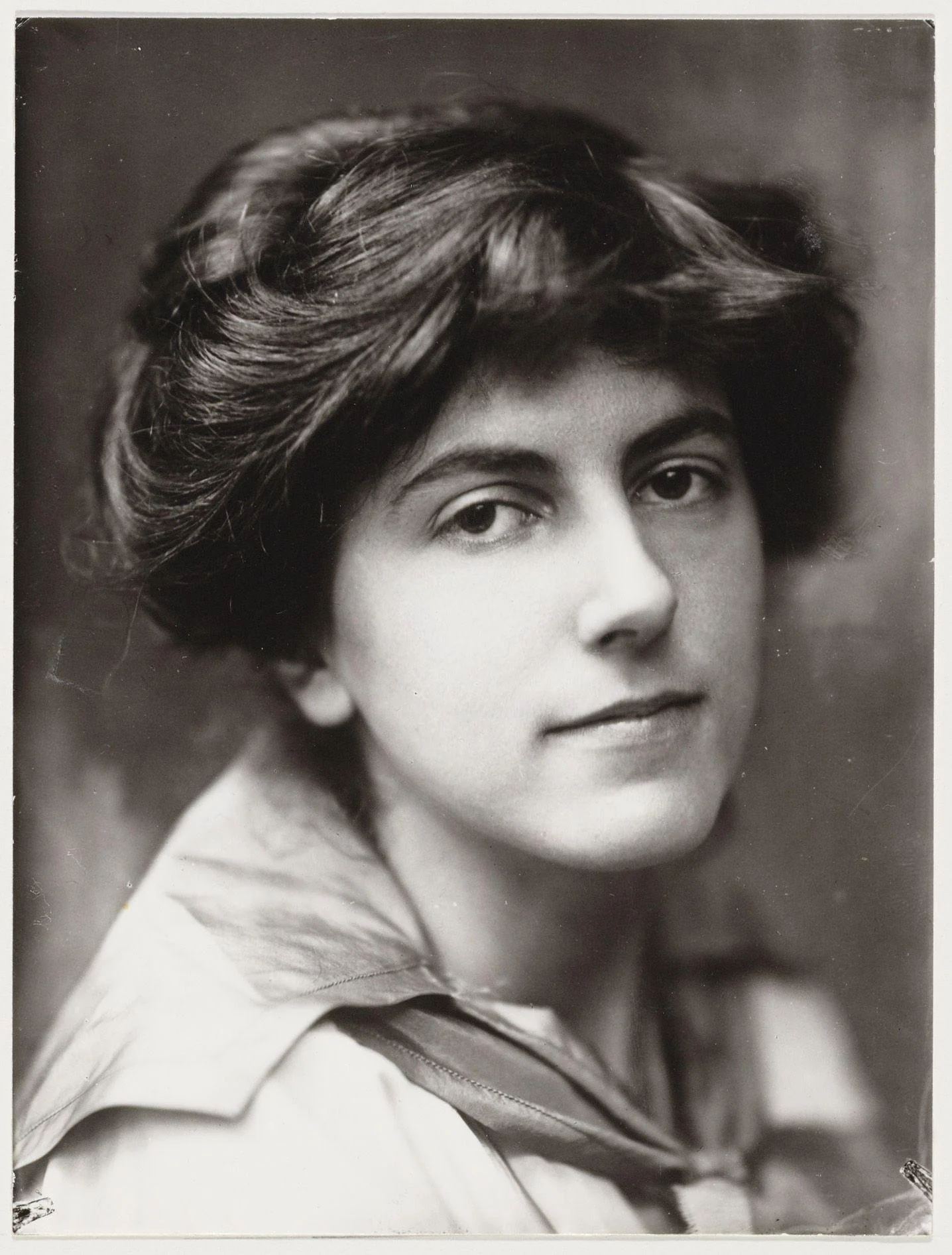
Image from Wikipedia
Image from Wikipedia
Henriëtte Bosmans – The Passionate Voice of Dutch Modernism
A Composer and Pianist between Lyricism, Resistance, and Rediscovery
Henriëtte Hilda Bosmans was one of the most remarkable musical personalities in the Netherlands in the 20th century. Born on December 6, 1895, in Amsterdam, and passing away there on July 2, 1952, she combined artistic sensitivity with remarkable inner strength as both a pianist and composer. Her musical career developed in an environment shaped by familial influences, excellent training, and later by historical threats. ([nieuwgeneco.nl](https://nieuwgeneco.nl/en/about-henriette-bosmans/))
Bosmans today represents a music that oscillates between late Romantic warmth, chamber music precision, and a very personal language of expression. Her works for cello, violin, piano, and orchestra showcase a composer who confidently shapes timbres and never leaves emotional tension to chance. At the same time, her biography tells of an artist who refused to be silenced in a time of political violence. ([nieuwgeneco.nl](https://nieuwgeneco.nl/en/about-henriette-bosmans/))
Early Years in Amsterdam: Music as a Family Legacy
Henriëtte Bosmans' musical journey began in a highly musical household. Her father, Henri Bosmans, was a cellist in the Concertgebouw Orchestra, and her mother, Sara Benedicts, taught piano at the Amsterdam Conservatory for decades. Bosmans received her piano education from her mother and obtained her teaching diploma in piano with honors in Utrecht in 1912. This early combination of pedagogical discipline and instrumental practice profoundly influenced her artistic development. ([nieuwgeneco.nl](https://nieuwgeneco.nl/en/about-henriette-bosmans/))
Her dual talent as both performer and composer became evident early on. The first preserved works were created for piano and chamber ensemble; these include the Drie Klavierstukken from 1914, the Preludes from 1918, and the violin sonata from the same year. Bosmans navigated a stylistic world still deeply rooted in the late Romantic tradition, yet already seeking a personal touch. ([classical-music.com](https://www.classical-music.com/features/composers/henriette-bosmans))
The Breakthrough as a Pianist and Early Compositional Successes
In the 1920s and early 1930s, Bosmans established herself as a sought-after pianist. She regularly performed with the Concertgebouw and collaborated with conductors such as Pierre Monteux, Eduard van Beinum, and Willem Mengelberg. During this phase, her stage presence solidified into the authority that made her exceptional in the Dutch music scene. ([classical-music.com](https://www.classical-music.com/features/composers/henriette-bosmans))
In parallel, her compositional profile gained definition. In 1919, commissioned by cellist Marix Loevensohn, she created her cello sonata, a work of great seriousness and dense musical substance. Close collaboration with instrumentalists was critical for Bosmans; many of her pieces emerged from specific encounters and musical friendships. Thus, her compositions always represented a dialogue with the people for whom she wrote. ([classical-music.com](https://www.classical-music.com/features/composers/henriette-bosmans))
Fate, Loss, and the Dark Years of War
A deep cut marked Bosmans’ life in 1934 when she became engaged to violinist Francis Koene, who died in 1935 from a brain tumor. This loss resonated for a long time and coincided with a phase in which her compositional language also changed. The emotional upheaval and political tensions of that time are reflected in the intensity of many of her works. ([classical-music.com](https://www.classical-music.com/features/composers/henriette-bosmans))
During the German occupation, Bosmans refused to join the Kultuurkamer, which was mandatory for Dutch musicians. Initially, she continued to perform and substituted for foreign pianists who had to cancel their engagements. However, in 1942, she was no longer admitted as a pianist, and her music was banned. She earned a living with private underground concerts, remaining artistically active despite being shut out of the public sphere. ([nieuwgeneco.nl](https://nieuwgeneco.nl/en/about-henriette-bosmans/))
Compositional Language: Lyricism, Concentration, and Emotional Depth
Bosmans' music possesses a distinctive signature often described as lyrical, fluid, and strongly focused on sonic balance. Her works for cello are particularly characteristic, treating the instrument with singing expansiveness and noble warmth. At the same time, her orchestration demonstrates a confident sense of color and form that elevates her works beyond mere salon music. ([jpc.de](https://www.jpc.de/jpcng/cpo/detail/-/art/henriette-bosmans-cellokonzerte-nr-1-2/hnum/11794494))
The tone of her music ranges from intimate chamber music to more dramatic concert repertoire. The Concertstuk for violin and orchestra from 1934 has been described as searching and introspective, bringing Bosmans international recognition beyond the Netherlands. Such works showcase a composer who does not rely on effects but instead on structural tension, melodic precision, and a delicate drama of the instruments. ([classical-music.com](https://www.classical-music.com/features/composers/henriette-bosmans))
Discography, Reissues, and Current Reception
Even decades after her death, interest in Bosmans' work continues to grow. In 2023, Warner Classics released a recording of her Concertstuk, performed by the Royal Concertgebouw Orchestra, Vesko Eschkenazy, and Santtu-Matias Rouvali; the piece had not been played for 70 years. This release reintroduced Bosmans not only as a historical figure but as a living voice in the repertoire. ([warnerclassics.com](https://www.warnerclassics.com/release/henriette-bosmans))
In 2025, another album titled Le Diable dans la nuit followed, focusing on songs and chamber music by Bosmans. The recording was released by Editions Hortus and is part of the Voix Étouffées – Missing Voices series, dedicated to the revival of marginalized or suppressed composers. Included are works like Le Diable dans la nuit, Dit Eiland, and La chanson des marins hâlés, performed by Elizaveta Agrafenina, Dimitri Malignan, and Sarah Bayens. ([donemus.nl](https://donemus.nl/new-cd-with-songs-of-henriette-bosmans/))
Current receptions highlight especially the quality of her orchestration and the emotional clarity of her chamber music. A contemporary review of the cello concertos emphasizes the fluid structure, excellent orchestration, and the richly romantic tone of her music. Meanwhile, initiatives like Forbidden Music Regained anchor Bosmans within the larger context of cultural restitution and European memory culture. ([jpc.de](https://www.jpc.de/jpcng/cpo/detail/-/art/henriette-bosmans-cellokonzerte-nr-1-2/hnum/11794494))
Cultural Influence: An Artist of Resilience
Today, Henriëtte Bosmans is much more than a rediscovered composer. Her name stands for resistance, artistic integrity, and the affirmation of musical individuality in a century marked by persecution. The fact that her works were absent for a long time after the war seems less proportional to their quality makes today's rediscovery all the more significant. ([nieuwgeneco.nl](https://nieuwgeneco.nl/en/about-henriette-bosmans/))
Her relationships with significant musicians such as Frieda Belinfante, Marix Loevensohn, and Francis Koene directly influenced her work. It is precisely the close connection between life and work that makes Bosmans so fascinating for music lovers: Every line of her scores seems nourished by encounter, loss, and artistic self-assertion. The Henriëtte Bosmans Prize for young Dutch composers, named after her, further underscores her lasting significance in music history. ([en.wikipedia.org](https://en.wikipedia.org/wiki/Henri%C3%ABtte_Bosmans))
Conclusion: Why Henriëtte Bosmans Resonates Today
Henriëtte Bosmans fascinates because her music never separates beauty from seriousness. She combines a warm, lyrical sound with historical depth, personal drama, and refined compositional control. Those who listen to her works encounter an artist whose musical career matured under difficult conditions and whose voice should once again be heard with great urgency today. ([nieuwgeneco.nl](https://nieuwgeneco.nl/en/about-henriette-bosmans/))
Especially in a time when the repertoire increasingly seeks forgotten voices, Bosmans seems remarkably present. Her chamber music, concert pieces, and songs offer a distinctive perspective on the 20th century, rewarding live experiences with interpretive depth. Anyone who has the opportunity to experience Bosmans in the concert hall should take it: This music unfolds its full power where sound, presence, and emotion meet directly. ([warnerclassics.com](https://www.warnerclassics.com/release/henriette-bosmans))
Official Channels of Henriëtte Bosmans:
- Instagram: no official profile found
- Facebook: no official profile found
- YouTube: no official profile found
- Spotify: no official profile found
- TikTok: no official profile found
Sources:
- Wikipedia – Henriëtte Bosmans
- Wikipedia (en) – Henriëtte Bosmans
- Nieuw Geneco – About Henriëtte Bosmans
- Classical Music – Henriëtte Bosmans: the composer who bravely took on the Nazis
- Warner Classics – Henriëtte Bosmans: Concertstuk
- Donemus – New CD with Songs of Henriette Bosmans
- Forbidden Music Regained – Impressions: the discovery of Henriette Bosmans
- Klassika – Henriette Hilda Bosmans (1895-1952)
- jpc / cpo – Henriette Bosmans: Cellokonzerte Nr. 1 & 2
- Wikipedia: Image and text source