
Helmut Berger (Schauspieler, 1944)
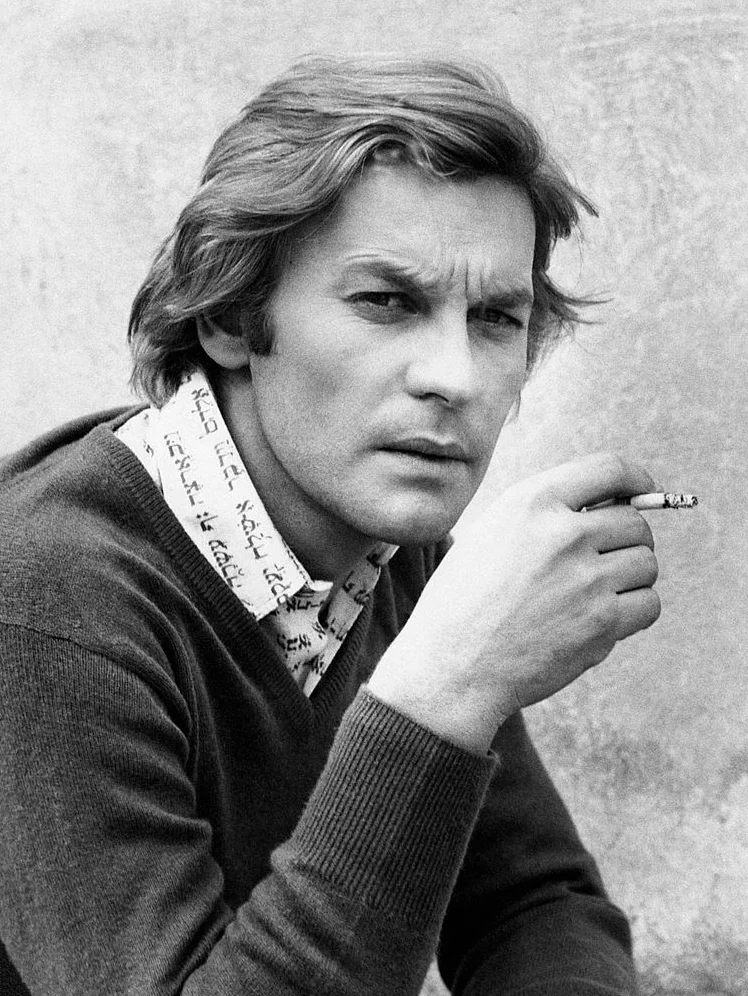
Image from Wikipedia
Image from Wikipedia
Helmut Berger (1944–2023) – Icon of European Cinema
The Beautiful Provocateur: How Helmut Berger Made Film History with Radical Presence and Artistic Freedom
Helmut Berger, born as Helmut Steinberger on May 29, 1944, in Bad Ischl and passed away on May 18, 2023, in Salzburg, shaped the European film culture of the late 1960s and 1970s as an Austrian actor. With magnetic stage presence, uncompromising role choices, and an artistic evolution that broke taboos, he embodied a modern, androgynous star personality. Internationally celebrated for his collaborations with Luchino Visconti, Berger became a symbol of a cinematic era where style, substance, and scandal formed an exciting alliance.
His public image – sexually liberated, glamorous, and risk-taking – often blurred with the characters he portrayed. This closeness to the role gave his performances a unique authenticity that fascinated both critics and audiences alike. From the artful decadence in historical dramas to psychologically sharp character studies: Berger did not have a music career, but his film career set the tempo and rhythm for an entire generation of filmmakers.
Early Years and Artistic Development
Growing up as the son of a hotelier family, Berger sought the stage of life early on, away from prescribed paths. After stints in London – where he took acting lessons and worked as a model – his journey took him to Italy, where he deepened his language and cultural knowledge at the University of Perugia. This international influence, his sense of fashion, pose, and visual aesthetics, as well as his understanding of composition and staging, shaped an actor who perceived the camera as an ally.
In Rome, Berger found the fertile ground for his artistic expansion. Initially an extra, then taking on small roles, he gained confidence in gesture and timing. His talent for nuanced arrangements of glances and pauses became evident early on and later became his trademark. More crucial than technique alone, however, was Berger's ability to transform personal risk-taking into scenic energy – an experience that permanently influenced his acting.
The Formative Alliance with Luchino Visconti
The encounter with Luchino Visconti fundamentally changed the trajectory of Berger's career. Visconti became a mentor, partner, and artistic compass. With The Damned (1969), Berger achieved international breakthrough: As Martin von Essenbeck, he portrayed a character caught between narcissism, sexual ambiguity, and lust for power, delivering an uncomfortably modern performance in a historical tableau. For this role, he received a Golden Globe nomination in 1970 as "Most Promising Newcomer" – an early seal of his brilliance.
In Ludwig (1973), Visconti refined their collaboration into an opulent psychogram: Berger portrayed the Bavarian king as a vulnerable aesthetic and obsessed visionary – an interpretation that earned him the Special David di Donatello in 1973. In Conversation Piece (Violence and Passion, 1974), Berger's artistry intensified: In interplay with Burt Lancaster, he demonstrated precise modulations of closeness and distance, eros and vanity, leading his artistic development to a climax.
Iconic Roles, International Productions, and Serial Narration
In the 1970s, Berger deconstructed a repertoire of dandies, gigolos, and decadent aristocrats, continually subverting expectations. He contrasted seductive surfaces with fractures within the character – a performative choreography oscillating between glamour and danger. Alongside the Visconti masterpieces, he collaborated with directors such as Vittorio De Sica, Claude Chabrol, and Tinto Brass, navigating stylistically between auteur cinema and provocative genre films.
In the 1980s, Berger ventured into the realm of serial narration and expanded his reach in U.S. television. In the series Dynasty, he portrayed the shady Peter De Vilbis – a role where his European charisma met American prime-time dramaturgy. Later, in a notable supporting role in Francis Ford Coppola's The Godfather Part III, he flashed the aura of the dangerous aesthetic: Berger's screen presence remained unmistakable, even in brief appearances.
Style, Themes, and Impact: An Acting Between Pose and Abyss
Berger's acting aesthetic combined body awareness, iconic poses, and psychological depth. His characters resembled artfully composed portraits, in which camera and costume became an extension of an internal dramaturgy. He worked with precise timing, sparing yet impactful use of facial expressions, and stimulated the audience's imagination through subcutaneous erotic tension.
Content-wise, his oeuvre revolved around power, desire, and self-staging. Berger fluidly constructed gender roles, deconstructed masculinity, and constantly juxtaposed attractiveness with abyss. This tension – technically supported by precise control of gaze axes, spatial composition, and tone – endowed his roles with a modernity that resonates to this day.
Awards, Recognition, and Cultural Historical Context
The Golden Globe nomination following The Damned and the Special David di Donatello for Ludwig mark the formal recognition of an extraordinary film career – one that connected European cinephilia with pop iconography. In reviews and obituaries, Berger is described as a "sex symbol" and a "pop icon" of his era, whose presence made European auteur cinema more visible to the public and shattered aesthetic boundaries.
The European Film Academy, major media outlets, and festivals honored his work with obituaries, retrospectives, and accolades. His artistic radicality, courage to be vulnerable, and unique visual impact are continually highlighted. Berger stands in film history for an understanding of acting that treats beauty, decadence, and psychological complexity as equal tones in a score.
Crises, Public Life, and the Price of Radicality
The media fascination with Berger also stemmed from biographical fractures. After Visconti’s death in 1976, his life entered tumultuous phases marked by health crises and publicly displayed excesses. Yet it was precisely this openness, this unfiltered aspect – extending to talk shows and controversial appearances – that made him a projection surface for debates about star culture, transgression, and authenticity.
Berger remained an artist unafraid of risks. He played with the image of the enfant terrible, intertwining it with professional precision when the right project called. This tension between obstinacy and discipline explains why his best works exert a pull that does not rely solely on pure scandal but on a serious, sometimes painful search for artistic truth.
Later Work, Artistic Endpoints, and Withdrawal
In his later work, Berger made significant marks through carefully chosen appearances. In Albert Serra's Liberté (2019), he once again merged with a radically aesthetic conceptual cinema, treating desire and power as a physical, atmospheric experience. The decision to withdraw from public life in 2019 felt like a consciously set final chord – an artistic gesture that suited his controlled self-staging.
Berger passed away on May 18, 2023, in Salzburg. Posthumously, obituaries and retrospectives underline the contours of his legacy: He defined how far film can go in representing identity, desire, and abyss – not losing the audience but rather challenging it.
Filmography Highlights and Reception
Canonical works include The Damned (1969), Ludwig (1973), and Conversation Piece (1974). This is complemented by notable performances in European and American productions, ranging from glamorous melodrama to modern auteur signatures. Critically, Berger is particularly appreciated where his performance oscillates between seduction and disturbance. This dualism ensures his films have enduring relevance that transcends fleeting trends.
Even beyond the Visconti works, his roles showcase a fine sensitivity to pace, rhythm, and the musical quality of language: speech as melody, pauses as breaks, gaze axes as dynamic arcs of tension. His "scores" of gesture, space, and costume remain learning material for performative composition in cinema.
Cultural Influence and Artistic Legacy
Berger changed the perception of male beauty in film: not as a monolithic strength but as a fragile construct of style, intelligence, and desire. This interpretation influenced portrayals of masculinity in fashion photography, music videos, and series decades later. His public bisexuality and confident handling of androgyny opened discourse spaces in pop and high culture.
For younger generations of filmmakers and viewers, Berger remains a reference point. He showed that glamour and seriousness, surface and depth, pose and truth do not have to be opposites. His work acts as an aesthetic resonance space, where cinematic tradition, social change, and personal freedom meet.
Conclusion: Why Helmut Berger Continues to Captivate
Helmut Berger is fascinating because he understood cinema as a total work of art: a interplay of image, body, costume, voice, and space. His artistic development was not linear but followed dramatic cadences – with overwhelming peaks, risky interludes, and a late, dignified withdrawal. Experiencing him on screen offers an acting that disturbs, seduces, and echoes long after the credits roll.
His works belong on the big screen. Anyone who has the opportunity to see a restored version of The Damned or Ludwig in theaters should seize it: Live in the hall, Berger's presence unfolds the auratic intensity for which he became famous – an experience that makes film history immediately palpable.
Official Channels of Helmut Berger:
- Instagram: No official profile found
- Facebook: No official profile found
- YouTube: No official profile found
- Spotify: No official profile found
- TikTok: No official profile found
Sources:
- Wikipedia (DE) – Helmut Berger
- Wikipedia (EN) – Helmut Berger
- DIE ZEIT – Actor Legend Helmut Berger is Dead (18.05.2023)
- DIE ZEIT – Obituary: The Scandalous Nature of the Beautiful Man (18.05.2023)
- DER SPIEGEL – Obituary: Helmut Berger (19.05.2023)
- Golden Globes – The Damned (Nomination 1970)
- Wikipedia – Ludwig (Awards & Nominations)
- The Guardian – Obituary (19.05.2023)
- European Film Academy – In Memoriam Helmut Berger (19.05.2023)
- Wikipedia – The Damned (1969) – Reception & Awards
- Wikipedia – The Godfather Part III (Role Frederick Keinszig)
- Wikipedia – Liberté (2019) – Final Film Role
- Festival de Cannes – Profile Helmut Berger
Upcoming Events
Exhibition "Mythos Helmut Berger"
Exhibition Mythos Helmut Berger