
Gunda Niemann-Stirnemann
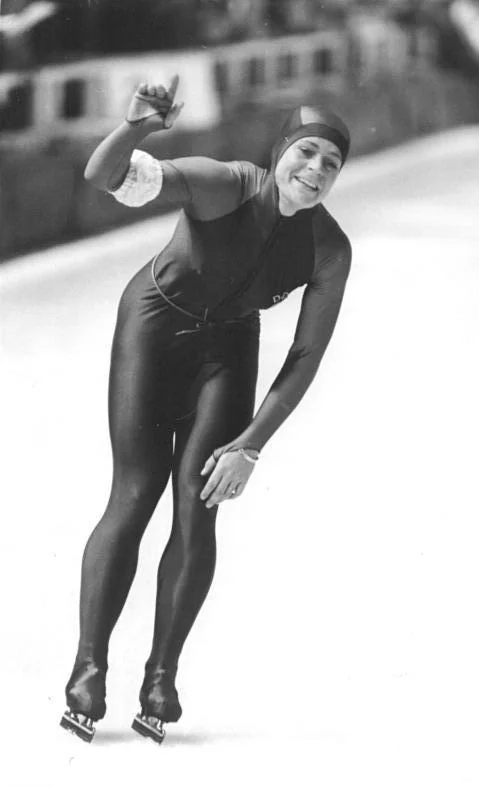
Image from Wikipedia
Image from Wikipedia
Gunda Niemann-Stirnemann: The Exceptional Athlete Who Redefined Speed Skating
A German Sports Icon Between Discipline, Dominance, and Historical Greatness
Gunda Niemann-Stirnemann is one of the defining figures in international speed skating. Born on September 7, 1966, in Sondershausen, this Thüringer developed from a versatile young athlete into the outstanding long-distance specialist of her era. During the 1990s, she dominated the world of speed skating with a mix of tactical intelligence, physical toughness, and remarkable consistency. ([britannica.com](https://www.britannica.com/biography/Gunda-Niemann-Stirnemann?utm_source=openai))
Her career stands for a rare form of sporting authority: not a single triumph, but rather an entire decade of victories, championships, and records shaped her reputation. With 19 World Championship titles, three Olympic gold medals, and 98 World Cup wins, she set benchmarks that resonate in her sport to this day. Even after her competitive career ended, she remained connected to speed skating as a coach and official. ([de.wikipedia.org](https://de.wikipedia.org/wiki/Gunda_Niemann-Stirnemann?utm_source=openai))
From the GDR Sports School to the Pinnacle of World Sports
Niemann-Stirnemann's first sports steps were not on the ice, but in athletics. It wasn't until 1983 that she transitioned to speed skating, a decision that would define her entire sporting career. Early on, it became clear that she possessed exceptional endurance on longer distances, approaching her races with a rare mix of patience and aggression. ([de.wikipedia.org](https://de.wikipedia.org/wiki/Gunda_Niemann-Stirnemann?utm_source=openai))
Her World Cup debut in the winter of 1987/88 marked the beginning of a rapid rise. In 1988, she competed in her first Olympic Games, and in 1989 she claimed her first international title as European Allround Champion. These early successes were no coincidence but the prelude to a dominance that particularly shone through in the 1500, 3000, and 5000-meter events. ([de.wikipedia.org](https://de.wikipedia.org/wiki/Gunda_Niemann-Stirnemann?utm_source=openai))
The 1990s: An Era of Dominance
Between 1991 and 2001, Niemann-Stirnemann won 19 World Championship titles, thereby defining an entire decade of women's speed skating. Her consistency in the all-round events was particularly impressive, where she amassed eight World Championship gold medals and proved to be nearly unbeatable. Experts and the German sports public repeatedly described her as a unique talent who not only won races but controlled them. ([de.wikipedia.org](https://de.wikipedia.org/wiki/Gunda_Niemann-Stirnemann?utm_source=openai))
She also set standards at the Olympic Games: in total, she won eight Olympic medals, including three gold medals. In 1992 in Albertville, she won gold in the 3000 and 5000 meters, along with silver in the 1500 meters; in 1998 in Nagano, she secured her third Olympic gold in the 3000 meters. In Lillehammer in 1994 and in other major events, it also became clear that even a dominant athlete must compete in a highly competitive environment. ([britannica.com](https://www.britannica.com/biography/Gunda-Niemann-Stirnemann?utm_source=openai))
Technique, Training Discipline, and Longevity
The athletic myth of Niemann-Stirnemann was built not only on talent but on iron discipline. Her successes were repeatedly explained in sources by her willpower, structured training, and extraordinary resilience. These very traits made her the dominant figure in long distances and all-round events for more than a decade. ([munzinger.de](https://www.munzinger.de/register/portrait/biographien/Gunda%20Niemann-Stirnemann/01/2816?utm_source=openai))
Especially her strength in the 1500, 3000, and 5000 meters gave her career a clear profile. She collected 98 first-place finishes in World Cups and won 16 gold medals at annually held World and European Championships in all-round events. Team Germany therefore describes her to this day as the “Speed Skater of the Century,” a classification that encapsulates her historical exceptionalism. ([de.wikipedia.org](https://de.wikipedia.org/wiki/Gunda_Niemann-Stirnemann?utm_source=openai))
Competition, Comeback, and the Price of Greatness
From the mid-1990s onward, Claudia Pechstein emerged as an internal and international rival. Particularly in the 5000 meters, a sporting duel developed that further charged German speed skating and set the standard for the next generation. At the 1994 and 1998 Winter Olympics, Niemann-Stirnemann was defeated by Pechstein in this distance each time. ([de.wikipedia.org](https://de.wikipedia.org/wiki/Gunda_Niemann-Stirnemann?utm_source=openai))
After a maternity break, she returned in 2003 but could no longer match her previous winning streak. Back issues ultimately led to her retirement in the fall of 2005. Reports from that time framed the end of her career as a farewell to an athlete who had dominated the sport for years with an almost unwavering self-evidence. ([faz.net](https://www.faz.net/aktuell/sport/mehr-sport/eisschnellauf-gunda-niemann-stirnemann-beendet-karriere-1279897.html?utm_source=openai))
Awards, Recognition, and Lasting Impact
Niemann-Stirnemann received extensive recognition for her achievements both nationally and internationally. From 1995 to 1997, she was the first woman to be awarded the Oscar Mathisen Memorial Trophy three times in a row, one of the most prestigious honors in speed skating. In 1998, she was also honored with the Golden Hen and appointed honorary citizen of Erfurt. ([bundesstiftung-aufarbeitung.de](https://www.bundesstiftung-aufarbeitung.de/de/recherche/kataloge-datenbanken/biographische-datenbanken/gunda-niemann-stirnemann?utm_source=openai))
Her name remained present both architecturally and symbolically: she became the namesake for the Gunda-Niemann-Stirnemann-Halle, which opened in Erfurt in 2001. In 2019, as further recognition, she was inducted into the Hall of Fame of German Sports as the first speed skater ever. Such honors cement her status not only as a champion but as a cultural figure in German winter sports. ([de.wikipedia.org](https://de.wikipedia.org/wiki/Gunda_Niemann-Stirnemann?utm_source=openai))
Current Role in Sports and Impact on Youth
Even after her active career, Gunda Niemann-Stirnemann remained visible in the world of speed skating. Since September 2020, she has been the co-national coach of the German Speed Skating Association, bringing her experience to the development of young athletes. This shifts her significance from an active competitor to that of a mentor imparting knowledge, timing, and race tactics. ([de.wikipedia.org](https://de.wikipedia.org/wiki/Gunda_Niemann-Stirnemann?utm_source=openai))
This role fits her biography well: an athlete whose career was defined by performance, discipline, and repeatability transforms into a significant voice in the background. Particularly in the youth sector, this form of experience is crucial as it combines athletic excellence with structural knowledge about training and competition. ([bundesstiftung-aufarbeitung.de](https://www.bundesstiftung-aufarbeitung.de/de/recherche/kataloge-datenbanken/biographische-datenbanken/gunda-niemann-stirnemann?utm_source=openai))
Cultural Influence and Historical Context in Sports
Niemann-Stirnemann is more than a medal collector. She represents an entire era of German speed skating, the visibility of East German training systems after the fall of the Berlin Wall, and the professionalization of a sport that often only receives broad attention during Olympic moments. Team Germany and other biographical sources continue to emphasize her status as an outstanding figure in winter sports. ([teamdeutschland.de](https://www.teamdeutschland.de/sportarten/details/eisschnelllauf?utm_source=openai))
Her influence is also reflected in how dominance in speed skating is discussed: mentioning her name signifies not only records but also a style, an era, and a certain understanding of performance. This is where her historical power lies. She embodies the rare connection between athletic greatness, public recognition, and lasting relevance. ([teamdeutschland.de](https://www.teamdeutschland.de/sportarten/details/eisschnelllauf?utm_source=openai))
Conclusion: A Legend of Ice Whose Story Extends Far Beyond Medals
Gunda Niemann-Stirnemann remains one of the most fascinating personalities in German sports. Her career unites titles, dominance, rivalry, and the will to return into a biography that shines far beyond mere statistics. Those who look at her career recognize an athlete who has shaped speed skating and redefined its standards. ([de.wikipedia.org](https://de.wikipedia.org/wiki/Gunda_Niemann-Stirnemann?utm_source=openai))
She remains exciting to this day because her story encapsulates everything that defines great athletes: attitude, precision, resilience, and impact. Anyone wanting to understand speed skating in its most beautiful form cannot overlook Gunda Niemann-Stirnemann. Her career is not only worth remembering but also deserving of engagement with the sport she dominated so uncompromisingly for years. ([bundesstiftung-aufarbeitung.de](https://www.bundesstiftung-aufarbeitung.de/de/recherche/kataloge-datenbanken/biographische-datenbanken/gunda-niemann-stirnemann?utm_source=openai))
Official Channels of Gunda Niemann-Stirnemann:
- Instagram: No official profile found
- Facebook: No official profile found
- YouTube: No official profile found
- Spotify: No official profile found
- TikTok: No official profile found
Sources:
- Team Germany – Gunda Niemann-Stirnemann
- Team Germany – Speed Skating
- Encyclopaedia Britannica – Gunda Niemann-Stirnemann
- FAZ – Speed Skating: Gunda Niemann-Stirnemann Ends Career
- Federal Foundation for the Reappraisal of the SED Dictatorship – Gunda Niemann-Stirnemann
- Wikipedia – Gunda Niemann-Stirnemann