
Gottfried Benn
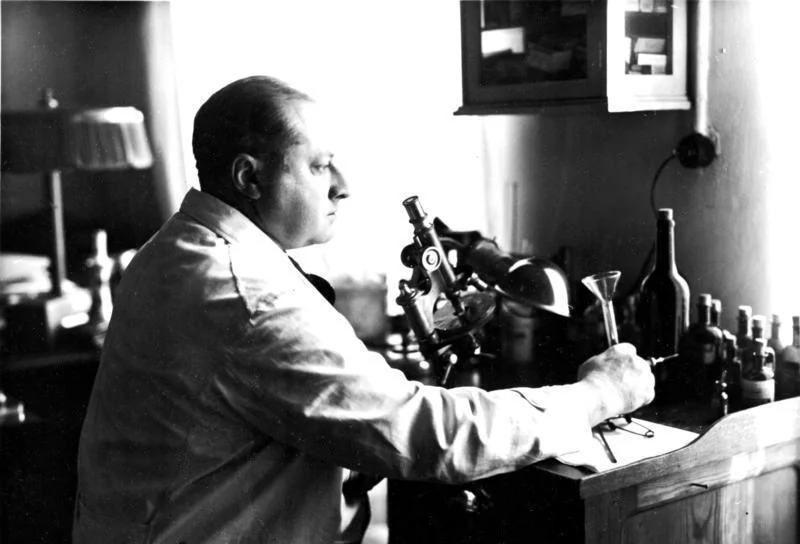
Image from Wikipedia
Image from Wikipedia
Gottfried Benn – the uncompromising renewer of German modernism
A poet between scandal, radical form, and lasting impact
Gottfried Benn is one of the most influential and simultaneously controversial voices in 20th-century German literature. As a poet, essayist, and physician, he combined clinical observation, linguistic harshness, and aesthetic radicalism into a distinctive poetics that suddenly redefined Expressionism. His career ranged from the scandalous success of his early poetry to recognition in the Weimar Republic, culminating in late canonical appreciation after World War II. ([fischerverlage.de](https://www.fischerverlage.de/autor/gottfried-benn-1002415?utm_source=openai))
Early years: Parsonage, studies, and medical influence
Born on May 2, 1886, in Mansfeld near Putlitz in Prignitz, Benn grew up as the son of a Lutheran pastor in a parsonage. The intellectual rigor of his upbringing collided early with his inclination towards analytical distance, which would later become unmistakable in his literature. After abandoning theological studies, he successfully completed his medical education and received an award for a medical paper as early as 1910. This connection between science, knowledge of the body, and skepticism toward language became a fundamental theme throughout his entire body of work. ([dhm.de](https://www.dhm.de/lemo/biografie/gottfried-benn?utm_source=openai))
The breakthrough: Morgue and the birth of the Expressionist scandal
With the 1912 publication of the poetry collection Morgue und andere Gedichte, Benn provoked a literary uproar. The drastic choice of themes, the starkly formulated physicality, and the casual style struck the contemporary audience as an assault on bourgeois taste. It was precisely this intensification that quickly made him the signature author of the emerging Expressionist poetry. Benn's early poems represent a literature that does not idealize humanity but rather depicts people as vulnerable, ephemeral, and biologically determined bodies. ([gottfriedbenn.de](https://gottfriedbenn.de/lebenslauf/?utm_source=openai))
Prose, essays, and the continuation of civilization criticism
With the novella collection Gehirne from 1916, Benn made an important contribution to Expressionist prose. His criticism of civilization, which was already present in the Morgue poems, continued in his essays, deepening in texts like Das moderne Ich. There, he addressed the position of the individual in society with a mix of philosophical coolness and existential harshness. This dual movement of observation and abstraction gave his prose an intellectual tension that defined him beyond mere lyricism. ([fischerverlage.de](https://www.fischerverlage.de/autor/gottfried-benn-1002415?utm_source=openai))
Between montage and classical form: the mature artistic development
After World War I, Benn experimented with montage in his poetry while simultaneously seeking formal rigor, ancient topoi, and a new order in the fragmented consciousness of modernity. In his essays, he remained committed to a Darwinian and life-philosophical perspective on socialization, individuality, and cultural crisis. The poetry collection Gesammelte Gedichte from 1927 marked a significant point in his maturation; during the Weimar Republic, he earned a reputation as an outstanding poet of his time. In 1932, he was admitted to the poetry section of the Prussian Academy, a sign of institutional recognition for a work that had long been considered unwieldy. ([dhm.de](https://www.dhm.de/lemo/biografie/gottfried-benn?utm_source=openai))
Political missteps and literary isolation during National Socialism
In 1933, Benn delivered the speech Der neue Staat und die Intellektuellen, in which he demanded the collaboration of poets within the National Socialist state after the Nazi takeover. As the dictatorship was brutally enforced, his metapolitical hope crumbled, and he came under increasing pressure due to his early statements and Expressionist background. Although his works continued to be published, he stood outside the literary world dominated by Nazi Party authors. In 1938, he was expelled from the Reich Literature Chamber and received a writing ban. This phase remains a heavy, irreducible part of his biography. ([fischerverlage.de](https://www.fischerverlage.de/autor/gottfried-benn-1002415?utm_source=openai))
Late recognition: Statische Gedichte, radio, and the Büchner Prize
After World War II, Benn returned to the literary public with late works and had to confront sharp criticism from former colleagues. In 1949, the autobiography Der Ptolemäer and the poetics essay Ausdruckswelt were published; in 1951, he was awarded the Georg Büchner Prize. Notably, the classicizing and neoclassical gnomic poetry of the Statischen Gedichte and the Apreludes contributed to his renewed recognition. His contributions and debates on the radio made him more widely known in this late phase and solidified his status as one of the great German lyricists of classical modernism. ([fischerverlage.de](https://www.fischerverlage.de/autor/gottfried-benn-1002415?utm_source=openai))
Style, language, and cultural influence
Benn's style is characterized by cool, precise, and often harshly cut language, which remains exemplary in its conciseness to this day. His montage poetry, the sober diagnosis of the body, and the tension between expression and classicism made him a formative author for several generations. Günter Eich and Peter Rühmkorf drew inspiration from his art, as did later authors from the new federal states, including Heiner Müller, Durs Grünbein, Marcel Beyer, and Thomas Kling. Thus, Benn not only acted as an individual author but also as a driving force for post-war German literature and for a modern, reflective critique of the subject. ([fischerverlage.de](https://www.fischerverlage.de/autor/gottfried-benn-1002415?utm_source=openai))
Contextualization of works and literary reception
The reception of Benn's work fluctuated for decades between fascination, rejection, and late canonization. His Expressionist radicalism, the criticism of civilization from his early years, and the formal rigor of his late poetry made him a central figure of literary modernism. S. Fischer Publishing describes his work as formative for literary modernity; concurrently, the Gottfried Benn Society documents the biographical and work-historical milestones, focusing on its lasting impact. The ongoing presence of his texts in literary studies and the history of poetry shows how deeply his influence is etched into the German cultural history. ([fischerverlage.de](https://www.fischerverlage.de/autor/gottfried-benn-1002415?utm_source=openai))
Conclusion: Why Gottfried Benn remains fascinating today
Gottfried Benn continues to be intriguing because his work unites extreme contrasts: scandal and rigor, body and idea, rupture and will for form. Few other German authors have so precisely transformed the inner tornness of modernity into language, so unresolved and so stylistically distinct. Reading Benn leads to an uncompromising artistic development that continues to resonate and provoke new interpretations today. His texts deserve careful reading – not as a museum legacy but as a vibrant challenge to thought and writing. ([fischerverlage.de](https://www.fischerverlage.de/autor/gottfried-benn-1002415?utm_source=openai))
Official channels of Gottfried Benn:
- Instagram: no official profile found
- Facebook: no official profile found
- YouTube: no official profile found
- Spotify: no official profile found
- TikTok: no official profile found
Sources:
- S. Fischer Verlage – Gottfried Benn
- LeMO / Deutsches Historisches Museum – Biography of Gottfried Benn
- Gottfried-Benn-Gesellschaft e.V. – Curriculum Vitae
- Solivagus Verlag – About Gottfried Benn
- Gottfried Benn Poems – Chronology
- Deutsche Digitale Bibliothek – Gottfried Benn
- Wikipedia: Image and text source