
George Tabori
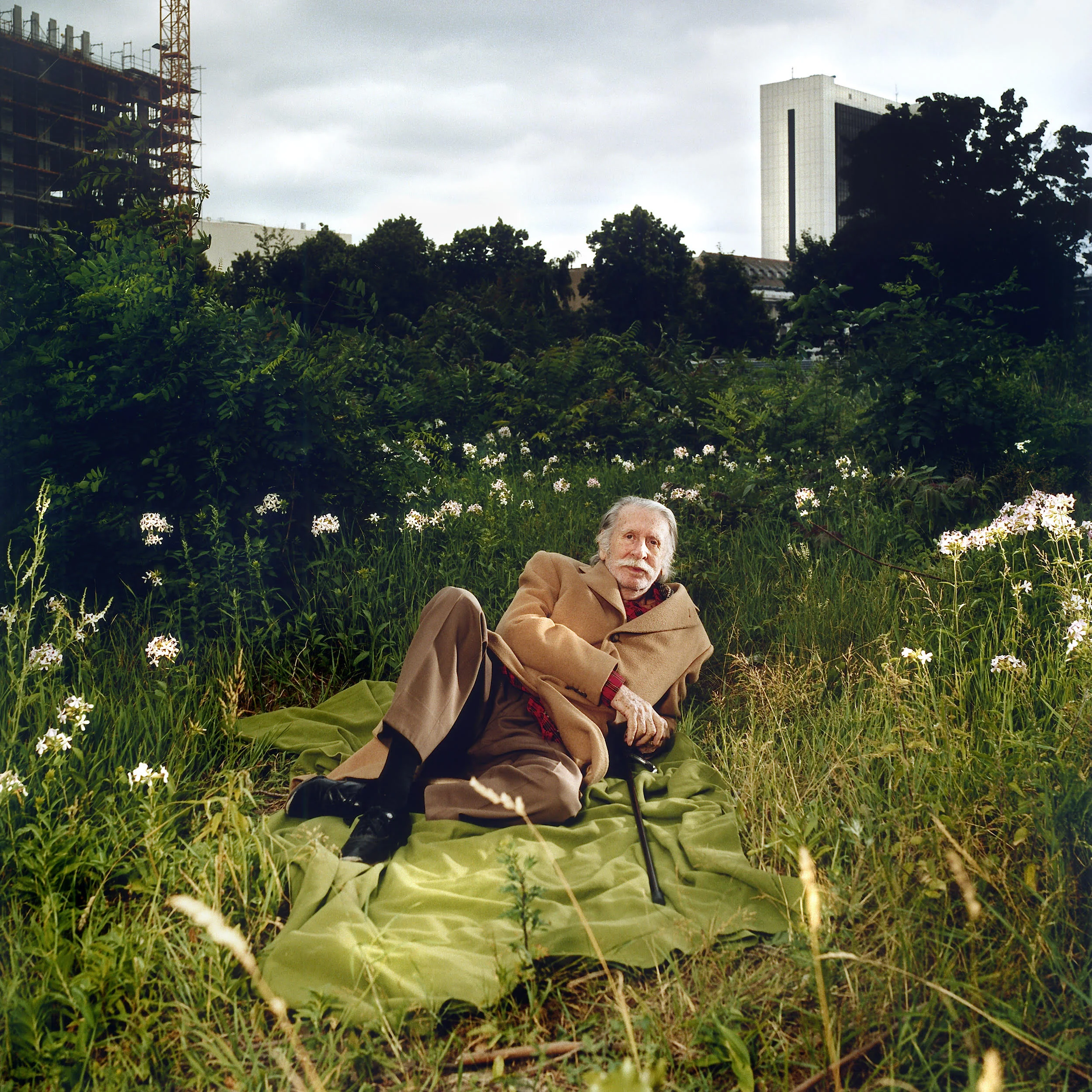
Image from Wikipedia
Image from Wikipedia
George Tabori – the great game maker of European theater
An artist between exile, memory, and radical artistic freedom
George Tabori, born as György Tábori in Budapest, was one of those rare artists who didn't just create theater but reimagined it. As a playwright, director, screenwriter, writer, translator, actor, and speaker, he crafted a body of work that delves into the darkest chapters of the 20th century without ever stripping them of human complexity. His art thrives on the tension between historical experience, black humor, and absurd comedy, rendering horror not smoother but even more sharply visible.
Tabori rejected the term “director” and preferred the title “game maker,” as he found authority on stage suspect. This attitude shaped his entire musical career in the broadest sense of performing arts: not as a hierarchical command model, but as an open process in which actors, text, and ensemble search for a shared truth. It was precisely this working style that made him exceptionally popular among many performers and cemented his reputation as one of the most influential theater artists in the German-speaking world.
Biographical Roots: Budapest, Emigration, and Exile Experience
Tabori was born on May 24, 1914, in Budapest and grew up in a time when Europe was becoming politically unhinged. His early years took him to Berlin, where he initially worked in the hotel industry before becoming a journalist and translator. These early years sharpened his perception of language, power, and social masks—themes that later defined his dramatic texts.
With the persecution by the Nazis, exile became a biographical and artistic turning point. Tabori worked during the war as a journalist and war correspondent for the BBC and the British Army; at the same time, the Holocaust was no abstract historical backdrop for him but part of his own family history. The murder or threat to his relatives flowed into his writing, making memory, loss, and survival central motifs of his work.
The American Period: Screenwriting, Film, and Encounters with Brecht and Hitchcock
In the USA, Tabori established a second artistic existence and worked as a screenwriter in the film industry. There, he encountered Alfred Hitchcock and Bertolt Brecht, two names that represent very different but equally formative forms of tension, precision, and theatrical construction. Although he did not achieve a major breakthrough in film, these years expanded his perspective on rhythm, dialogue, and scenic condensation.
His path was not a smooth ascent but rather a series of relocations, breaks, and artistic reorientations. In New York, he wrote films and plays, but increasingly developed into a theater author whose language understood the stage as a space for thought. This transition from the film industry to theater made his later work distinctive: Tabori wrote not for smooth illusions but for spaces where memory, contradiction, and comedy collide.
Return to Central Europe and Rise to Theater King
In 1971, Tabori returned to Central Europe and became one of the most defining figures in modern theater. From 1986 onward, he reached an artistic peak in Vienna, with works like “Der Kreis” and at the Burgtheater. His creations combined literary sharpness with an almost childlike joy of play, which revealed movement, wit, and tempo even in grim subjects.
The Vienna years were not only a triumph of age but also a late form of institutional recognition. That an artist who never submitted to the authoritarian directorial model could have such a strong impact on major houses demonstrates the uniqueness of his authority: it was based on trust, precision, and curiosity. Many theater lovers saw him as the unofficial "theater king" – not due to a claim to power, but because of the sovereignty of his play with form and content.
Berlin and the Berliner Ensemble: Late Mastery
From 1999 onwards, Tabori shaped the Berliner Ensemble and achieved yet another celebrated master phase there. This last significant phase of work encapsulated everything that characterized his art: the engagement with historical guilt, the delight in staging breaks, and the courage to confront the terrible with black humor. Particularly in Berlin, a city of layers of memory, his art operated as a precise but never didactic questioning of the past.
His final years as a theater maker demonstrated an artist who understood the ensemble as a community of thought and play. Tabori was never interested in decorative interpretation but in the lively friction between text, body, and audience space. His productivity well into old age reinforced his status as an extraordinary stage artist, whose experience in directing productions deepened with each decade.
Work, Themes, and Aesthetic Signature
Tabori's theater cannot be conceived without grappling with racism, mass murder, and the experience of exile. At the same time, he rejected mere heaviness: his plays employ black humor, absurd comedy, and grotesque distortion not to repress horror but to make it visible. This fusion of seriousness and irony imparts a power to his work that remains unsettling and liberating to this day.
His well-known works include adaptations and original pieces that deal with Shakespeare, Beckett, Jewish history, and the mechanisms of power. Tabori worked on plays such as “Mein Kampf,” “Jubiläum,” “Peepshow,” “Die Kannibalen,” “Requiem für einen Spion,” and “Mutters Courage,” thus developing a repertoire that combines biographical experience with grand theatrical form. His language is concise, pointed, and simultaneously open to the element of play that undermines any final interpretation.
Discography, Filmography, and Overview of Works
In the classical sense, George Tabori does not have a discography as a musician, but his artistic oeuvre is well documented in theater texts, audio and film works, and screenplays. For an authoritative artist page, his body of work is therefore crucial: the plays, adaptations, and productions that substantiate his rank. His work in film and theater exhibits the same handwriting: precise construction, pointed dialogue, and a deep sensitivity for the impact of pauses, timing, and ensemble dynamics.
Important milestones in his work also include his collaborations with Brecht, his participation in international productions, and his late work at the major German-speaking stages. To understand Tabori, one should not view him as a linear career but as a series of artistic formats, where each medium received its own dramaturgy. Herein lies his cultural-historical value: he connected literature, theater, and film experience into a distinctive stage aesthetic.
Critical Reception, Awards, and Cultural Influence
Tabori's work has been intensely discussed, admired, and at times critically viewed over decades. His ability to make memory not museum-like but physically and sensually experiential was particularly emphasized. Literature and theater critics recognized him as an artist who used humor not for deflection but for insight.
Among his significant awards is the Georg-Büchner-Prize in 1992. This honor underscores how central Tabori's contribution was to German-language literature and theater culture. His influence extends far beyond individual productions: he shaped an understanding of theater as a moral, aesthetic, and profoundly human space of experience.
Legacy: Why George Tabori Remains Fascinating Today
George Tabori remains intriguing because he did not shy away from the unspeakable but instead translated it into a theatrical language that brings together pain, comedy, and resistance. His art demonstrates that the stage can be a place where memory does not freeze but remains alive. Encountering Tabori through reading or viewing is to engage with an author and game maker who critically interrogated the history of Europe with uncompromising imagination and great humanity.
In this lies the enduring power of his work: Tabori demands attention, contemplation, and emotional openness. His plays belong to the works that are not only studied but experienced. Anyone who has the opportunity to visit a production, a showcase, or an engagement with his theater should seize it – for George Tabori is one of those rare artists whose significance unfolds fully only in the vibrant play.
Conclusion
George Tabori represents a theater of radical humanity, intellectual precision, and courageous comedy. His work combines the experience of exile, historical reflection, and grand theater art into an unmistakable signature that still resonates today. He remains compelling because he does not lecture the audience but draws them into a play of memory, irritation, and insight. Anyone who wants to experience theater as a living art form should certainly encounter Tabori – on stage, in text, and in the historical impact of his work.
Official Channels of George Tabori:
- Instagram: No official profile found
- Facebook: No official profile found
- YouTube: No official profile found
- Spotify: No official profile found
- TikTok: No official profile found
Sources:
- Wikipedia – George Tabori
- Akademie der Künste – George Tabori
- Deutsche Biographie – Tabori, George
- EBSCO Research – George Tabori
- Deutsche Digitale Bibliothek – Tabori, George
- Verlag Klaus Wagenbach – George Tabori
- FAZ – George Tabori: One has to become old enough to be young
- taz – George Tabori
- Wikipedia: Image and text source
Upcoming Events
Mein Kampf a Farce by George Tabori
Mein Kampf a farce by George Tabori