
Elisabeth Leonskaja
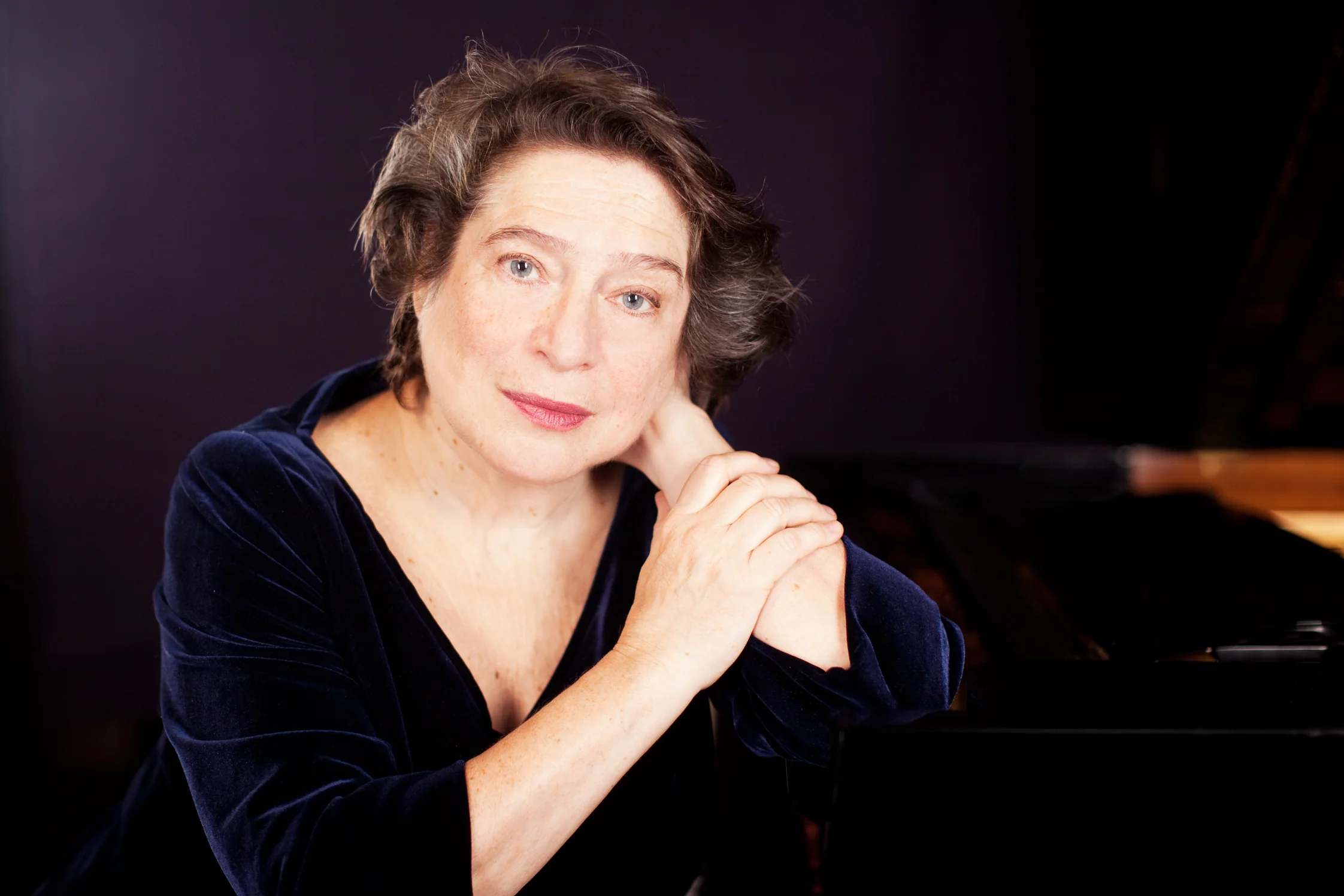
Image from Wikipedia
Image from Wikipedia
Elisabeth Leonskaja – Grande Dame of the Piano between Sound Truth and Artistic Integrity
A world-class pianist whose stage presence and musical culture shape generations
Elisabeth Leonskaja has been one of the leading pianists of our time for decades. Born in Tbilisi, formed in the Soviet tradition, and based in Vienna since 1978, she embodies a rare combination of uncompromising fidelity to the work, tonal nobility, and deep historical awareness. Her music career includes legendary performances with top orchestras, award-winning recordings, and an artistic development shaped as much by her dialogue with great masters like Svyatoslav Richter as by her ongoing engagement with the core repertoire. As an interpreter of Beethoven, Schubert, and Mozart, she is in high demand worldwide; her discography documents a lifelong search for the “music within itself” – not for self-presentation.
Background and Early Years: Talent from Tbilisi
Leonskaja was born in 1945 in Tbilisi, where she showed exceptional pianistic talent early on. Her early training in the Soviet system sharpened her technique, discipline, and sound conception – foundations that would later shape her tone: a flexible yet grounded legato, structurally aware phrasing, and the ability to unfold even dense piano textures transparently. As a young artist, she won awards at international competitions, including the Enescu Competition as well as the Marguerite Long–Jacques Thibaud and the Queen Elisabeth Competition, milestones in an increasingly successful career in Europe’s classical music landscape.
Education, Competitions, and the Formative Influence of Svyatoslav Richter
Her studies at the Moscow Conservatory opened up artistic horizons. The decisive mentor became Svyatoslav Richter, whose artistic ethics – humility before the work, analytical penetration, uncompromising seriousness – would permanently shape Leonskaja's interpretive stance. From their collaboration grew duo evenings, joint recordings (including Mozart–Grieg arrangements), and an artistic dialogue that continues to resonate in her playing today. In terms of repertoire, Leonskaja oriented herself around the great pillars of the canon: Mozart, Beethoven, Schubert, Chopin, Brahms – supplemented by Slavic colors from Shostakovich to Prokofiev.
New Beginnings in Vienna: Artistic Development in the European Music Metropolis
In 1978, Leonskaja left the Soviet Union and settled in Vienna – a geographical and aesthetic turning point. The breakthrough in the West did not take long: At the Salzburg Festival in 1979, she celebrated a widely acclaimed success that propelled her international concert and recording career. Vienna, the city of classical piano tradition, became her second home and a resonance space for her repertoire: Beethoven sonatas and concertos, Schubert's late piano poetry, Mozart's sonatas – all conveyed in a sonic language that combines warmth, architecture, and dignity.
Worldwide Orchestras, Legendary Stages: The Mature Music Career
As a soloist, Leonskaja has performed with leading ensembles such as the New York Philharmonic, the Berlin Philharmonic, the Cleveland Orchestra, the London Philharmonic Orchestra, the BBC Symphony, the Czech Philharmonic, and many more. Renowned festivals – from Vienna to Schleswig-Holstein to Schwarzenberg – are part of her regular circuit. Her stage presence captivates with concentration: she shapes large musical arcs, allows transitions to breathe organically, and grants even monumental scores a clear texture. One can always feel the artistic development of an interpreter who combines dramaturgy and sound balance with sober judgment and poetic intuition.
Discography: From Teldec and MDG to Warner Classics – A Documented Life Path
Leonskaja's discography reflects the breadth of her art. After formative years with Teldec and MDG, central Warner Classics releases have been the focus since 2022. Her complete recording of the Mozart piano sonatas (2022) marks a discographic landmark: 55 movements realized in a few intense recording days, with a slender tone, buoyant articulation, and exemplary clarity of form. In 2023, a much-anticipated recording of Beethoven's Piano Concertos No. 3 & 4 with the Orchestre National du Capitole de Toulouse under Tugan Sokhiev followed – a recording that meticulously explores weight distribution, phrase culture, and dialogical balance. In 2025, she set interpretive accents with Beethoven's “Emperor” Concerto and the E-flat Quintet op. 16 (with soloists from the Orchestre Français des Jeunes) between classicism and the breadth of the late works. Curated collections and thematic anthologies (including “Shadow and Light at the Piano”; “Mozart, Schubert, Chopin, Brahms”) as well as extensive playlists underscore her role as a reference interpreter in the streaming era.
Critical Reception: Authority of Quiet Tones and Architectural Clarity
The music press appreciates Leonskaja's “innate pianism” and her ability to organically connect structure and expression. Her Beethoven interpretations are praised for clarity, breadth, and tonal nobility; even where critiques discuss nuances – such as tempo dispositions or dramatic weightings – her authority remains unchallenged. Crucial is the handwriting: a rhetoric that focuses on cantilena and voice leading, a sense of counterpoint and inner rhythm that makes the architecture of the movements audible, as well as a touch culture that remains controlled from mezzavoce to orchestral forte.
Chamber Music, Mentorship, and Artistic Ethics
Besides her solo repertoire, Leonskaja maintains an intense chamber music practice – with the Alban Berg Quartet, the Borodin Quartet, the Artemis Quartet, the Belcea Quartet, or the Jerusalem Quartet. In these constellations, her art of listening is revealed: a sound-forming, balancing piano technique that consolidates lines and opens spaces. Her closeness to Svyatoslav Richter – artistic friend, duo partner, moral authority – sharpened her understanding of style, textual fidelity, and the ethics of making music. This attitude also shapes her masterclasses: Leonskaja conveys stylistics, culture of articulation, and repertoire history with a focus on composition, form, and sound speech.
Awards and Honors: EEAT in Lived Practice
For her contributions to art and culture, Leonskaja received the Austrian Cross of Honour for Science and Art, 1st class, in 2006. In 2024, she was awarded the Wigmore Hall Medal – a rare circle of musicians whose contributions to the London chamber music icon are considered particularly significant. Furthermore, she is honored as an honorary member by the Wiener Konzerthaus; international juries have repeatedly acknowledged her recordings – exemplified by the ICMA Award 2014 (“Paris”) and subsequent accolades for her lifetime achievement and artistic consistency. These recognitions attest to her authority and trustworthiness: An artist whose discography, stage biography, and pedagogical work together create a coherent artistic profile.
Current Projects 2024–2026: Releases, Portraits, and Concert Calendar
In the years 2024 to 2026, new releases and prominent stages underscore her ongoing presence. In addition to curated collections, extensive thematic albums and a focus on Beethoven with the Emperor Concerto were released in 2024/25. Concert engagements have taken her to Paris, Bremen, Cologne, and Copenhagen; in 2025, she interpreted Beethoven's Piano Concerto No. 5 with the Gürzenich Orchestra Cologne while simultaneously presenting solo evenings with Beethoven's sonata trilogy op. 109–111. In early 2026, the television station Mezzo will dedicate a birthday portrait program to her – a media sign of the unbroken relevance of her interpretative art.
Style, Technique, and Ideal of Sound: Work-Centered Rather than Cult of Virtuosity
Leonskaja's playing combines songful line direction, elastic timing, and clear form perspective. In Beethoven's variation movements, she models harmonic pivot points with breathing phrasing; in Schubert's large forms, she maintains tension arcs through clever tempo dramaturgy; in Mozart, she cultivates a buoyant articulation that makes the “speech pattern” of classical writing audible. Her touch remains variable – from transparent pianissimo to robust, orchestral tutti – yet always without hardness. The production and arrangement of her recordings aim for spatial naturalness, richly detailed voice leading, and a balance that presents soloist and orchestra as partners.
Cultural Influence and Legacy
As a style-defining pianist with decades of music career, Leonskaja extends her influence beyond the concert hall. Her complete recording of Mozart offers guidance in the repertoire of the piano sonata; her Beethoven concertos convey artistic standards to young orchestral musicians in orchestral dialogue; her chamber music partnerships strengthen a culture of listening. In an era of accelerated reception habits, she stands for depth, patience, and work-centeredness – values that carry the classical tradition into the present.
Conclusion: Why Elisabeth Leonskaja Fascinates
Leonskaja is an artist who places the composer at the center. Her stage presence rests on inner calm, her artistic development on constant work on the text. Those who experience her Beethoven sonatas or hear the Emperor Concerto with her characteristic sound will feel a rare balance of authority and sensitivity. The appeal is clear: This pianist should be experienced live – for the sound, the time she gives to the music, and the authenticity with which she tells the great stories of the piano repertoire.
Official Channels of Elisabeth Leonskaja:
- Instagram: No official profile found
- Facebook: No official profile found
- YouTube: No official profile found
- Spotify: No official profile found
- TikTok: No official profile found
Sources:
- Elisabeth Leonskaja – Official Website
- Elisabeth Leonskaja – Biography (Official Website)
- Warner Classics – Artist Profile Elisabeth Leonskaja
- Warner Classics – Beethoven: Piano Concerto No. 5 & Quintet op. 16 (2025)
- Warner Classics – Mozart/Grieg: Piano Sonatas (with Svyatoslav Richter)
- Warner Classics – Mozart: Complete Piano Sonatas (2022)
- Wigmore Hall – The Wigmore Hall Medal (List of Winners, 2024)
- Classical Music (BBC Music Magazine) – Review of Beethoven Concertos 3 & 4 (2023)
- The Guardian – Concert Review (2022)
- DSO Berlin – Biography Elisabeth Leonskaja
- Gürzenich-Orchester Cologne – Press Release for Concerts 2025
- Mezzo TV – Program Focus “Elisabeth Leonskaja – 80 years” (January 2026)
- Apple Music – Mozart: Complete Piano Sonatas (2022)
- Wikipedia: Image and Text Source
Upcoming Events
Spotlight Secrets Riddle Tour "Back to the Middle Ages"
Opening Concert - Elisabeth Leonskaja
Opening Concert of Kissinger Sommer 2026
Opening Concert: Budapest Festival Orchestra
»Coffee with ... Elisabeth Leonskaja«
A Coffee with ... Elisabeth Leonskaja
»Coffee with ... Elisabeth Leonskaja«