
Edvard Grieg
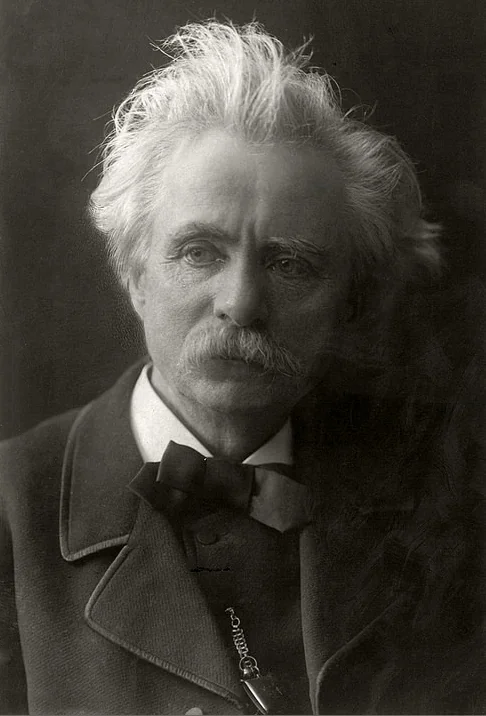
Image from Wikipedia
Image from Wikipedia
Edvard Grieg – The Sound of Norway Between Romanticism, Folk Song, and International Fame
A composer who created a musical world from Bergen
Edvard Hagerup Grieg is one of the defining voices of European Romanticism and one of Norway's most celebrated composers. Born on June 15, 1843, in Bergen and passing away there on September 4, 1907, he combined pianistic skill with a distinctive compositional voice deeply rooted in Norwegian folk music. His name is synonymous with cantabile melodies, finely crafted harmonies, and the poetic conciseness that makes his music instantly recognizable even today. ([britannica.com](https://www.britannica.com/biography/Edvard-Grieg?utm_source=openai))
Biographical Roots: Bergen, Education, and Artistic Impression
Grieg grew up in a culturally open environment that sharpened his sensitivity to sound and form early on. His biography reveals a musician who did not merely appear as an epigone of German Romanticism but consciously sought an independent Scandinavian musical language. LeMO describes him as a co-founder of the Euterpe Society, which aimed to promote new Scandinavian music; at the same time, he distanced himself from German Romanticism, pursuing the goal of strengthening a Norwegian musical idiom. ([kodebergen.no](https://www.kodebergen.no/hva-skjer/familie/trolltur-med-nina-pa-troldhaugen?utm_source=openai))
This orientation was not decorative national folklore but rather an aesthetic decision with long-lasting effects. Grieg transformed folk music, dance rhythms, and modal shifts into art music that held its own on international concert stages. This embodies a central part of his authority: he made Norwegian timbres exportable without smoothing over their character. ([britannica.com](https://www.britannica.com/biography/Edvard-Grieg?utm_source=openai))
The Breakthrough: Peer Gynt and the Path to Icon Status
The international breakthrough came with the incidental music for Henrik Ibsen’s Peer Gynt, which premiered in 1876 with the play and received immediate acclaim. Britannica emphasizes that Grieg's music was praised for its lyricism, stylistic diversity, and precise orchestral effects; the famous suites Op. 46 and Op. 55 turned individual pieces like “Morning Mood,” “Anitra’s Dance,” and “In the Hall of the Mountain King” into worldwide classics. ([britannica.com](https://www.britannica.com/topic/Peer-Gynt-by-Grieg?utm_source=openai))
It is precisely this music that showcases Grieg's art at the highest level: he thinks not in mere themes but in scenes, moods, and dramatic arcs. The composition responds to Ibsen's text, heightening psychological tension and shaping distinct sound dramaturgies from short motifs. That these pieces are still present today in concert halls, film music, and pop culture highlights their status as a cultural membrane between art music and mass recognition. ([britannica.com](https://www.britannica.com/topic/Peer-Gynt-by-Grieg?utm_source=openai))
Musical Development: From Piano Pieces to Large Forms
Britannica describes Grieg as a composer whose work is uniquely shaped by Norwegian folk songs and a refined lyrical approach. Between 1867 and 1901, he composed ten collections of Lyric Pieces for piano, the Piano Concerto in A minor Op. 16, violin sonatas, the String Quartet in G minor Op. 27, the Ballade Op. 24, and various other pieces where he combined free sonata forms and folk-like rhythms with late-Romantic harmonies. ([britannica.com](https://www.britannica.com/biography/Edvard-Grieg?utm_source=openai))
Especially noteworthy is how Grieg could think big with small forms. His piano miniatures develop a narrative density in just a few measures, which has become almost a hallmark in music history. Thus, Grieg's musical development is also a story of concentration: no demonstrative monumentality, but precision, sound economy, and emotional depth. ([britannica.com](https://www.britannica.com/biography/Edvard-Grieg?utm_source=openai))
Troldhaugen: Home, Refuge, and Sound Legacy
In 1885, Grieg had his house Troldhaugen built near Bergen, which later became a central location for his posthumous fame. Kode describes Troldhaugen as one of Norway's most significant cultural memorial sites; the museum opened in 1928 and continues to attract visitors from around the world. The site is not just a museum but a vibrant concert venue with the Troldsalen, specifically designed for chamber music. ([kodebergen.no](https://www.kodebergen.no/en/museums/troldhaugen?utm_source=openai))
This connection between work and place is crucial for the reception of Grieg. Troldhaugen makes visible the landscape from which many of his musical images are drawn and shows how closely biography, experience of nature, and composition are entwined. To understand Grieg, one must perceive Troldhaugen as a resonating topography of his work. ([kodebergen.no](https://www.kodebergen.no/en/museums/troldhaugen?utm_source=openai))
Discography and Repertoire: The Works That Carry His Legacy
Although Grieg did not leave behind a discography in the modern sense, his work continues to thrive in countless recordings. Some of his most performed and important compositions include the music for Peer Gynt, the Lyric Pieces, the Piano Concerto in A minor Op. 16, the Holberg Suite Op. 40, as well as Norwegian dances and songs. Britannica explicitly names these works as the core of his oeuvre, referring to their unique connection of folk elements, rhythm, and harmonic innovation. ([britannica.com](https://www.britannica.com/biography/Edvard-Grieg?utm_source=openai))
The international tradition of editions also confirms this canon. Deutsche Grammophon lists Grieg as one of the great composers of the Romantic era and highlights the worldwide reputation that continues to overshadow his contributions to concert repertoire today. This is not merely a catalog effect but a sign that his music forms a permanent fixture in the repertoire of pianists, orchestras, and chamber ensembles. ([deutschegrammophon.com](https://www.deutschegrammophon.com/de/komponist-innen/edvard-grieg/biografie?utm_source=openai))
Style and Signature: Lyricism, Harmony, and Norwegian Identity
Grieg's style thrives on a balance of simple gestures and intricate development. Britannica describes his harmony as late-Romantic yet innovative; the rhythm often bears the character of a folk song or dance without ever sounding clichéd. This blend of intimacy and recognizability makes his sound perpetually accessible. ([britannica.com](https://www.britannica.com/biography/Edvard-Grieg?utm_source=openai))
His great achievement lies in shaping a national sound language not as a political slogan but as a musical reality. In works like the Holberg Suite or the Lyric Pieces, Norway is not illustrated but compositionally condensed. This precisely creates the authority that established Grieg as a reference point in European music history. ([britannica.com](https://www.britannica.com/biography/Edvard-Grieg?utm_source=openai))
Cultural Influence: From the Concert Stage to Popular Memory
Grieg's music possesses an extraordinary recognizability and has left traces far beyond the classical concert scene. The strong cultural memory attached to Peer Gynt is due not only to its famous numbers but also to the ability of the music to immediately evoke atmosphere. The global presence of “Morning Mood” or “In the Hall of the Mountain King” demonstrates how deeply Grieg's musical language has inscribed itself into the collective ear. ([britannica.com](https://www.britannica.com/topic/Peer-Gynt-by-Grieg?utm_source=openai))
The institutions surrounding Grieg also attest to his enduring significance. Troldhaugen is considered a pilgrimage site for Grieg lovers, hosting an annual Composer-in-Residence program and the International Edvard Grieg Piano Competition. Such formats illustrate that Grieg is not only historically relevant but also serves as a living reference point for new interpretation, research, and concert practice. ([kodebergen.no](https://www.kodebergen.no/en/museums/troldhaugen?utm_source=openai))
Current Projects and Publications: A Legacy that Continues
Edvard Grieg himself has no current projects, as he passed away in 1907. Nevertheless, his work remains actively present in the 21st century: Kode announced restoration work on Grieg's villa for 2025, with reopening planned for the summer season of 2026. This shows how much his person and residence still function as cultural infrastructure. ([kodebergen.no](https://www.kodebergen.no/en/collections/major-restoration-grieg-s-villa-is-closed?utm_source=openai))
The ongoing performances, editions, and festival programs surrounding Grieg make him a composer whose afterlife is by no means museum-like or frozen. Rather, his works continue to serve as core repertoire for pianists, singers, and orchestras, while institutions in Bergen and beyond are recontextualizing his music. ([kodebergen.no](https://www.kodebergen.no/hva-skjer/konserter/sanger-fra-fjell-og-hav-backer-grondahl-og-grieg?utm_source=openai))
Conclusion: Why Edvard Grieg Continues to Fascinate
Edvard Grieg fascinates because he has connected the personal with the universal, the national with the universal, and the poetic with a sense of form. His music sounds immediately accessible and yet remains finely crafted, melodically memorable, and harmonically surprising. Those who listen to Grieg encounter not only a Romantic master but also a composer who decisively shaped the sound identity of Norway. ([britannica.com](https://www.britannica.com/biography/Edvard-Grieg?utm_source=openai))
His legacy lives on in concert halls, in Troldhaugen, and in countless recordings. For this reason, it is worthwhile to rediscover Grieg time and again, experiencing his piano miniatures, his songs, and especially the music from Peer Gynt live, where his poetic power and stage presence are most immediately palpable. ([britannica.com](https://www.britannica.com/biography/Edvard-Grieg?utm_source=openai))
Official Channels of Edvard Grieg:
- Instagram: No official profile found
- Facebook: No official profile found
- YouTube: No official profile found
- Spotify: No official profile found
- TikTok: No official profile found
Sources:
- Britannica – Edvard Grieg
- Britannica – Peer Gynt by Grieg
- Deutsche Grammophon – Edvard Grieg Biography
- LeMO – Biography Edvard Grieg
- Kode Bergen – Troldhaugen / Home of Edvard Grieg
- Kode Bergen – Troldhaugen (Norwegian page)
- Kode Bergen – Major restoration: Grieg's villa is closed
- Wikipedia – Edvard Grieg