
Dieterich Buxtehude
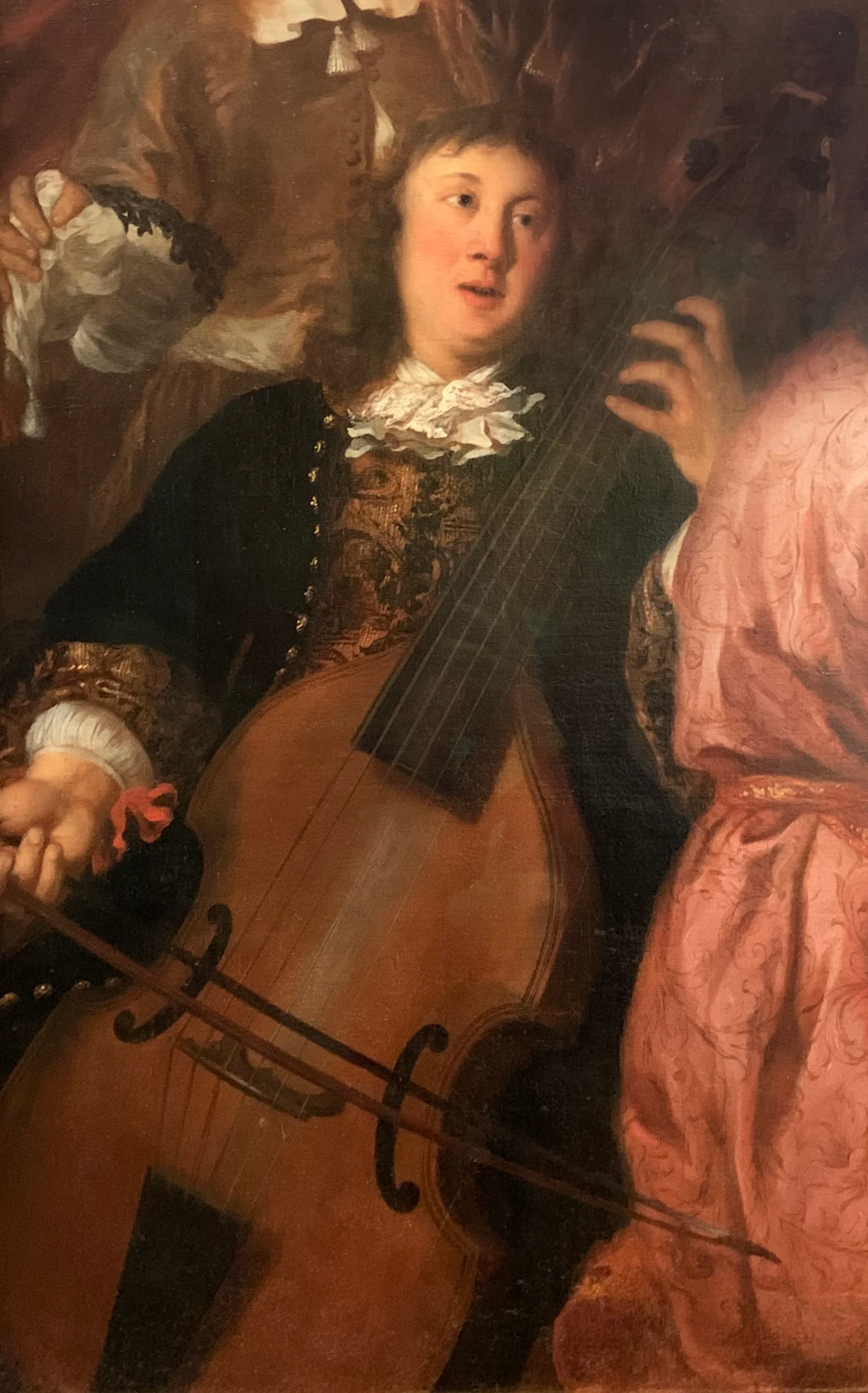
Image from Wikipedia
Image from Wikipedia
Dieterich Buxtehude – Architect of the North German Baroque Sound
The Visionary of Evening Music – How an Organist Shaped Music History
As an organist, composer, and catalyst of the North German Organ School, Dieterich (also: Dietrich) Buxtehude (ca. 1637–1707) profoundly influenced the sound language of the Baroque with his unmistakable signature. Balancing liturgical practice and extra-liturgical concert culture, he forged a musical career that set new standards for stage presence in church settings. His artistic development culminated in Lübeck at St. Mary’s, where the legendary evening concerts originated as an early publicly accessible concert series that resonated across Europe. Buxtehude's work integrates virtuosic organ artistry, highly elaborate vocal music, and chamber-like explorations – an oeuvre that significantly inspired Johann Sebastian Bach and Georg Friedrich Händel.
Early Years Between Helsingborg and Helsingør
The biographical beginnings of Buxtehude lie shrouded in the shadows of history: as the son of an organist, he received his initial training in the immediate environment of church music. He soon took up organist positions in Helsingborg and Helsingør, two important stops in his artistic development. It is here that his dual talent for improvisation and composition began to emerge, shaping the organ style of the North. The historical context – confessional orientation, urban bourgeoisie, trade networks – provided fertile ground for music that combined spiritual ambition with public representation.
Lübeck: Master Craftsman, Organist, and Curator of a New Concert Culture
In 1668, Buxtehude assumed the significant organist position at St. Mary’s in Lübeck. As "Master Craftsman," he was responsible not only for the musical life but also for organizational and financial matters – a rare autonomy that solidified his authority in the city. In this role, he professionalized the evening concerts: initially starting as expanded church concerts during Advent, they evolved into elaborate programs featuring orchestras, choirs, and dramatic elements. These non-liturgical performances attracted streams of visitors from across the entire northern German region; Lübeck became a pilgrimage site for organists, composers, and music lovers.
Encounters with Händel, Mattheson, and Bach
Buxtehude's reputation as the main representative of the North German Organ School reached the young masters of his time. In 1703, Georg Friedrich Händel and Johann Mattheson traveled to Lübeck; in 1705, Johann Sebastian Bach made the long journey on foot. The famous study trip, which caused Bach to stay longer than planned, attests to Buxtehude's impact as a living example. What transpired at the organ, in rehearsals, and likely within the evening concerts at that time shaped Bach's compositional ambition – from the free toccata aesthetic (Stylus phantasticus) to the artful choral arrangements.
The Organ Works: Preludes, Fugues, and Ostinato Innovations
Buxtehude's fame is primarily based on his organ works. The “Preludes” merge free, fantasy-like toccata sections with rigorously crafted fugues – a dramatic interplay of affects that demands interpretative maturity. Outstanding are the three ostinato compositions: the Passacaglia in D Minor (BuxWV 161) and two Chaconnes (BuxWV 159, 160). These works demonstrate the principle of the varying bass model with architectural consistency, modulating sound spaces, accentuating metric shifts, and sketching organic arcs of tension. Later masters – from Bach (Passacaglia BWV 582) to Brahms – recognized in this ostinato architecture a center of compositional power.
Vocal Music and the Düben Collection: Sound Archive of the 17th Century
Although Buxtehude was not obliged to compose vocal music regularly as an organist, the sacred vocal music constitutes a large part of his surviving works. The central site of transmission is the so-called Düben Collection at the court of Stockholm/Uppsala, which contains scores and parts for more than one hundred vocal works by Buxtehude. This source documents repertoire diversity, instrumentation breadth, and text politics: biblical words, hymns, and contemporary sacred poetry intertwine. For historical performance practice, the collection provides essential guidelines on instrumentation, vocal ranges, figured bass practice, and rhetorical declamation.
“Membra Jesu nostri”: Cycle, Devotion, Sound Design
With the seven-part cantata cycle “Membra Jesu nostri” (BuxWV 75, 1680), Buxtehude reached a peak of sacred concert art. The cycle develops a theological-poetic meditation on the parts of Christ – from the feet to the face – and unites concertante aria forms with choral settings, instrumental ritornellos, and artful imitations. The formal structure showcases Buxtehude’s mastery in composition, arrangement, and sound balance between vocal ensembles and string color. The dedication and transmission context weave the work closely with the Düben Collection – a prime example of the international circulation of North German music around 1680.
Chamber Music and Trio Sonatas: Stylus Phantasticus in Small Form
In addition to organ and vocal music, Buxtehude cultivated the chamber music genre of the trio sonata. His sonatas cultivate the Stylus phantasticus in a compressed form: free, improvisatory-sounding passages stand alongside dance-like movements, counterpoint flashes appear, and affect shifts intensify the drama. These works demonstrate his ability to envision sound spaces beyond the organ – a compositional laboratory that consciously blurs the boundaries between liturgical service and “public” concert music.
Discography, Reception, and Historically Informed Performance Practice
The history of reception in the 19th and 20th centuries viewed Buxtehude largely through the lens of Bach's biography. Only the historically informed performance practice of the late 20th century unveiled the stylistic independence of his music. Significant complete recordings – such as the “Opera Omnia” project – and editorial milestones focused attention on source criticism, work catalogs (BuxWV), instrumentation variations, and tempo questions. Since then, renowned ensembles and organists have dedicated themselves to the complete organ works, cantatas, and trio sonatas, expanding discography in both breadth and depth. Award-winning recordings and scholarly editions reinforce the authority of Buxtehude's work in the canon.
Current Projects: Editions, Reconstructions, Digitizations
Even centuries after his death, Buxtehude's music remains a dynamic field of research and performance. Reconstructions of lost or fragmentarily transmitted evening concerts are reintroduced into concert programs, accompanied by congresses and festivals. The digitization of central sources – especially the Düben database – improves accessibility for research and practice. Additionally, previously overlooked autographs are being re-evaluated and published as facsimiles, which further sharpens the discussion around notation, text transmission, and performance modalities. New recordings and thematic concert series regularly bring Buxtehude's sound language into contemporary awareness.
Evening Concerts: From Urban Economy to Europe's Sound Brand
The evening concerts are a cultural-historical unique: supported by the Hanseatic urban economy, free of charge, with high artistic aspirations. Organizationally demanding, aesthetically ambitious, and dramaturgically composed, they formed a forum in which Buxtehude could present large-scale sacred concepts – up to multi-part oratorios. This “stage presence” in sacred space redefined the relationship between church, citizenship, and art, making Lübeck a hub of Baroque concert culture.
Stylistics and Genre Politics: What Makes Buxtehude Distinctive
Buxtehude thinks compositionally in terms of drama: transitions between free, fantasy-like invention and contrapuntal rigor, affect-laden dissonance treatment, rhetorically pointed text interpretation. In the organ works, toccata ecstasies merge with fugue construction; in the vocal music, concerto elements, chorale fantasies, and aria typologies meet. Characteristic is the precise control of the figured bass and the color-conscious instrumentation – from violins to violas da gamba – with an architecturally sound perspective. This combination of expertise in composition, arrangement, and production makes his works particularly coherent in historically informed practice.
Cultural Influence: From the North German Workshop Concept to European Modernity
Buxtehude stands at a cultural-historical crossroads: between Schütz and Bach, he anchors North German church music in the European discourse. His ostinato works provide blueprints that later generations – from Bach to Brahms – productively engaged with. The evening concerts establish a model of citizen-funded concert series. The modern culture of editions and recordings owes its impulses to Buxtehude, which set quality standards for source criticism, repertoire development, and sound aesthetics. The fact that today organists, vocal ensembles, and chamber formations worldwide draw on Buxtehude attests to the enduring relevance of his music.
Conclusion: Why Listen to Buxtehude Today – and Experience It Live?
Buxtehude sounds timeless because his music combines inner architecture with emotional directness. Those who experience the Passacaglia in D Minor or “Membra Jesu nostri” live encounter Baroque sound as contemporary art: bold in formal conception, precise in structure, and touching in expression. Whether in a reconstruction of an evening concert or on a historic organ – Buxtehude demonstrates how artistic development, technical mastery, and cultural-political vision culminate in a work that continues to inspire today. The call is clear: this music belongs in the concert hall, in the church – and on every well-curated playlist for early music.
Official Channels of Dieterich Buxtehude:
- Instagram: No official profile found
- Facebook: No official profile found
- YouTube: No official profile found
- Spotify: No official profile found
- TikTok: No official profile found
Sources:
- Encyclopaedia Britannica – Dietrich Buxtehude (updated 2026)
- Wikipedia (DE) – Dieterich Buxtehude
- Wikipedia (EN) – Dieterich Buxtehude
- Wikipedia (DE) – Abendmusiken
- International Dieterich Buxtehude Society (IDBG) – Official Website
- Uppsala University – The Düben Collection Database Catalogue
- Uppsala University – Information on the Düben Collection
- Wikipedia (EN) – Membra Jesu nostri, BuxWV 75
- Wikipedia (EN) – Passacaglia in D minor, BuxWV 161
- Bärenreiter – Facsimile “Herr, ich lasse dich nicht”, BuxWV 36
- Wikipedia (EN) – Dieterich Buxtehude – Opera Omnia (Ton Koopman)
- Unser Lübeck – “Buxtehude Evening Concert” (Premiere of reconstructed works, 2025)
- Wikipedia: Image and text source
Upcoming Events
Cantata Service in Lent – Sunday Judika
Cathedral Concert: Exclamatio - Baroque Music in Freising Cathedral