
Daniel Hope (Violinist)
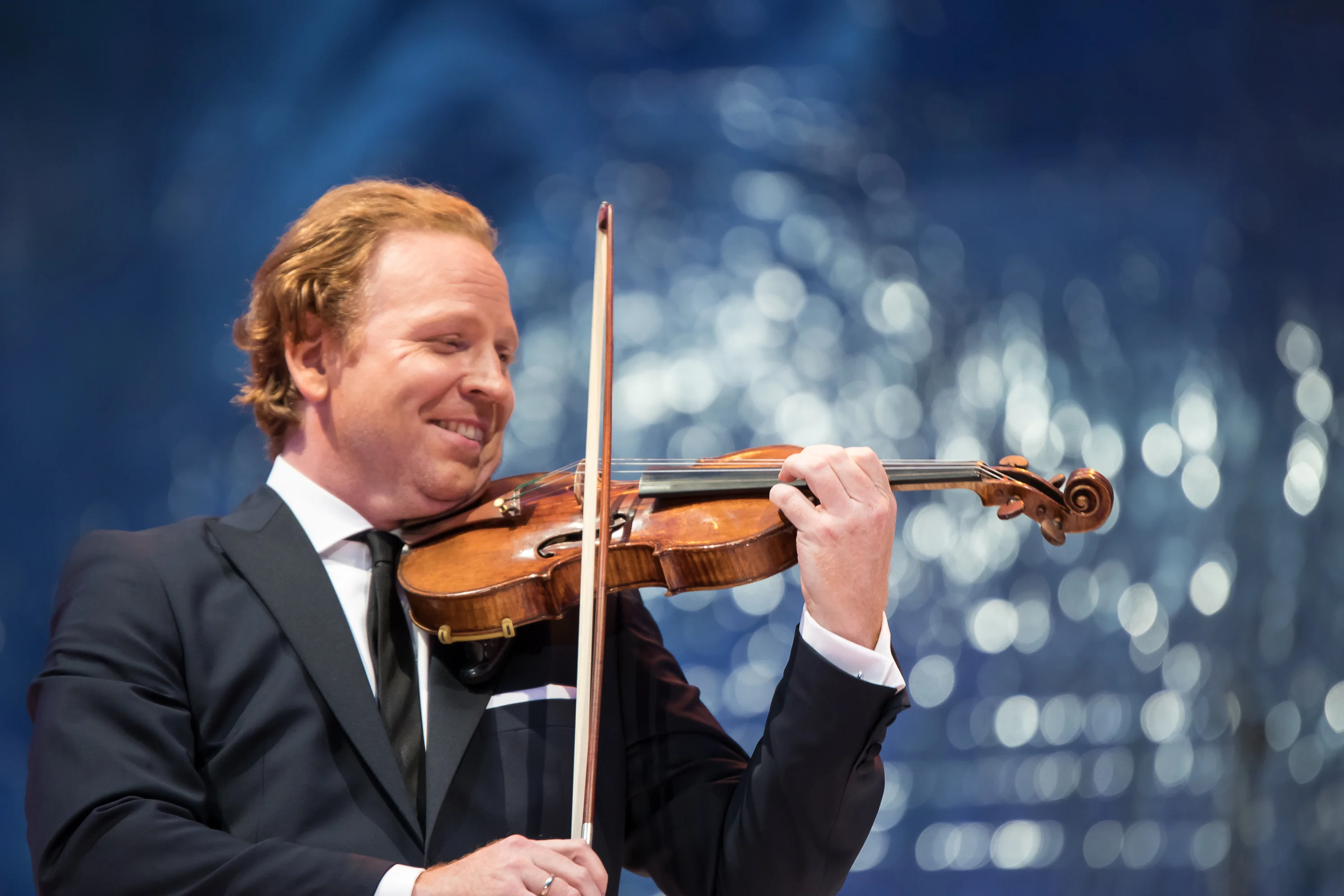
Image from Wikipedia
Image from Wikipedia
Daniel Hope – the cosmopolitan violinist between tradition, curiosity, and the present
An exceptional violinist who understands classical music as a living narrative
Daniel Hope is one of the defining violinists of his generation: an Irish-German violinist born in 1973 in Durban, raised in England, early supported by Yehudi Menuhin, and internationally present for decades as a soloist, chamber musician, host, author, and musical curator. His career combines technical confidence with programmatic imagination, historical sensitivity, and a pronounced eagerness for musical communication. Since 2016, he has been the artistic director of the Zurich Chamber Orchestra; he has also been the artistic director of the Dresden Frauenkirche since 2019 and will take over as director and Artistic Director of the Gstaad Menuhin Festival & Academy in the 2025/26 season. ([danielhope.com](https://danielhope.com/about/?utm_source=openai))
Biography: Growing up between continents, languages, and musical influences
Hope's life journey begins in South Africa, moves through Paris to London, reflecting an early biography shaped by migration, cultural openness, and education. His family was forced out of the country by the history of apartheid in South Africa; his mother later worked for Yehudi Menuhin, which gave Daniel Hope immediate access to one of the most significant musical personalities of the 20th century. As a child, he played in Menuhin's surroundings, later studied at the Royal Academy of Music, and received important impulses from Zakhar Bron and Itzhak Rashkovsky. ([deutschegrammophon.com](https://www.deutschegrammophon.com/en/artists/danielhope/biography?utm_source=openai))
This early connection to Menuhin not only shaped his artistic stance but also his self-understanding as a musical ambassador. In a personal piece in 2016, The Guardian recalled Hope's lasting gratitude towards Menuhin and the extraordinary impact of this encounter. His subsequent work in music education, on concert stages, television, and in projects with social or cultural-historical focus consistently follows this approach: classical music as a personal experience, not a museum ritual. ([theguardian.com](https://www.theguardian.com/music/2016/mar/29/yehudi-menuhin-by-daniel-hope-violinist?utm_source=openai))
Career: From a promising young talent to an internationally sought-after musical creator
Hope's professional path began to accelerate in the early 1990s. A significant career boost came from his membership in the Beaux Arts Trio, which he joined as a violinist in 2002; with his entry, the last section of the legendary formation entered its final phase before the ensemble gave its farewell concerts in 2008. At the same time, Hope developed into a soloist with a broad repertoire, performing with leading orchestras and conductors while also standing out as a program thinker. ([en.wikipedia.org](https://en.wikipedia.org/wiki/Daniel_Hope))
His dual role as a performing artist and artistic director is particularly striking. Since 2016, he has been shaping the Zurich Chamber Orchestra, since 2019 the music programs of the Dresden Frauenkirche, and in 2025, he will take over the leadership of the Gstaad Menuhin Festival & Academy. These positions reflect not just an administrative claim but a curatorial thinking that intertwines repertoire, audience, and venue. His profile as a musical host and storyteller is just as important as his role as a soloist. ([danielhope.com](https://danielhope.com/about/?utm_source=openai))
Musical development: From classical core to open program idea
The appealing aspect of Daniel Hope lies in his ability to expand the classical concert format without diluting the character of the works. His programs connect Baroque, Classical, Romantic, Modern, and crossover elements with a dramaturgical idea that guides listeners through thematic arcs. The official website currently describes concerts referencing Beethoven, Brahms, Mozart, Elgar, Strauss, Irish Roots, and Late-Night Jazz – a spectrum that sharpens Hope's role as a boundary-crosser in the classical scene. ([danielhope.com](https://danielhope.com/performances/))
His musical signature stems from a combination of stylistic awareness and curiosity. Rather than mere virtuosity, Hope emphasizes musical rhetoric, precise expression, and the internal dramaturgy of a work. This explains why he excels in both the core repertoire and in developing projects with folk, film, crossover, historical reflection, and contemporary compositions. This versatility is not a side effect but the core of his artistic identity. ([danielhope.com](https://danielhope.com/about/?utm_source=openai))
Discography: From Menuhin homages to "DANCE!" and "Irish Roots"
Since 2007, Daniel Hope has been an exclusive artist with Deutsche Grammophon and has an extensive, award-winning discography. His notable recordings include homages to Yehudi Menuhin, repertoire with historical perspectives, and conceptually designed albums such as "For Seasons," "DANCE!," "Irish Roots," and "Hope." DG also points to numerous awards, including the Classical Brits title "Young Artist of the Year" in 2004, seven ECHO Klassik awards, the German Record Prize, the Prix Caecilia, the Diapason d’Or de l’Année, and a Special Prize from the Edison Classical Award. ([deutschegrammophon.com](https://www.deutschegrammophon.com/en/artists/danielhope/biography?utm_source=openai))
In terms of content, Hope's recordings bear his curatorial signature. "DANCE!" traces the history of Western dance from medieval sources to the present, while "Irish Roots" emerged from his exploration of Irish family history and connects folk and art music. The official website names both releases as key pillars of the 2024/25 season; other projects like "Hope" and "Hommage à Menuhin" underscore his inclination towards thematically cohesive, narrative albums rather than mere collections of repertoire. ([danielhope.com](https://danielhope.com/2024-25-season-highlights/))
Current projects from 2024 to 2026: New programs, tours, and leadership roles
Recent activities show Daniel Hope in full agility. For 2024/25, he announced programs like "Irish Roots," "A Winter Fairytale: Stories and Songs at Christmastime," "Journey to Mozart," as well as performances with the Barcelona Symphony Orchestra and the Sinfonia Varsovia. His official website lists further stops in 2026 in Elmau, Istanbul, Dresden, California, and at the Frauenkirche Dresden – a dense concert calendar that confirms his international presence. ([danielhope.com](https://danielhope.com/2024-25-season-highlights/))
Content-wise, the work remains current and thematically cohesive. The programs announced for 2025 and 2026 continue to develop Hope's lines between repertoire maintenance, thematic dramaturgy, and ensemble culture. Notably, he does not merely perform concert formats but conceives them as spaces of experience: with changing chamber formations, programmatic titles, and clear connections between historical music and contemporary listening habits. ([danielhope.com](https://danielhope.com/performances/?utm_source=openai))
Critical reception and cultural influence
The music press has described Hope for years as an exceptionally versatile artist. Deutsche Grammophon cites Gramophone's assessment that he embodies "the role of the music ambassador" in a special way; The Guardian praised his interpretations multiple times in reviews and accompanying texts about recordings and programs. Earlier press reviews also highlight his "dedication and brilliance" along with his creativity and humanitarian commitment. ([danielhope.com](https://danielhope.com/about/?utm_source=openai))
His cultural influence extends far beyond the classical concert. During the pandemic, his streaming series "Hope@Home" became a media-effective format with hundreds of contributors and millions of views; he is also committed to the memory of persecuted composers, music from exile, and cultural-historical projects with documentary aspirations. Thus, Hope is one of those rare artistic figures who convincingly combines virtuosity, educational mission, and cultural responsibility. ([danielhope.com](https://danielhope.com/about/?utm_source=openai))
Stage presence, repertoire, and artistic signature
On stage, Daniel Hope captivates not only through sound but through presence. His performances never feel isolated but rather like carefully composed dialogues between the work, space, and audience. Especially in chamber music and in programmatically designed concert series, his strength as a musician unfolds, one who not only plays but also interprets, frames, and tells stories. ([danielhope.com](https://danielhope.com/performances/?utm_source=openai))
His repertoire reflects this signature: Elgar, Mozart, Brahms, Berg, Strauss, Hailstork, Kilar, folk traditions, and contemporary works stand equally side by side. This openness makes him equally interesting for classical purists and listeners seeking new approaches. In sum, it creates the image of a violinist who does not conserve tradition but keeps it alive. ([danielhope.com](https://danielhope.com/performances/))
Conclusion: Why Daniel Hope remains compelling today
Daniel Hope is compelling because he understands classical music as a cultural resonance space: personal, historical, open, and contemporary. His music career unites international stage presence, curatorial intelligence, pronounced stylistic sensitivity, and a discography that goes far beyond mere virtuosity. Those who experience him live encounter not just an outstanding violinist but a creator of musical narratives. ([danielhope.com](https://danielhope.com/about/?utm_source=openai))
Those who experience Daniel Hope on stage witness a sound culture with substance, temperament, and attitude. Particularly because he thinks of programs as journeys and music as encounters, every concert is worth experiencing as a standalone event. His performances deserve attention – and they deserve the live experience. ([danielhope.com](https://danielhope.com/performances/?utm_source=openai))
Official channels of Daniel Hope:
- Instagram: no official profile found
- Facebook: no official profile found
- YouTube: no official profile found
- Spotify: no official profile found
- TikTok: no official profile found
Sources:
- Daniel Hope – Official Website
- Daniel Hope – About
- Daniel Hope – Performances
- Daniel Hope – 2024/25 Season Highlights
- Daniel Hope – Winter/Spring 2025
- Deutsche Grammophon – Daniel Hope Biography
- Deutsche Grammophon – HOMMAGE À MENUHIN
- The Guardian – My mentor Yehudi Menuhin: 'I can still hear his beautiful sound'
- The Guardian – 'Dear Daniel, that was enchanting'
- Wikipedia: Daniel Hope (Violinist)
Upcoming Events
BTHVN WEEK 2026: Around the World in 80 Minutes
Chamber Music Festival BTHVN WEEK 2026
BTHVN WEEK 2026 in Bonn: Chamber Music Festival at the Beethoven House
BTHVN WEEK 2026
Mecklenburg-Vorpommern Festival: Hope Plays Elgar
International Stars on the Rhine: Classical Music for Bonn
BTHVN2027 Chamber Music Festival with Daniel Hope in Bonn
BTHVN2027 Chamber Music Festival