
Brüder Grimm
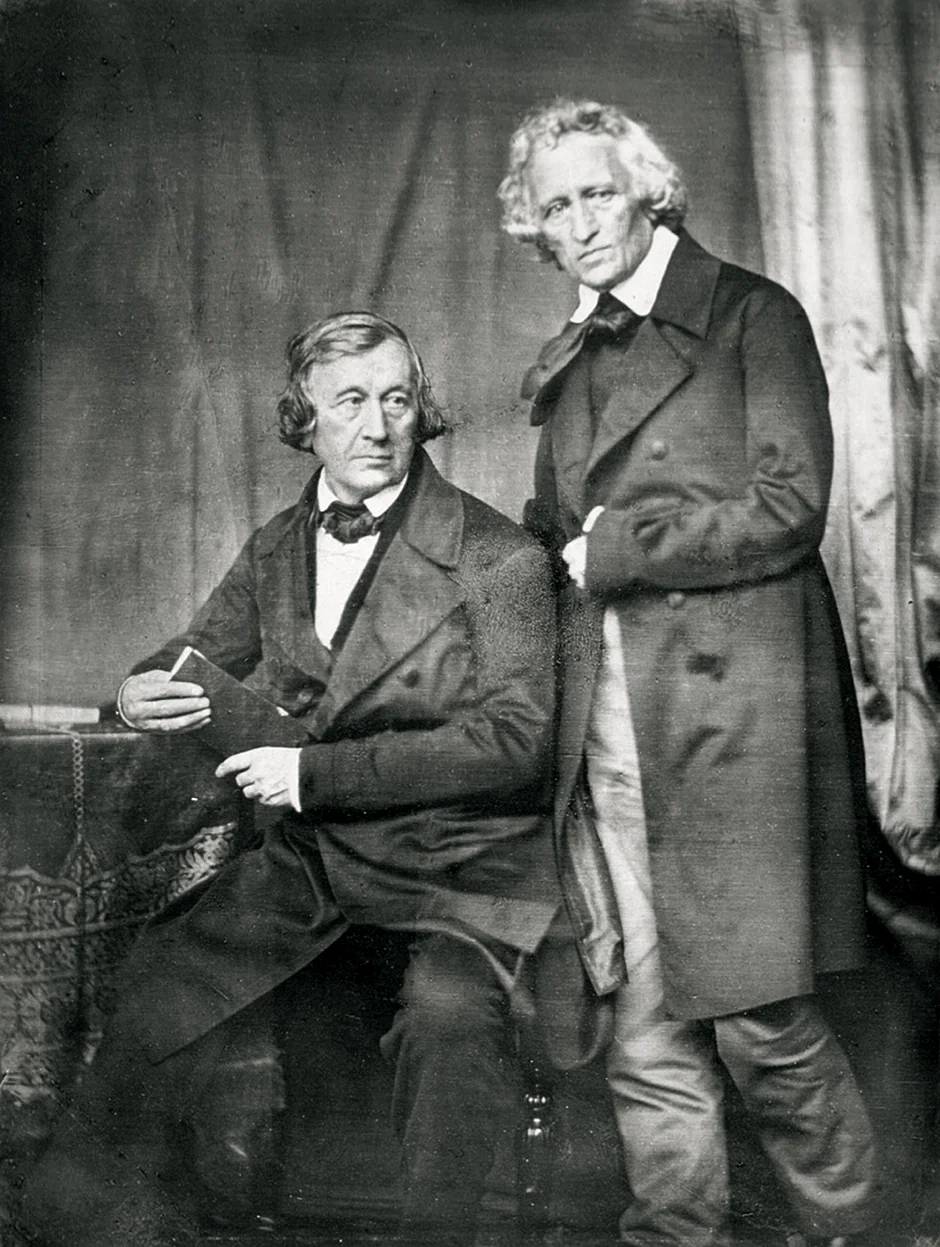
Image from Wikipedia
Image from Wikipedia
Brothers Grimm – the great architects of German fairy tale heritage
Jacob and Wilhelm Grimm: Linguists, collectors, and cultural icons
The Brothers Grimm are not musicians but an intellectual duo of German cultural history: Jacob Grimm and Wilhelm Grimm, born in 1785 and 1786 in Hanau, became world-renowned as linguists, folklorists, and editors. Together, they shaped the way fairy tales, language, and national narrative tradition are read to this day through their Children's and Household Tales and the initiated German Dictionary. Their significance extends far beyond literature, as their work became a foundation of German studies and a cultural memory space in the German-speaking world. ([britannica.com](https://www.britannica.com/biography/Brothers-Grimm?utm_source=openai))
Biographical roots: Hanau, Kassel, and Marburg
The brothers grew up in an educated but increasingly burdened family after the early death of their father. After attending the Lyceum in Kassel, both studied law at the University of Marburg, originally aiming for a career in public service. However, their interest soon shifted to language, textual transmission, and historical source research—a path that led them from jurisprudence to the history of ideas. Britannica describes this phase as the early academic formation of two brothers whose temperaments differed, yet whose work became one of the most productive collaborations in European science. ([britannica.com](https://www.britannica.com/biography/Brothers-Grimm?utm_source=openai))
The breakthrough with the Children's and Household Tales
The true cultural breakthrough came with the collection and publication of the Children's and Household Tales, the first volumes of which were published between 1812 and 1822. What began as a collection of oral and written traditions evolved into one of the most influential books of world literature. The Grimm fairy tales have been not only read but also continuously reinterpreted, adapted, illustrated, set to music, and carried into theater, film, and pop culture. The GRIMMWELT Kassel explicitly classifies this work as a central reference point of narrative culture and modern reception. ([britannica.com](https://www.britannica.com/biography/Brothers-Grimm?utm_source=openai))
Language work as a lifelong project: The German Dictionary
Equally influential as the fairy tale collection was the brothers' scholarly approach to the German language. With the German Dictionary, they began a monumental project that aimed to systematically document words, meanings, and linguistic history. This work represents the philological precision with which the Grimms shaped the foundations of modern German studies. The GRIMMWELT emphasizes this triad of linguistic research, Children's and Household Tales, and biography as the core of their life's work. ([grimmwelt.de](https://www.grimmwelt.de/files/downloads/Stellenanzeigen/Ausschreibung_GRIMMWELT_Volontariat_2026.pdf?utm_source=openai))
Academic authority and the birth of German studies
Together with Karl Lachmann and Georg Friedrich Benecke, the Brothers Grimm are regarded as founders of German studies. Their authority stemmed not from a single bestseller but from the combination of collection, edition, linguistic analysis, and cultural-historical interpretation. Particularly, Jacob Grimm distinguished himself as a systematic thinker, while Wilhelm Grimm was often seen as the more literarily sensitive and narratively refined editor. Together, they created a biographical body of work that uniquely combines science and imagination. ([britannica.com](https://www.britannica.com/biography/Brothers-Grimm?utm_source=openai))
Political stance and public impact
The Brothers Grimm did not remain solely within the academic realm. Their path led them into the political conflicts of their time, and their involvement in the movement of the Göttingen Seven made them public figures of significant regional influence. This episode shows that their life's work was not only based on texts but also on conviction, civil courage, and an awareness of the cultural responsibility of scholars. Steffen Martus describes the brothers in his biography as figures whose impact extended deep into the political public sphere. ([britannica.com](https://www.britannica.com/biography/Friedrich-Melchior-Baron-von-Grimm?utm_source=openai))
Discography? Why the Grimms left behind a repertoire instead of albums
The Brothers Grimm do not have a classical discography, but their narrative repertoire functions culturally like a catalog of immortal standards. Hansel and Gretel, Little Red Riding Hood, Snow White, Cinderella, and many other tales have become global reference points that circulate in countless media formats. In this sense, the fairy tales form a kind of canon, whose motifs reach into contemporary literature, children's culture, animation, and festival programs. The Grimmwelt points to this ongoing popularization and the role of the fairy tales as living cultural material. ([grimmwelt.de](https://www.grimmwelt.de/de/presse/bilder?utm_source=openai))
Critical reception and cultural influence
The reception of the Brothers Grimm is extraordinarily broad: Literary studies, education, art, theater, and pop culture continue to draw upon their work. Their fairy tales are not just harmless children's stories, but complex narrative forms full of ambiguity, symbolism, and social tension. That their texts belong to the standard repertoire internationally is evident in museum permanent exhibitions, anniversary programs, and ongoing reinterpretations. The cultural authority of the brothers lies precisely in the fact that their stories never seem complete, but can be read anew time and again. ([grimmwelt.de](https://www.grimmwelt.de/de/journal/grimms-cassel?utm_source=openai))
Current relevance: Why the Brothers Grimm are still present in 2026
Even in 2026, the work of the Brothers Grimm remains relevant, as it continues to shape institutions, programs, and exhibitions. The GRIMMWELT Kassel refers to ongoing educational offerings, special exhibitions, and the continued engagement with Grimm’s narrative worlds in its current program. Additionally, festivals and stage formats around the Grimm theme showcase how vibrant the cultural heritage of the brothers remains. This is not a nostalgic retrospective but a continued dialogue between past and present. ([grimmwelt.de](https://www.grimmwelt.de/de/journal/das-neue-programm-ist-da?utm_source=openai))
Style, method, and literary signature
The handwriting of the Brothers Grimm combines precision with poetic openness. Their scholarly method was based on collecting, comparing, and preserving, while their literary impact arose from the simplicity and archaic power of the fairy tale texts. This balance of documentation and narrative magic makes their work so accessible even today. Those who read the Grimms encounter not only old stories but also a foundational space of German language and cultural research. ([britannica.com](https://www.britannica.com/biography/Brothers-Grimm?utm_source=openai))
Conclusion: A legacy that never loses resonance
The Brothers Grimm remain compelling because they unify science and imagination, collection and myth, accuracy and narrative power in a unique life’s work. Their work has globalized fairy tales, established German studies, and erected a monument to German language history. Anyone wishing to understand how stories become cultural myths cannot overlook Jacob and Wilhelm Grimm. A visit to exhibitions, readings, or the Grimm locations in Kassel and Hanau makes this heritage vividly experienceable. ([grimmwelt.de](https://www.grimmwelt.de/de/journal/grimms-cassel?utm_source=openai))
Official channels of the Brothers Grimm:
- Instagram: No official profile found
- Facebook: No official profile found
- YouTube: No official profile found
- Spotify: No official profile found
- TikTok: No official profile found
Sources:
Upcoming Events
What if... the Brothers Grimm had been in Wasserburg - Guided Tour
Tour »The GRIMMWELT from A-Z«
Führung »Die GRIMMWELT von A-Z«
Tour "The GRIMMWELT from A-Z"
From One Who Set Out to Learn Fear - Fairy Tale Musical

City Tour Kassel - Art - Culture