
Bamberger Symphoniker
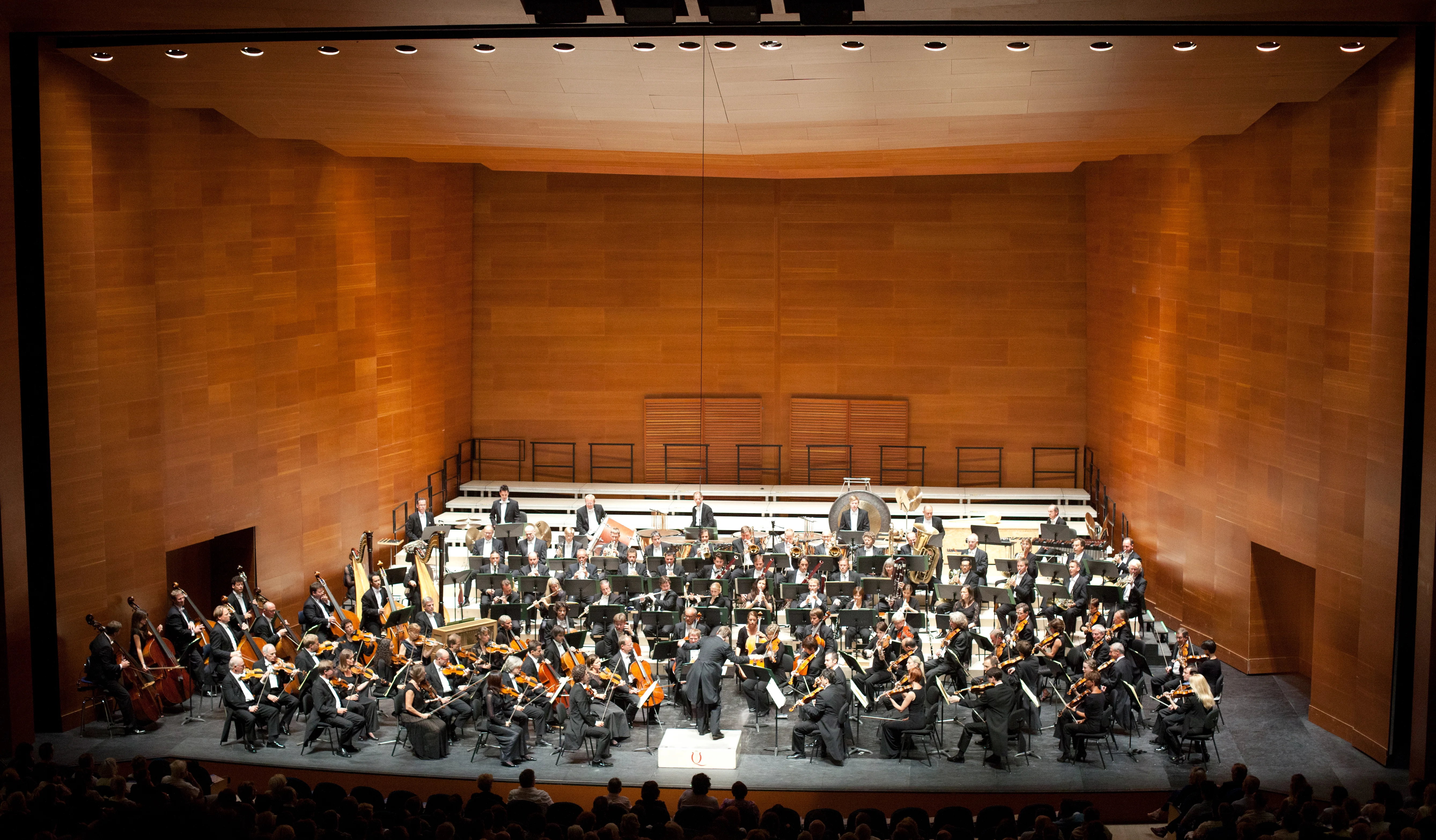
Image from Wikipedia
Image from Wikipedia
Bamberg Symphony Orchestra – Bavarian State Philharmonic
An Orchestra with a Global Sound: From Bohemian Roots to a Global Ambassador of Symphony
Founded in 1946 and based in Bamberg, the Bamberg Symphony Orchestra embodies a musical journey that combines tradition, artistic development, and international outreach. Their distinctive "Bohemian sound" is rooted in the post-war history of the ensemble and continues to shape their stage presence today. As the Bavarian State Philharmonic and one of the most touring orchestras in Germany, the ensemble makes a unique contribution to European orchestral culture through a carefully curated repertoire, innovative concert formats, and award-winning recordings.
Biography: Origins, Identity, and Sound
The founding of the Bamberg Symphony Orchestra takes place in the immediate post-war period – a moment of reorientation where musicians from the Bohemian-Moravian region established a new orchestral life in Bamberg. This origin is not only a historical foundation but also acoustic DNA: the warmly grounded, chamber-music-like sound, which has entered the orchestra's music history as the "Bohemian sound." Since 2004, the orchestra has held the status of a state orchestra; its home since 1993 is the Concert Hall Bamberg with the Joseph Keilberth Hall, whose acoustics ideally support the precision of articulation, phrasing, and dynamic gradation. Since its inception, the orchestra has performed in over 500 cities and 64 countries, giving more than 7,700 concerts and carrying the name Bamberg as a musical ambassador around the world.
Chief Conductors, Honorary Conductors, and a Signature of the 21st Century
The lineage of chief conductors shapes the artistic development: Following Joseph Keilberth, personalities such as James Loughran, Horst Stein, Jonathan Nott, and since 2016 Jakub Hrůša have taken up the baton. Under Hrůša, the artistic profile has consolidated – programmatically, sonically, and discographically. The orchestra shares a special partnership with honorary conductors Herbert Blomstedt, Christoph Eschenbach, and Manfred Honeck, whose work exemplifies the interpretational range from classical modernism to late Romantic repertoire. The continuity of these artistic alliances establishes an interpretive framework: Those who listen to the Bamberg Symphony experience how tradition becomes contemporary – as lived expertise rather than a museum piece.
Career Highlights on Tour – From the Edinburgh Festival to Asia
As a touring orchestra, the Bamberg Symphony Orchestra performs on major stages across Europe and beyond. In recent seasons, they have held residences at the Edinburgh Festival and the Dvořák Festival in Prague, guest performances at the Concertgebouw Amsterdam and Elbphilharmonie, as well as a comprehensive tour of Asia with stops in Japan, Korea, and Taiwan. This traveling activity is more than mere representation: it sharpens ensemble culture, repertoire competence, and collaboration with leading soloists. This results in a vibrant exchange that is audible in the orchestral sound – in the flexibility of tempos, the delicate balance of woodwind and brass colors, and the careful agogics in large symphonic arcs.
Season Themes, Formats, Audience: "What We Love" and "Joy of Playing"
With dramaturgically curated seasons, the Symphony Orchestra creates a profile. Under mottos like "What We Love" (2024/25) or "Joy of Playing" (2025/26), the orchestra links core repertoire with innovative formats – such as "Slam Symphony," "Club Symphony," or "Video Games in Concert." These programs open the house to new listening demographics without compromising artistic substance. This is pedagogically supported by active education work and the Joseph Keilberth Orchestra Academy: young musicians are integrated into daily rehearsal and performance practices, learning sound discipline, stylistic understanding, and orchestral culture – growing alongside a top-tier ensemble.
Discography: Curated Sound Worlds, Award-Winning Cycles
The discography of the Bamberg Symphony Orchestra documents a reflective repertoire policy. Since the 1950s, close media partnerships have been established with Bavarian Radio; today, label-specific collaborations with Accentus Music, Deutsche Grammophon, CPO, and others shape the picture. Under Jakub Hrůša, prominent projects have emerged, such as the multi-layered Bruckner focus and conceptual albums. A prime example is "Heroes – Life – Song" (Dvořák: A Hero's Song, Glazunov: Symphonic Elegy "To the Memory of a Hero," Strauss: A Hero's Life), representing a modern program dramaturgy that connects thematic fields – hero, memory, legacy – across composers and epochs. This is complemented by Bruckner releases that operate at the highest acoustic and editorial level, as well as projects like the "Direct-to-Disc" vinyl of Dvořák's Ninth, making the live gesture of analog production audible.
Critical Reception and Awards: Authority Through Performance
The international response confirms the artistic authority: For the four-part edition "Bruckner 4 – The 3 Versions," the Bamberg Symphony Orchestra received an International Classical Music Award (ICMA). Reviews highlight the detail-saturated sound work, the structural clarity in complex late Romanticism, and the differentiated brass-woodwind relationship. Recent releases also prompt discourse in the press – such as "Heroes – Life – Song," whose dramatic coherence and orchestral presence are recognized as a striking statement of a modern state orchestra. These acknowledgments extend beyond recordings: They sharpen expectations for the live experience and set benchmarks for performance practice and repertoire interpretations.
Style and Aesthetics: The "Bamberg Sound" as a Signature
What defines the "Bamberg Sound"? On one hand, the organic homogeneity of the strings, which speaks as a collective in legato culture, bow weights, and vibrato economy. On the other hand, the distinctly articulated woodwind colors, whose phrasing makes the inner voices of a score audible. Additionally, the brass, supported by the hall profile, appears substantial but never flashy. Under Hrůša, this has been perfected in a mix of energetic pulse, clear form direction, and an instinctive sense of orchestral transparency: contrapuntal densifications remain illuminated, culminations build plausibly dramaturgically, and the grand line retains – even in the virtuosic moment – an architectural format.
Programmatic Diversity: From Core Repertoire to Crossover
Besides the classical pillars – Beethoven, Brahms, Bruckner, Dvořák, Strauss – the orchestra seeks dialogue with contemporary and pop culture. Projects like "Video Games in Concert" or techno-affine club formats demonstrate how orchestral textures can be translated into new contexts. The production aesthetics are crucial: orchestration, arrangement, and sound design are treated not as gimmicks but as serious expansions of the symphonic language. At the same time, the ensemble remains closely connected to song and choral repertoire, collaborating with choirs and vocal stars as well as outstanding instrumental soloists.
The Mahler Competition: A Talent Factory with Global Impact
Since 2004, the Bamberg Symphony Orchestra Foundation has hosted the internationally renowned "Mahler Competition" – a conducting competition featuring public rehearsal work, an exceptional density of jurors, and a final concert. The 8th edition (June 23 – July 3, 2026) underscores Bamberg's significance as a training and career hub. The format – extensive rehearsal times, direct work with the orchestra – is unique and has propelled careers that today shape major stages. In this way, the institution exemplifies a connection between artistic excellence, youth promotion, and audience engagement.
Current Projects and Perspectives
Currently, the 2025/26 anniversary season ("Joy of Playing"), international residencies, and high-profile guest lists shape the program. On the recording side, in addition to thematically curated Accentus productions, there are partnerships with Deutsche Grammophon and CPO. Special concert events also mark highlights – such as Bruckner's Ninth for the composer’s 200th birthday with Herbert Blomstedt or the continuous care of the late Romantic repertoire in contrasting program architectures. At the same time, the orchestra is focusing on more sustainable travel routines and a consistent audience engagement that harmonizes accessibility, quality, and educational commitments.
Voices of the Fans
The reactions from fans clearly show: The Bamberg Symphony Orchestra captivates people worldwide. On Instagram, one visitor writes after a guest performance: "This sound goes under your skin – so much warmth and precision in one evening!" A listener praises on Facebook: "Program, dramaturgy, ensemble culture – rarely experienced such harmony!" And under a YouTube video it says: "Transparency, energy, grand line – one of the best orchestras of our time." These spontaneous comments reflect what is described analytically in reviews: an ensemble that unites technique, soul, and a sense of style.
Conclusion: Why the Bamberg Symphony Orchestra is Indispensable Today
The Bamberg Symphony Orchestra unites historical depth, interpretational clarity, and programmatic curiosity. Their discography demonstrates expertise in composition, orchestration, and production, while their on-stage presence on tour continues to project the Bamberg sound as a living signature. Whether core repertoire, curated thematic albums, or crossover – the musical idea always prevails. Those who wish to understand how a modern state orchestra shapes artistic development should experience the Bamberg live: here, symphony becomes contemporary art, an immediate experience – inspired, precise, and moving.
Official Channels of Bamberg Symphony Orchestra:
- Instagram: https://www.instagram.com/bambergsymphony/
- Facebook: https://www.facebook.com/bambergersymphoniker
- YouTube: https://www.youtube.com/channel/UC4sz_Evu102KsBVXEoJi8Lw
- Spotify: No official profile found
- TikTok: No official profile found
Sources:
- Bamberg Symphony Orchestra – Official Website
- DIE ZEIT – "Joy of Playing" in the Anniversary Season (dpa), 16.05.2025
- DIE ZEIT – Season 2024/25 "What We Love" (dpa), 17.04.2024
- dpa-Publication – Season 2024/25, Residencies & Tours
- Accentus Music – "Heroes – Life – Song" (Album Page)
- Accentus Music – Bruckner: Symphony No. 9 (Album Page)
- Accentus Music – Bruckner: Symphony No. 2 (Album Page)
- Accentus Music – Dvořák: "From the New World" Direct-to-Disc
- The Mahler Competition – Official Website
- Bamberg Symphony Orchestra – The Mahler Competition 2026 (Announcement)
- The Guardian – Review "Strauss, Dvořák & Glazunov" (31.10.2025)
- International Classical Music Awards – Winners 2023 (ICMA)
- Bamberg Symphony Orchestra – New Recordings (Press Reviews & Awards)
- AP News – Jakub Hrůša: Future Tasks (Czech Philharmonic, 30.06.2025)
- Wikipedia – Bamberg Symphony Orchestra (Image and Text Source)
Upcoming Events
Bamberg Symphony Orchestra – Concert in Bad Kissingen
An evening full of emotion and precision in the Max-Littmann-Hall: Bamberg Symphony Orchestra live in Bad Kissingen. 14.01.2026, 19:30. Great symphonies, best acoustics, real live experience. Secure tickets now. #BadKissingen
Bamberg Symphony Orchestra – Bavarian State Philharmonic
Symphonic intensity at the Fürth City Theatre: Mendelssohn & Widmann with the Bamberg Symphony Orchestra. 13.02.2026, 19:30, from 57 €. Big emotions, clear sound colors – secure tickets now! #FürthCulture
Symphony Concert Bamberger Symphoniker
Experience an unforgettable symphony concert by the Bamberger Symphoniker at the Concert and Congress Hall in Bamberg.
Symphonic Concert Bamberger Symphoniker
An evening full of sound colors in the Concert Hall Bamberg: Beethoven, Bartók, and Ravel with Juraj Valčuha and Frank Peter Zimmermann. 24.04.2026, 8 PM. Experience it live now! #Bamberg #Classical
Symphony Concert Bamberger Symphoniker
A great symphony evening in Bamberg: Beethoven, Bartók, and Ravel meet Valčuha and Zimmermann. 25.04.2026, 8 PM. #Bamberg #Concert
6. Chamber Concert at Kloster Banz: Wind Quintet
Sunday magic in the Kaisersaal: Wind Quintet of the Bamberg Symphony with Poulenc, Ippolitov-Ivanov, Rimsky-Korsakov. 26.04.2026, 11 AM, from 25 €. Intense concert experience – secure your tickets now. #KlosterBanz
Symphony Concert Bamberger Symphoniker
Spanish sound colors, Debussy brilliance and Ravel's pull in the Joseph-Keilberth-Saal: This symphony concert promises an evening full of energy. #Bamberg #Classical
Symphonic Concert Bamberg Symphony Orchestra with Roberto González-Monjas & Javier Perianes
An evening full of Spanish colors and grand symphony in Bamberg: Bamberg Symphony Orchestra, Roberto González-Monjas, and Javier Perianes live. #Classical
Family Concert: Pictures at an Exhibition
Experience Mussorgsky's 'Pictures at an Exhibition' as a moderated family concert for children from 5 years old in Bamberg.
Symphony Concert Bamberger Symphoniker
Enjoy the concert of the Bamberger Symphoniker with Kazuki Yamada and master pianist Leif Ove Andsnes at the Concert and Congress Hall on May 22.