
Auguste Herbin
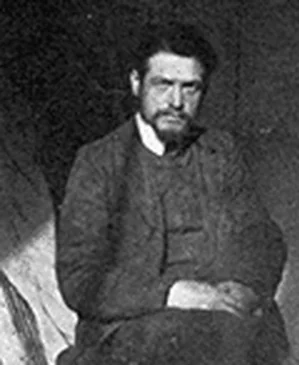
Image from Wikipedia
Image from Wikipedia
Auguste Herbin: The French Pioneer of Abstraction and His Radical Path to Geometric Art
A Life Between Fauvism, Cubism, and the Invention of a Personal Visual Language
Auguste Herbin is considered one of the significant yet often underestimated renewers of classical modernism. The French painter, born in 1882 in Quiévy and died in 1960 in Paris, underwent an exceptionally consistent artistic development: from late Impressionist early works through Fauvism and Cubism to geometric abstraction with his own visual logic. Museums today describe him as a revolutionary modernist and one of the forerunners of abstraction in France. ([openart-munich.de](https://openart-munich.de/en/exhibition/auguste-herbin/))
His work not only tells the story of an individual artist but also the story of an entire era of formal liberation. Herbin worked with color, surface, rhythm, and structure so precisely that his painting often evokes musical composition. This very connection of order and energy makes him still intriguing to art lovers, curators, and collectors today. ([metmuseum.org](https://www.metmuseum.org/de/art/collection/search/904836))
The Early Years: From Observational Painting to Avant-Garde Revelation
At the beginning of the 20th century, Herbin painted landscapes, still lifes, and portraits with late Impressionist influences. However, his preference for vibrant, harmoniously set colors became evident early on, which later found a much bolder language in Fauvism. The exhibition at the Lenbachhaus emphasizes this early development and places it as the first phase of a consistent artistic breakthrough. ([openart-munich.de](https://openart-munich.de/en/exhibition/auguste-herbin/))
By 1905 at the latest, Herbin was among the early Fauves, and in 1908 he already presented Cubist works at the Salon des Indépendants. The museum text from Montmartre further underscores that he was discovered by key collectors and mediators of the avant-garde and by 1913 had an internationally recognized career. Thus, Herbin was early at the center of those movements that redefined European modernity. ([hbdd.fr](https://www.hbdd.fr/files/expos/Expo%20Auguste%20Herbin_Mus%C3%A9e%20de%20Montmartre.pdf))
Bateau-Lavoir, Cubism, and International Avant-Garde
A crucial location in Herbin’s career was the Bateau-Lavoir in Montmartre, where he worked and lived for many years. This artistic environment brought him in close proximity to the leading figures of Parisian modernism and anchored him deeply in the experimental atmosphere of the time. The Montmartre catalog describes him as an artist who not only witnessed but actively shaped the ruptures of the 20th century. ([hbdd.fr](https://www.hbdd.fr/files/expos/Expo%20Auguste%20Herbin_Mus%C3%A9e%20de%20Montmartre.pdf))
It is particularly noteworthy how early Herbin was integrated into the canon of the avant-garde. His works appeared in collections and exhibitions that were formative for international art history, and in 1936 his work was featured in the context of "Cubism and Abstract Art" at the Museum of Modern Art in New York. This illustrates how naturally he belonged to the global narrative of abstract modernity, even though his name was later often overshadowed by larger icons. ([hbdd.fr](https://www.hbdd.fr/files/expos/Expo%20Auguste%20Herbin_Mus%C3%A9e%20de%20Montmartre.pdf))
The 1920s and 1930s: Reliefs, Objects, and the Step to Pure Form
In the 1920s, Herbin expanded his practice beyond classical panel painting. His reliefs and monumental objects, according to the Musée de Montmartre, had no direct counterpart in France and connected him with international movements like Constructivism and Neoplasticism. This phase clearly indicates that Herbin was not just a painter but also a thinker of form. ([hbdd.fr](https://www.hbdd.fr/files/expos/Expo%20Auguste%20Herbin_Mus%C3%A9e%20de%20Montmartre.pdf))
In the 1930s, Herbin collaborated within the principal networks of abstract art. The Fondation Maeght specifically mentions his involvement in the Abstraction-Création group between 1931 and 1936 as well as his role in the Salon des Réalités Nouvelles starting in 1946. Thus, he became an organizational and conceptual driving force of an art that definitively broke away from representationality. ([fondation-maeght.com](https://www.fondation-maeght.com/auguste-herbin/))
The "alphabet plastique": Herbin's Own Grammar of Abstraction
The perhaps most important step in Herbin's later work is the development of the so-called "alphabet plastique." The Metropolitan Museum of Art describes how Herbin articulated a theory of color in his 1949 text as well as the complex relationship between writing, music, and visual art. Triangles, circles, and rectangles became a kind of visual alphabet in his work, a system of signs with its own syntax. ([metmuseum.org](https://www.metmuseum.org/de/art/collection/search/904836))
The Fondation Maeght situates this invention as a consequence of his radical turn to geometric abstraction and emphasizes that beyond his sixties, Herbin developed a new, autonomous visual language. Herein lies his historical significance: he conceived abstraction not merely as a stylistic device but as a universal language. His art, therefore, is characterized as simultaneously rigorous, poetic, and surprisingly modern. ([fondation-maeght.com](https://www.fondation-maeght.com/auguste-herbin/))
Late Work, Physical Setback, and Artistic Consistency
After 1953, Herbin suffered a paralysis of the right side of his body and had to paint with his left hand from then on. The Metropolitan Museum documents this turning point explicitly, illuminating the unusual conditions under which his late works were created. The final paintings particularly demonstrate how determined he was to defend his visual language until the end. ([metmuseum.org](https://www.metmuseum.org/de/art/collection/search/904836))
A late work such as Naissance No. 1 from 1958 is regarded by the Met as the culmination of his typical style. The composition of clear color areas and geometric signs reflects a summary of his entire artistic thought. Herbin remained an artist of order until the very end, without ever losing his inner tension. ([metmuseum.org](https://www.metmuseum.org/de/art/collection/search/904836))
Style, Reception, and Cultural Influence
Herbin's significance extends far beyond French modernism. The Fondation Maeght names him a master of the new geometric abstraction after World War II and attributes a decisive influence of his work on artists like Victor Vasarely and Jo Delahaut. The Musée de Montmartre likewise emphasizes his impact on later generations of geometric abstraction, Op Art, and kinetic art. ([fondation-maeght.com](https://www.fondation-maeght.com/auguste-herbin/))
This reception explains why Herbin is increasingly coming back into focus today. The Lenbachhaus describes him as a modern revolutionary and a pioneer of abstraction in France, while current exhibitions in 2024 and 2025 will re-illuminate his phases of work. The renewed museum presence indicates: Herbin is not a marginal name but a key figure in the history of the European avant-garde. ([openart-munich.de](https://openart-munich.de/en/exhibition/auguste-herbin/))
Current Exhibition Situations and Ongoing Presence in the Art Scene
Herbin will remain present in 2024 and 2025 as well. The Musée de Montmartre is dedicating a major retrospective to him from March 15 to September 15, 2024, and the Lenbachhaus in Munich is showing an exhibition of his work from June 3 to October 19, 2025. These events confirm that Herbin is being reinterpreted as a central figure of abstraction in the international exhibition circuit. ([hbdd.fr](https://www.hbdd.fr/files/expos/Expo%20Auguste%20Herbin_Mus%C3%A9e%20de%20Montmartre.pdf))
This attention is justified because Herbin's work offers a rare combination of formal rigor, color sovereignty, and intellectual consistency. His images do not demand a loud pose but concentrated viewing. Those who engage with Herbin discover an artist who not only participated in abstraction but also contributed to its analytical clarity. ([fondation-maeght.com](https://www.fondation-maeght.com/auguste-herbin/))
Conclusion: Why Auguste Herbin Continues to Fascinate Today
Auguste Herbin is fascinating because he encapsulates the development of modernity in a single biography: Fauvism, Cubism, construction, abstraction, and finally a personal universal system of signs. His musical career in painting consists, if you will, of precisely set motifs, variations, and crescendos that still feel fresh today. When viewing his works, one sees not only art history but a vision of painting as a language. ([openart-munich.de](https://openart-munich.de/en/exhibition/auguste-herbin/))
For this reason, an encounter with Herbin in a museum or a major exhibition is particularly worthwhile. His works unfold an intensity before originals that reproductions can hardly capture. Experiencing Auguste Herbin live means directly witnessing the birth of an abstract visual language. ([openart-munich.de](https://openart-munich.de/en/exhibition/auguste-herbin/))
Official Channels of Auguste Herbin:
- Instagram: No official profile found
- Facebook: No official profile found
- YouTube: No official profile found
- Spotify: No official profile found
- TikTok: No official profile found
Sources:
- Wikipedia – Auguste Herbin
- Open Art Munich – Auguste Herbin
- Museum Boijmans Van Beuningen – Auguste Herbin
- The Metropolitan Museum of Art – Naissance No. 1, Auguste Herbin
- Fondation Maeght – Auguste Herbin
- Musée de Montmartre – Exposition Auguste Herbin, Le maître révélé
- Art Absolument – Auguste Herbin, la géométrie comme langage universel
- Le Journal des Arts – Exposition personnelle, Auguste Herbin
Upcoming Events
Auguste Herbin – Encryption with the alphabet plastique
When Colors Find Shapes – kunsthalle weishaupt Ulm
Art-Lunch in When Colors Find Shapes. Works from the Collection