
Antonio Vivaldi
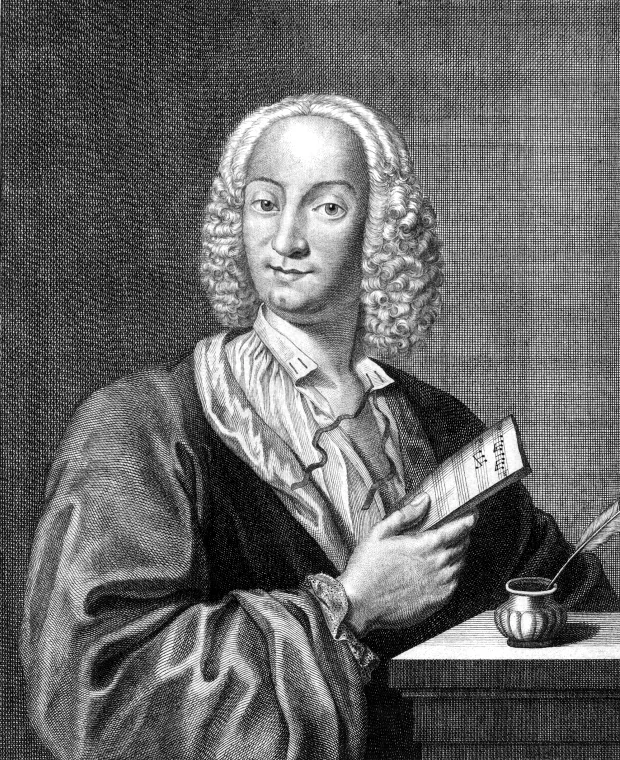
Image from Wikipedia
Image from Wikipedia
Antonio Vivaldi: The Red Priest Who Brought Baroque Music to Life
A Venetian Revolutionary Between Virtuosity, Clergy, and Musical Theater
Antonio Lucio Vivaldi was much more than the composer of The Four Seasons. Born on March 4, 1678, in Venice and died on July 28, 1741, in Vienna, he significantly shaped the development of the Baroque concerto as a violinist, priest, and composer. His musical career intertwines technical brilliance with dramatic imagination, courtly representation with Venetian sound culture, and artistic productivity with remarkable stylistic consistency. ([britannica.com](https://www.britannica.com/biography/Antonio-Vivaldi))
Biography: Venice as the Origin of a Distinctive Voice
Vivaldi's musical foundation was established in the context of the lagoon city, which was one of the most important music centers in Europe in the late 17th century. His father, Giovanni Battista, was probably his first teacher; in 1696, Antonio publicly performed as an additional violinist at San Marco for the first time. He was ordained a priest in 1703, and his distinctive red hair earned him the famous nickname Il Prete Rosso – the Red Priest. ([britannica.com](https://www.britannica.com/biography/Antonio-Vivaldi))
In the same year, he began a long and formative relationship with the Ospedale della Pietà, a Venetian orphanage where female wards were trained musically to the highest standard. There, Vivaldi initially worked as a violin master, later as the head of instrumental music, and as an external composer. This institution provided him with an extraordinary laboratory for tone color, concert forms, and performance practice. From his pedagogical work emerged one of the most productive careers of the Baroque era. ([britannica.com](https://www.britannica.com/biography/Antonio-Vivaldi))
Career: From Violin Virtuoso to European Brand Name
Vivaldi's rise to musical authority occurred in quick, distinct stages. Early printed collections of trio and violin sonatas emerged, and in 1711, he released L'estro armonico, one of the most influential concert publications of the 18th century. This publication made his name known beyond Italy and established him as a master of the concertante principle, dramatically contrasting the soloist and tutti. ([britannica.com](https://www.britannica.com/biography/Antonio-Vivaldi))
He also set standards in the field of sacred music. In 1713, he wrote his first major church music for the Pietà, and shortly thereafter, he turned to opera with Ottone in villa. The combination of sacred rigor, virtuosic instrumental writing, and theatrical energy shaped his profile as a versatile Baroque artist. In Mantua, he held a permanent position as the director of secular music between 1718 and 1720; otherwise, he preferred the independence of a freelance composer and entrepreneur. ([britannica.com](https://www.britannica.com/biography/Antonio-Vivaldi))
The Breakthrough: The Concert as Dramatic Narrative Form
Vivaldi's actual historical achievement lies in the radicalization of the solo concerto. He sharpened contrasts, condensed form developments, and employed great dramatic precision with recognition, tension, and emotional intensification. In doing so, he influenced not only the violin concerto but the entire development of instrumental music in the late Baroque. The structure of his works often resembles musical theater without a stage: motifs emerge, disappear, return transformed, and create an almost narrative energy. ([britannica.com](https://www.britannica.com/biography/Antonio-Vivaldi))
This virtuosity was never merely a technical display. Vivaldi's compositions combine playful agility with precise rhetoric and a distinctive economy of material. Particularly in the violin concertos, it becomes evident how expertly he shaped large spans of tension from small motivic units. The effect remains immediate today: His music feels alive, pointed, and surprisingly modern. ([britannica.com](https://www.britannica.com/biography/Antonio-Vivaldi))
Discography and Body of Work: A Hundredfold Inventor of Sound and Form
Vivaldi's oeuvre includes hundreds of instrumental concertos, numerous sonatas, liturgical compositions, and dozens of operas. Important publications include the collections Opus 3 to 12, which were published in the 1710s and 1720s and solidified his reputation throughout Europe. Additionally, stage works such as Ottone in villa and later numerous operas demonstrate his talent for scene, character development, and musical dramaturgy. ([britannica.com](https://www.britannica.com/biography/Antonio-Vivaldi))
His most famous work, The Four Seasons, has long transformed from a Baroque concerto into a global cultural symbol. Today, this cycle serves as a reference point for interpretations, transcriptions, and new productions. The continued presence of the work shows how profoundly Vivaldi's music has shaped collective listening: as a representation of nature, as a virtuoso piece, as acoustic drama, and as part of popular classical music. ([britannica.com](https://www.britannica.com/biography/Antonio-Vivaldi))
Style and Musical Handwriting: Energy, Contrast, and Venetian Elegance
Vivaldi's style combines rhythmic clarity with vibrant melodies and a distinct preference for clear forms. His compositions thrive on sharply defined themes, virtuosic runs, sequences, and the art of transforming repetition into tension. Especially in the concertos, the interplay between soloist and orchestra becomes the driving force of a music that not only describes movement but generates it. ([britannica.com](https://www.britannica.com/biography/Antonio-Vivaldi))
The colors of his instrumentation are also characteristic. Vivaldi worked with transparent textures, pointed harmonies, and a sensitivity for tonal drawing that found an ideal home in the Venetian institutions of his time. His music is never heavy; it breathes speed, clarity, and presence. For this reason, it remains captivating for historical performance practice as well as for modern concert formats. ([britannica.com](https://www.britannica.com/biography/Antonio-Vivaldi))
Current Relevance: Why Vivaldi Still Makes Headlines in 2024 and 2025
Antonio Vivaldi himself can publish no new projects, but his music remains vibrantly alive in the 21st century. This is evidenced by the announced return of Viva Vivaldi. The Four Seasons Immersive Concert in 2025 to the Arena di Verona, where the cycle will be re-experienced by a large audience using modern technology, light, and immersive dramaturgy. The production highlights the enduring impact of Vivaldi's music in the tension between tradition and event culture. ([arena.it](https://www.arena.it/de/magazine/news/lo-spettacolo-viva-vivaldi-ritorna-allarena-di-verona-nel-2025/))
Vivaldi is also present in the realm of recording culture. A new album featuring Le quattro Stagioni and other pieces was released in January 2025 by Harmonia Mundi, underscoring how strongly his music continues to serve as repertoire for interpretative reinterpretations. Such releases not only demonstrate the unbroken demand but also the openness of his œuvre to historical research, sound experiments, and stylistic refinement. ([harmoniamundi.com](https://www.harmoniamundi.com/wp-content/uploads/pdf/vivaldi-le-quattro-stagioni-concerti-armonici-e-inventivi-HMM902757.58-de.pdf))
Critical Reception and Cultural Influence: From Oblivion to Rediscovery
Vivaldi's posthumous reputation did not proceed in a linear fashion. In the 1730s, his career faced a crisis; contemporary reports noted that his music had fallen out of fashion, and he died in 1741 in Vienna apparently in poverty. Only the rediscovery of his manuscripts in the 20th century revealed the full dimension of his work. Today, these collections in Turin are considered a central source for research and performance practice. ([britannica.com](https://www.britannica.com/biography/Antonio-Vivaldi))
His influence reaches deeply into music history. Vivaldi shaped the concerto as a genre so decisively that later composers and performers repeatedly turned to his formal and virtuosic solutions. At the same time, he anchored the Venetian Baroque aesthetic internationally and became a key figure in historical performance practice. Institutions such as the Istituto Italiano Antonio Vivaldi at the Fondazione Giorgio Cini maintain this legacy through editions, research, conferences, and extensive sound recordings. ([britannica.com](https://www.britannica.com/biography/Antonio-Vivaldi))
Conclusion: A Composer Who Continues to Change Listening Today
Antonio Vivaldi remains exciting because his music combines immediate impact with formal intelligence. He was a virtuoso, priest, theater man, and sound architect – an artist whose works continue to circulate between concert halls, studios, and immersive productions. Those who experience Vivaldi live do not merely hear Baroque music; they encounter an art of musical drama charged with present-day relevance. ([britannica.com](https://www.britannica.com/biography/Antonio-Vivaldi))
Official Channels of Antonio Vivaldi:
- Instagram: no official profile found
- Facebook: no official profile found
- YouTube: no official profile found
- Spotify: no official profile found
- TikTok: no official profile found
Sources:
Upcoming Events
Vivaldi for Kids
Vivaldi and Me
Vivaldi and Me
Vivaldi and Me
Vivaldi and Me
Vivaldi and Me
Vivaldi and Me
Vivaldi and Me
Vivaldi and Me