
Anouk Aimée
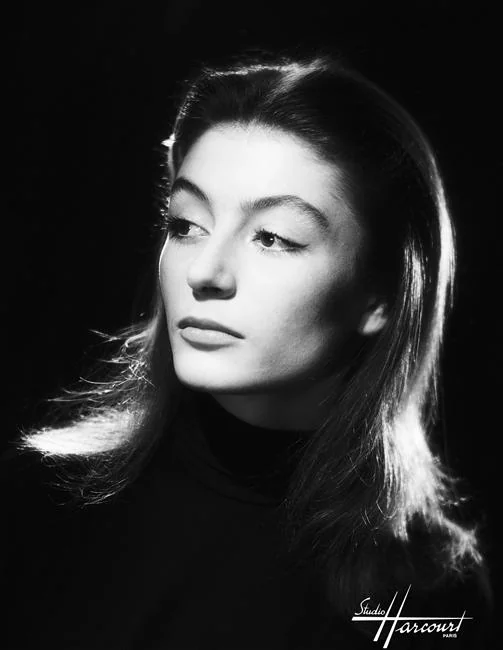
Image from Wikipedia
Image from Wikipedia
Anouk Aimée: The Unforgettable Elegance of French Cinema
An actress of rare presence, whose face wrote film history
Anouk Aimée, born Nicole Françoise Florence Dreyfus on April 27, 1932, in Paris and passed away on June 18, 2024, in the same city, was one of those actresses whose appearance instantly generated its own cinematic temperature. Over more than seven decades, she appeared in over 70 feature films, collaborating with some of the most influential directors from Europe and Hollywood. Her name is inseparably linked with La Dolce Vita, Eight and a Half, Lola, the Girl from the Port, and A Man and a Woman, four works that condense her art between restraint, melancholy, and iconic modernity. ([en.wikipedia.org](https://en.wikipedia.org/wiki/Anouk_Aim%C3%A9e?utm_source=openai))
Early Years: Paris, New Beginnings, and the Birth of an Artistic Name
Aimée grew up in Paris and entered the film world as a teenager. She made her debut in 1946 in La Maison sous la mer, where her character was named Anouk; this first name later evolved into her artistic identity. The surname Aimée, French for "the beloved," was reportedly suggested to her by early admirers from literary and cinematic circles. This name change already indicates how early her career was accompanied by a carefully crafted aura: not just an actress, but a projection surface for European post-war cinema. ([britannica.com](https://www.britannica.com/biography/Anouk-Aimee?utm_source=openai))
The Breakthrough in Author Cinema: Fellini, Demy, and the New Woman on Screen
In the 1950s and early 1960s, Anouk Aimée became a defining figure in European art cinema. Federico Fellini cast her in La Dolce Vita and later in Eight and a Half, while Jacques Demy made her one of the most stylistically influential heroines of the Nouvelle Vague with Lola, the Girl from the Port. Her performances were never loud or demonstrative; rather, the controlled, almost ethereal intensity added greatness to her characters. Critics described her as enigmatic, elegant, and emotionally complex, portraying a performer who did not explain everything but condensed tensions within the visual space. ([britannica.com](https://www.britannica.com/biography/Anouk-Aimee?utm_source=openai))
A Man and a Woman: The Film that Turned an Actress into an Icon
The international highlight of her career was Claude Lelouch's Un homme et une femme from 1966, a film that won the Palme d'Or at Cannes and achieved worldwide box office success. Aimée played a woman with a traumatic past, whose cautious approach to Jean-Louis Trintignant's character was marked by a rare emotional authenticity. The production blended acting, music, and imagery into a modern love myth; therein lay the magic of Aimée's performance. For this role, she received the Golden Globe for Best Actress, was nominated for an Oscar, and won several other prestigious awards, solidifying her international reputation. ([en.wikipedia.org](https://en.wikipedia.org/wiki/A_Man_and_a_Woman?utm_source=openai))
Later Career: Between European Author Cinema and International Productions
Aimée was not merely an actress of one decade; she evolved her career with remarkable consistency. She later collaborated with Bernardo Bertolucci, Robert Altman, and Henry Jaglom, demonstrating that her stage and screen presence could endure in a changing cinematic landscape. Among her most significant honors is the Best Actress Award at Cannes for Salto nel vuoto by Marco Bellocchio in 1980. Her career documents a rare form of continuity: not a loud comeback, but the steady refinement of an artistic personality. ([washingtonpost.com](https://www.washingtonpost.com/obituaries/2024/06/18/anouk-aimee-french-actress-dead-obituary/?utm_source=openai))
Discography, Repertoire, and Cultural Impact
Anouk Aimée does not possess a classical discography as a film actress; rather, her oeuvre corresponds to a filmography of extraordinary density. Her repertoire spans from early French post-war cinema through the Nouvelle Vague to international art cinema, making her a key figure in European film culture. Her influence particularly remained strong in how femininity was portrayed on screen: distant, sovereign, vulnerable, yet absolutely controlled. This blend was repeatedly described in reviews as her trademark, shaping the image of the modern French film woman far beyond her greatest successes. ([bfi.org.uk](https://www.bfi.org.uk/news/anouk-aimee-obituary-french-new-wave-embodiment-sophisticated-romance?utm_source=openai))
Reception in the Press: Admiration for Style, Attitude, and Emotional Precision
Following her death, international media honored her as a French cinema icon and one of the great faces of the 20th century. Obituaries from AP, Le Monde, FAZ, the British Film Institute, and Britannica unanimously emphasized her elegant presence, her significance to European art cinema, and the enduring impact of A Man and a Woman. Notably, these texts almost always reference her ability to generate maximum emotional impact with minimal gestures. That was where her greatness lay: not in exaggeration, but in a delicate, almost musical rhythm of performance. ([apnews.com](https://apnews.com/article/313f092179fb3bd3cf74a766d1c2a182?utm_source=openai))
Personality, Awards, and Legacy
Throughout her career, Anouk Aimée was honored with significant awards, including the Golden Globe and awards at Cannes for her later roles. Her presence in French, Italian, British, and American productions shows how adept she was at transcending the boundaries between national cinema and international prestige. Her private life was also marked by prominent connections, but public perception consistently centered on her acting artistry. Her legacy consists of a rare combination of style consciousness, dramatic depth, and an instinct for roles that resonate not with loudness but with lasting impact. ([goldenglobes.com](https://goldenglobes.com/person/anouk-aimee/?utm_source=openai))
What makes Anouk Aimée so fascinating is her enduring modernity: she embodied European cinema not as a pose but as an attitude. Her career showcases how an actress can become a cultural reference with precision, intelligence, and inner tension. Those who watch her films today encounter not a nostalgic museum figure, but an artist whose radiance extends into the present. Revisiting her great works is always worthwhile, as few connected elegance and emotional truth as irresistibly as Anouk Aimée. ([britannica.com](https://www.britannica.com/biography/Anouk-Aimee?utm_source=openai))
Official Channels of Anouk Aimée:
- Instagram: No official profile found
- Facebook: No official profile found
- YouTube: No official profile found
- Spotify: No official profile found
- TikTok: No official profile found
Sources:
- Wikipedia - Anouk Aimée
- Britannica - Anouk Aimee Biography
- BFI - Anouk Aimée obituary
- The Guardian - Anouk Aimée obituary
- Le Monde - Anouk Aimée, the great French actress, has died
- AP News - Anouk Aimée, the radiant French star of 'A Man and a Woman' and 'La Dolce Vita,' dies at 92
- Golden Globes - Anouk Aimée
- FAZ - For Anouk Aimée's ninetieth birthday
Upcoming Events
Anouk - Fantastic Children's Musical
Anouk – The Children's Musical
Anouk – The Children's Musical
Anouk – The Children's Musical
Anouk – The Children's Musical
Anouk – Fantastic Children's Musical
ANOUK - The Children's Musical in Cottbus
Anouk – The Children's Musical
Family Musical Anouk at RuhrCongress