
Albert Roussel
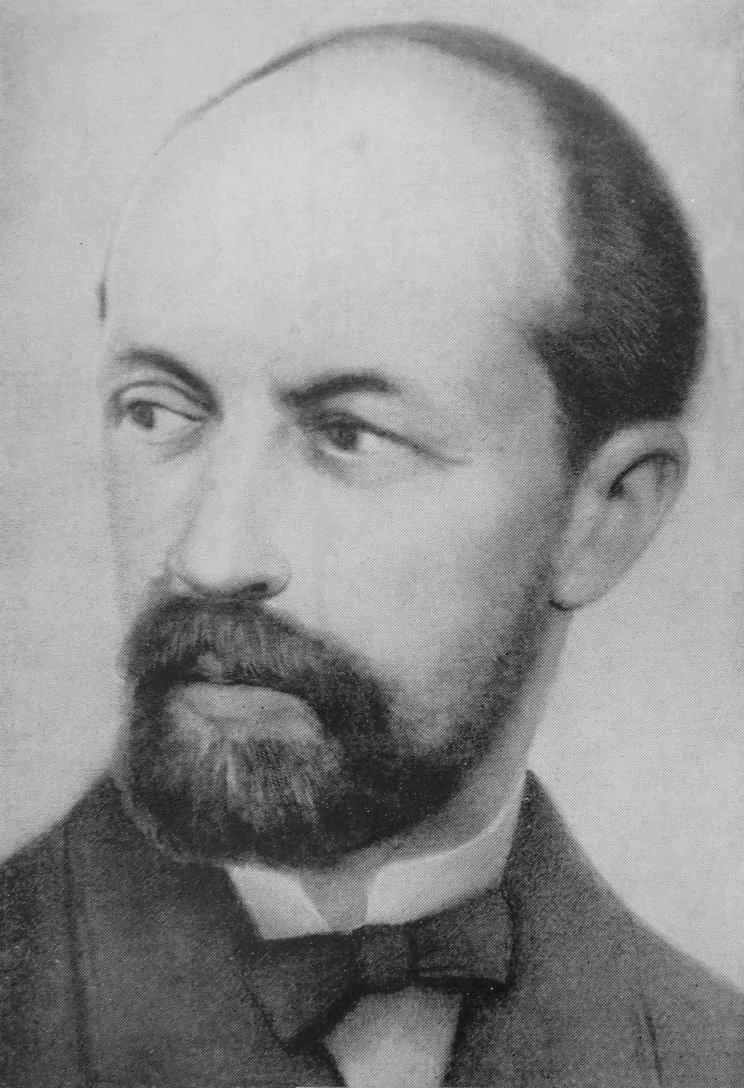
Image from Wikipedia
Image from Wikipedia
Albert Roussel – the French composer between Impressionism, Wanderlust, and Neoclassicism
A composer of rare independence: An overview of Albert Roussel
Albert Charles Paul Marie Roussel is among the most prominent French composers of the early 20th century. Born on April 5, 1869, in Tourcoing and died on August 23, 1937, in Royan, he developed a musical career shaped by maritime experiences, international impressions, and a continual artistic intensification. His works combine lyrical intensity, formal rigor, and harmonic boldness into a sonic language that has retained its uniqueness to this day. ([britannica.com](https://www.britannica.com/biography/Albert-Charles-Paul-Marie-Roussel?utm_source=openai))
Roussel is not a composer known for loud self-promotion, but rather one of inner consistency. His career took him from service in the French Navy, to studying with Vincent d'Indy at the Schola Cantorum in Paris, leading to a body of work that became a staple in the landscape of 20th-century French music. Particularly fascinating is how his musical development moved from Impressionistic influences to a personally shaped Neoclassicism. ([britannica.com](https://www.britannica.com/biography/Albert-Charles-Paul-Marie-Roussel?utm_source=openai))
From the Navy to Music: Biography and Artistic Formation
Roussel joined the French Navy at the age of 18 and undertook several trips to Southeast Asia, the impressions of which resonated later in his orchestral and theatrical works. At 25, he left naval service and became a student of Vincent d'Indy at the Schola Cantorum in Paris, where he taught composition himself from 1902 to 1914. Among his students were Erik Satie and Edgard Varèse, which further underscores his position within the network of French modernism. ([britannica.com](https://www.britannica.com/biography/Albert-Charles-Paul-Marie-Roussel?utm_source=openai))
His time in Asia and later in India left marks on his musical thinking. Works like the three Évocations, the operatic ballet score Padmâvatî, and other dramatic compositions take up exotic impressions not decoratively, but structurally. After his service on the front lines in World War I, his health deteriorated, prompting him to retreat to Brittany in 1918 and devote himself entirely to composing. This biographical breakpoint also marks the transition to a more mature, concentrated writing style. ([britannica.com](https://www.britannica.com/biography/Albert-Charles-Paul-Marie-Roussel?utm_source=openai))
The Breakthrough: Recognition, Style Shift, and Personal Signature
Roussel had already received recognition for his compositions in 1897, but the true value of his work became apparent in the 1920s and 1930s. A biobibliographical study describes how his productivity greatly increased in the 1920s, while the music of this phase remained influenced by Impressionism, and the neoclassical works of the 1930s found national acclaim. This is historically significant because Roussel thereby found a unique balance between two aesthetic poles. ([bloomsbury.com](https://www.bloomsbury.com/us/albert-roussel-9780313255588/?utm_source=openai))
Britannica characterizes his music as marked by "lyrical fervour," "austerity of technique," and "harmonic audacity." This hits the essence quite accurately: Roussel composed not pleasingly, but with control and power, often with a clear architectural line and surprising harmonic shifts. In this tension between emotion and construction lies one of the reasons why his music continues to seem modern and distinctive today. ([britannica.com](https://www.britannica.com/biography/Albert-Charles-Paul-Marie-Roussel?utm_source=openai))
Significant Works: Symphonies, Ballets, Operas, and Chamber Music
Among his most significant stage works are the ballets Le Festin de l’araignée and Bacchus et Ariane, both of which are also presented as orchestral suites in concert halls. Equally central is the one-act opera La Naissance de la lyre and the operatic ballet Padmâvatî, which draws from his oriental-inspired experiences. These works showcase Roussel as a master of music that tightly intertwines dramatic movement and orchestral color. ([britannica.com](https://www.britannica.com/biography/Albert-Charles-Paul-Marie-Roussel?utm_source=openai))
On the symphonic level, his four symphonies are important, particularly the third in G minor, which is considered especially impressive. Also noteworthy are Pour une fête de printemps, the Suite in F, and the Sinfonietta for Strings, in which Roussel expresses his neoclassical phase with clear contours and succinct thought processes. Additionally, he wrote chamber music, a smaller number of piano works, and songs, including settings of Chinese translations and James Joyce's poem "A Flower Given to My Daughter." ([britannica.com](https://www.britannica.com/biography/Albert-Charles-Paul-Marie-Roussel?utm_source=openai))
Discography, Reception, and Musical Significance
Roussel's discography is extensive and reflects the ongoing relevance of his oeuvre. A bibliographic reference about the composer highlights that the recording history of his works coincides with a renewed interest in his compositions, and a variety of recordings, performances, and reviews document this. This is a strong indication that his work is not only archived but actively kept alive in the repertoire. ([bloomsbury.com](https://www.bloomsbury.com/us/albert-roussel-9780313255588/?utm_source=openai))
Both the music press and musicological categorization see Roussel as an important bridge between French tradition and modernity. Britannica points out that some critics view him as a renewer of old French formal traditions that trace back to Jean-Philippe Rameau, while his harmonic daring is also associated with Igor Stravinsky. At the same time, his mature style is described as a reaction to both Impressionism and Franck's chromaticism. ([britannica.com](https://www.britannica.com/biography/Albert-Charles-Paul-Marie-Roussel?utm_source=openai))
This reception is no coincidence, as Roussel represents a French orchestral sound that never reduces itself to mere refinement. His works unite rhythmic energy, formal discipline, and a fine, often almost ascetic economy of sound. For this reason, his compositions can today be read as a distinctive counterpoint to the more well-known lines of French music history. ([britannica.com](https://www.britannica.com/biography/Albert-Charles-Paul-Marie-Roussel?utm_source=openai))
Style, Sonic Language, and Cultural Influence
Roussel's style is rooted in the French tradition but broadens it with East Asian influences, modern harmony, and an increasing neoclassical clarity. His early works demonstrate the influence of Claude Debussy's Impressionism as well as training by César Franck and Vincent d'Indy, while later pieces gain a stricter form and greater sharpness. This development makes him a composer who understands change not as a break, but as refinement. ([britannica.com](https://www.britannica.com/biography/Albert-Charles-Paul-Marie-Roussel?utm_source=openai))
His cultural influence extends beyond his own oeuvre. As a teacher at the Schola Cantorum, he shaped two very different but significant voices of modernity, Edgard Varèse and Erik Satie. Moreover, he belongs to the generation in French music history that connected French formal rigor with world musical impulses and modern harmony, thereby expanding the horizons of concert music. ([britannica.com](https://www.britannica.com/biography/Albert-Charles-Paul-Marie-Roussel?utm_source=openai))
Current Projects and Publications
As Albert Roussel died in 1937, there are no current projects, new albums, or ongoing tours in the contemporary sense. The current relevance of his work is rather evident in new recordings, programs from orchestras and chamber music ensembles, and in the continued musicological engagement with his scores. A bio-bibliography released in 1988 and later catalogs and repertoire entries testify to this ongoing presence in the classical concert scene and recordings. ([bloomsbury.com](https://www.bloomsbury.com/us/albert-roussel-9780313255588/?utm_source=openai))
Conclusion: Why Albert Roussel Fascinates Today
Albert Roussel fascinates because he is far more than a French composer between Impressionism and Neoclassicism. His music career combines seafaring, pedagogical influence, international impressions, and a sovereign composition technique into a body of work of high independence. Those who wish to discover French music history not only through the great names but through their finer, intellectually shimmering lines will find Roussel a remarkable reference point. ([britannica.com](https://www.britannica.com/biography/Albert-Charles-Paul-Marie-Roussel?utm_source=openai))
Especially in the concert hall, his music unfolds its full effect: rhythmically precise, colorfully orchestrated, and carried by a tension that lingers long after. Roussel is worth rediscovering again and again because his works merge intellect, form, and sensuality in a rare way. Anyone who has the opportunity to experience his music live should seize it. ([britannica.com](https://www.britannica.com/biography/Albert-Charles-Paul-Marie-Roussel?utm_source=openai))
Official Channels of Albert Roussel:
- Instagram: no official profile found
- Facebook: no official profile found
- YouTube: no official profile found
- Spotify: no official profile found
- TikTok: no official profile found